Mary Pride: Don’t Divorce Your Drunk, Raging Husband

Screen Shot 2014-12-29 at 2.26.19 PM

By R.L. Stollar, HA Community Coordinator

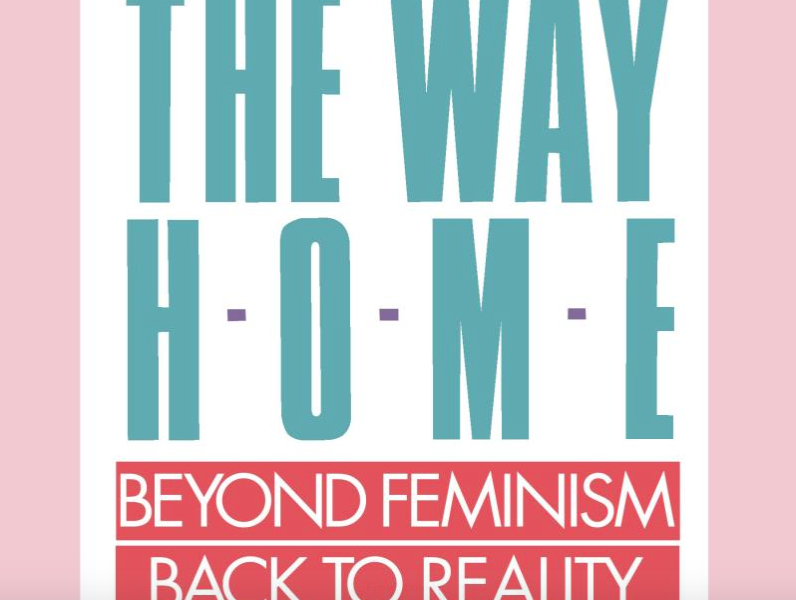
The following passage is from the 2010 “25th Anniversary Edition” of Mary Pride’s seminal book The Way Home: Beyond Feminism Back to Reality, originally published in 1985. The emphases are in original:

The reason the church is getting lax about divorce is that we no longer understand marriage. If a spouse has problems, such as drunkenness or fits of temper, the other one concludes it is not a “good” marriage and moves on. Those who take this perspective end up allowing divorce “for any and every reason,” just as the Pharisees were doing in Jesus’ day. Jesus answered the Pharisees that destruction of any God-ordained marriage is always wrong… Only adultery, which breaks the partnership by pouring its resources into a spiritually fruitless extramarital union, as well as (in the case of an adulterous wife) jeopardizing the children’s legitimacy, and desertion, which nullifies the partnership, are biblical grounds for divorce… Christians may never, never, never divorce Christians. (21-22)

Image from page 21’s excerpt of the book:

IMG_20141229_143356

You can read more about Mary Pride and her book The Child Abuse Industry here.

I Was an LDS Homeschooler: Tirzah’s Story, Part One

CC image courtesy of Flickr, Pedro Szekely. Image links to source.

Pseudonym note: The author’s name has been changed to ensure anonymity. “Tirzah” is a pseudonym.

I was homeschooled my entire life. As were all my brothers and sisters. I actually don’t mind at all that I was homeschooled. I enjoyed it, a lot. As an educational method I think it can be remarkably effective, giving children an unhindered environment to learn at their own pace and truly develop their own talents.

That being said, I still feel compelled to write and share my story. It’s not as bad or traumatic as some, but not as happy and rosy as others.

A few years ago my mother looked at me with a mournful and wistful look and sadly asked, “What happened to us? You used to trust me and confide in me so much, then when you were about 11 that all changed. Why did you stop trusting me?”

I didn’t know how to answer that at the time.

I was still sorting through my childhood and I genuinely believed that the change our relationship had taken was somehow my fault. I didn’t think it was all my fault, but surely a large portion of it was mine, because my mom loved me, and I was the one who was annoyed by her.

My family is LDS (you know, those controversial Mormons?). As members of The Church of Jesus Christ of Latter-Day Saints we have a doctrine that is distinct and very very different from any evangelical Christian denomination. But for a family that wants to homeschool for religious reasons back in my day there really weren’t any LDS oriented curriculums. So my parents did what many Mormon homeschoolers did: they branched out.

Abeka was the first inclusion I can remember. The books were vaguely creepy to me, with randomly placed Bible verses that had no bearing at all on whatever the subject matter was. Gradually more items worked their way in. Books about Amish and Mennonite children who learned valuable life lessons about greed, vanity, and perfect immediate obedience. They were also creepy, but I loved to read so I read them occasionally out of sheer boredom.

My dad was extremely abusive. He was large, frightening, and he thrived off of intimidating people. Especially us. He kept my mother in a constant state of fear and desperation, so as very small children we were largely unmonitored, my mother desperately cleaning one room after the other as we moved through like a storm of tiny Tasmanian devils. My mother eventually gathered the courage and resources to leave him and she gained full custody of all of us in the divorce. I came out of that experience with some deep rooted trust issues with men. I didn’t want to be left alone near any man.

My mother didn’t help in that matter, but we’ll get to that in a bit.

Now a newly single mother my mom faced a lot of pressure to put us in school. She didn’t feel like that would be the right thing, so she figured out ways to make money while staying at home. She also needed to figure out how to undo the years of bad habits we had learned when it came to our cleaning habits. And that is when she discovered the Pearls and their masterpiece of parenting wisdom “To Train Up a Child”. Suddenly her mind was opened- children were like horses who needed guidance and careful training, who needed to learn instant compliance in order to learn obedience to God. If they didn’t receive that training then their souls would be in peril and they would wander off into the lost paths of darkness, and be pulled into the hedonistic world of Babylon.

I got the horse analogy a lot as a child and teen. I was the oldest at home, my older brother having been sent off to live with our father, and as the oldest she not only needed me to be the example, but to also make me the example. So I got lots of switchings. Sometimes it was a switch, others a belt, once a wooden spoon but she broke that on me. Then I was in more trouble because I made her break the spoon.

I had no privacy for my thoughts. “Murmuring” was not tolerated, because Laman and Lemuel murmured (book of Mormon people) and that ended up creating an entire civilization that rejected God. I wasn’t allowed to feel any anger towards her for the sudden changes in my life, and anything but perfect respect and admiration was unacceptable.

My mom didn’t use the spanking philosophy for long, she couldn’t bear to continue to inflict bodily harm on her kids (gee, I wonder why…..) but the attitude and mentality behind it remained. Seemingly overnight I had gone from being decently self sufficient and independent to being unbearably incapable and never to be trusted. The siblings that I had spent my entire life protecting from my father and mentally ill brother suddenly needed to be protected from me. Suddenly I was a pathological liar who bullied and harmed them out of spite and malice. I was never to be believed, because I was older and bigger, and they all told the same story. My younger brother was the perfect and honest one who would never lie to her… Only me. I was the liar, I was too rebellious, too unruly. I was leading my siblings astray.

I was always made to feel self conscious of my body.

My mom once pulled me aside at the public swimming pool to inform me that any time I stepped out of the pool I needed to wrap the towel around my waist because men might think my legs were really sexy. I was only 13, and wasn’t even close to puberty. Once at 17 a boy in my youth group cruelly called me a “corner girl” to hurt me, they all knew that I had never so much as kissed a boy, so that was an especially painful barb. When I told my mother about it, instead of defending me she told me it was because my shirt was too tight and they could see the curve of my breasts. We were always warned about sex, but never taught anything. It would lead us to immoral acts, and if I learned anything about it then I might say something to my siblings and that would cause them to be immoral too. Every decision I made had to be weighed against how it would affect them.

But her lessons on my responsibility as the oldest and the counseling we had received in our abuse survivors group sunk in, and not how she had hoped. I knew that it was my responsibility to teach “the youngers”, as I referred to them, how to move into adulthood in spite of my mom’s desire to go back in time and re-raise us. So I pushed on. I persuaded her to let me get an email account. She was very worried about allowing me on the computer, and told me that I could become addicted to pornography from the junk mail, or kidnapped by a stranger who would try to “get me” from the chat rooms. After establishing some rules I got one. Within a few years the others each has one as well. The same went with phone usage, then cellphone use, then Facebook.

Eventually I decided to serve a mission for our Church. But because it was several years before the age change our church recently had, it meant that I lived at home till I was in my 20’s to save money and prepare for my mission.

It was during that time period that my mom discovered the Christian Patriarchy movement.

She feel in love with the notion of “stay-at-home daughters” carefully protected and guided by their wise and loving parents. My mom had remarried by this time, and desperately wanted to take back the abuse and neglect we had receive from our biological father. What better way to do that then having sah-daughters? Oh she thought it was lovely and refined. But still unreasonably expected us to function as adults. But her vision of adult daughters was one of daughters who were wise enough to submit to their parents.

At the time I went along with it, but with a great deal of reservation. I tried to be humble and submissive and recognized that I was still living in their house so I needed to respect their rules. I worked for my step father and “contributed” to the family. Don’t get me wrong, I had some pretty decent perks as well, lessons in music and other sports that I valued highly, but it was still miserable.

When I went on my mission everything changed.

Part Two >

Things HSLDA Opposes: Criminal Background Checks for Homeschool Co-op Instructors

Screen Shot 2014-12-10 at 8.59.25 PM

HA note: The following is reprinted with permission from Libby Anne’s blog Love Joy Feminism. It was originally published on Patheos on December 31, 2014.

View series intro here, and all posts here.

Here is what HLSDA had to say about House Bill 295, a 2013 bill in New Hampshire:

Summary:

House Bill (“HB”) 295 imposes the requirement of criminal background checks on employees and volunteers at recreation and “youth skill” camps. The bill is a potential problem for homeschoolers because of the overly broad definition of “youth skill camps” that could include homeschool groups.

The Senate Health, Education & Human Services committee amended the bill to define “Youth Skill Camps” as “a nonprofit or for-profit program that lasts 8 hours total or more in a year for the purpose of teaching a skill to minors. Such camps include, but are not limited to, the teaching of sports, the arts, and scientific inquiry.”

HSLDA’s Position:

Oppose unless amended to exempt homeschool related groups. HSLDA suggests that the bill be amended to include language similar to:

A “youth skill camp” does not include a group formed by or relating to home education programs.

So in a nutshell, this bill would require criminal background checks for employees and volunteers at a variety of youth camps, and HSLDA was concerned that the language was broad enough that it would require criminal background checks for those teaching in homeschool co-ops.

Let me say a word about homeschool co-ops. They take a variety of forms. When I was a girl, I was involved in a homeschool co-op that met for a morning every other week. We children were divided into classes by age to study subjects chosen by semester. The mothers served as the teachers, creating lesson plans geared to our age groups. When I was a teen I was involved in a weekly homeschool co-op that brought in professional teachers to lead classes in band, choir, and art.

I don’t see a problem with requiring background checks for those who teach in homeschool co-ops. I recently filled out a volunteer form for my daughter’s elementary school. If I want to be a chaperone at field trips, even under the supervision of teachers and other school employees, I have to have a background check. And why not? I’m glad to know that other parents chaperoning on my daughter’s field trips will have background checks on file, to prevent sex offenders or others with questionable criminal histories from having close contact with or authority over my child.

And don’t think this isn’t something that happens in homeschool groups.

I have a friend whose old homeschool group recently let a child sex offender speak at their annual homeschool graduation ceremony. He was one of the parents, and had been tried and convicted. I doubt most of the parents there knew. We saw this come up with The Old Schoolhouse scandal as well, when Paul and Gena Suarez sought to conceal the fact that a friend was being investigated for child pornography from other homeschooling families in their community. In Alabama, the founder of a homeschool “umbrella” school was arrested and convicted for child trafficking, and numerous other homeschool tutors and co-op teachers have been found guilty of child sexual abuse as well. This is a thing that happens.

I understand that requiring homeschool co-op instructors to have criminal background checks does mean paperwork. But shouldn’t it be worth a bit of paperwork to protect children from predators? The practical effects of HSLDA’s opposition to this bill would be to allow parents with questionable criminal backgrounds to teach in homeschool co-ops undetected. Once again, HSLDA seems to care very little about the actual safety and wellbeing of homeschooled children.

And yet, in their commentary on this bill’s ultimate passage, HSLDA vows to work to ensure that homeschool co-ops are not counted as youth camps, concluding that:

HSLDA will be following up on this issue and working to insure that homeschoolers interests are safeguarded.

Whose interests exactly are being safeguarded? Not the children’s, that’s for sure.

10 Things (Former) Homeschoolers Wish Their Parents Knew While Homeschooling

12098056_f1024

Introduction by Nicholas Ducote, HA Community Coordinator; list is a group effort by numerous members of the HA community.

*****

UPDATE, 01/05/2015: The title of this piece is, “10 Things Homeschoolers Wish Their Parents Knew While Homeschooling.” It is based on members of the HA community finding the “10 Things” in a homeschool parent’s article similar to statements they commonly heard growing up. The similarity proved too close for comfort. Thus these community members are expressing their reactions to those statements from their own experiences. This list represents the experiences of those contributors; it does not claim to be the universal homeschooling experience.

*****

Two days ago, this post came across my Facebook feed titled “10 Things Homeschool Moms Wish You Knew.” The blog post is generally about defenses of their homeschooling methods, especially in regards to math education, socialization, grade-level, and comparisons with kids who attend public schools. Her second “Thing” disturbed me greatly because, like her son, I could plan a Bible study (about math!) at age 15, but I still struggle with basic high school math.

“2. Our kids are behind in school.

It’s true. My daughter can’t spell “were” to save her life. She’s 13, for goodness sakes. My son hasn’t opened his math book in…well, let’s just say, it’s been a while. They are behind in some subjects. But, let me let you in on a little secret…your kids are behind too. Now, before you start arguing with me that your child just made principal’s honor roll, let me ask you this: Can your 17 year old change the brakes on a car? No? What have you been teaching him? Can your 13 year old plan a Bible lesson and teach a whole room full of students? No? What has she been studying?? Mine can do that and more.”

While changing the brakes on your car will save you some money on occasion, missing out on a fundamental math education will substantially limit your capabilities as an adult. Not every child is gifted in math, but that doesn’t mean you give up or don’t keep at it.

So in the spirit of viral counter-lists, our survivor community has compiled their own:

10 Things Homeschoolers Wish Their Parents Knew While Homeschooling

1. Your choice to homeschool was never about us. It was about control, it was about you. It was about creating little robots that mimicked your beliefs and did what they were told so that you could show off how superior we were to the whole world. It wasn’t the best decision for us, sometimes it was a really bad decision. But that didn’t matter because your belief that homeschooling would save your kids and make them Super Christians matter more than our individual needs.

2. Some of us were behind in school and are now behind in life. This is not a good thing.

Don’t assume real-life experience and book-learnin’ are mutually exclusive…. and don’t assume that we got either one. Our parents phrased it as this tradeoff existed between “well, your kids are up to grade level, but MINE have life skills,” but often, it didn’t work that way at all. We didn’t get the education we should have had, but we also did’nt learn most of the things that would have helped us in the “real world” later on. Bills? Checkbooks? Banking? Insurance? Credit cards? Managing money, being self-supporting, holding down a job, driving, etc etc etc? Nah.

3. Fundamental schooling is more important than your religion. Forcing your beliefs down our throats at the cost of educational building blocks is immoral

4. Despite the lies you’re told, you don’t have to homeschool to be a Christian. Have a little faith in your own parenting abilities when your kids go to public school. When our parents got impatient because we couldn’t learn what they were teaching, they should’ve changed how they taught or sent us to school so we could actually learn. Not screamed or locked themselves in the bathroom.

5. Admit when you’re in over your head. It’s okay.

6. That’s legit. People should leave kids alone.

7. It would’ve been nice to know what our grades were. That way when we graduated and entered the real world, we would know whether we were good competition for our peers or woefully behind and unable to get scholarships and jobs.

8. You say we were socialized. Which actually meant that we were pretty good at talking to adults. But many of us have no idea how to relate to peers. Peers scare the crap out of us. Kids are good, we can talk to kids. But some of us still struggle to see ourselves as adults and peers of adults and struggle to relate and socialize with other adults our age. This is the product of most homeschooling socialization.

9. You worry? Did you ever stop to think those worries were legit? You say “if you can’t say anything nice about our choices, then please just don’t say anything at all.” But you also describe educational neglect and your children’s lack of basic skills. I was glad every time someone stood up to my parents – like when my grandparents fought for months for my parents to allow me to receive a newspaper subscription.

10. You said “We like being different. We are okay being different, and we hope you can appreciate us for our differences!” Do you think your kids feel the same way? Would they even tell you if they didn’t? Because my mom said the same things. But the fact was I hated being different. I hated being weird and the freak. I hated it all and was miserable because of it. So speak for yourself.

10 Things Homeschool Parents Try To Explain But Fail

moms

HA note: The following is reprinted with permission from Darcy’s blog Darcy’s Heart-Stirrings. It was originally published on January 3, 2015.

There’s an article going around, called “10 Things Homeschool Moms Want You To Know”. Reading her points made me cringe, as it did my homeschooled friends who read it. You see, we were the kids in her article. So our perspective on these things are a little different than hers. Since this post was being passed around and lauded by homeschooling parents, I thought it worth an examination. I took her points and thoughtfully went through them here. Because I think that other homeschooled parents need to know that their perspective on homeschooling is not the only, and perhaps not the most important, one.

“1. Our choice to homeschool is not a judgment on you.”

This was her first point. She goes on to say that others shouldn’t feel bad, she won’t judge you for not homeschooling, don’t judge her for homeschooling, everyone is just doing what’s best for their kids. That’s all well and good and I sincerely hope it’s true for her. However, this was not my experience either as a homeschooled child or as a public school parent. Homeschooling was toted as superior no matter what. And those who didn’t homeschool just didn’t love their kids enough or let “worldly things” get in their way of choosing the best for their kids. We were raised thinking we were superior to public schooled kids, which we learned from the seminars and books and attitudes of the adults in our world. As a mom whose kids are in public school, I can say that this attitude of superiority is still prevalent in my world. It’s been repackaged by the new wave of homeschooling as “the natural, best way to teach children”. But it’s still a superiority complex. I think it’s great if everyone just chooses the best route for their family and leaves others alone unless harm is being done, but that just hasn’t been my experience in this context, then or now.

“2. Our kids are behind in school.”

This one really irks me and I almost think is the most important point:

Educational neglect is a very real travesty among my alumni peers.

It isn’t something to joke about. It isn’t something to be taken lightly. This is not a good thing. The author says that her 13-yr-old daughter can’t spell “were” and her son hasn’t done his math. She then throws up a red herring to distract from these disturbing facts to tell her readers (who are presumably public school parents) that it’s OK because our kids are behind too. Behind in what? Well, life skills! That’s right, she says because her kids can change the brakes in a car and lead a Bible study they’re actually not behind but yours are because they can’t do basic life things, and claims importance is “a matter of perspective”. But from my perspective and that of my friends, having “life skills” and not being equal to our peers in academics means that we are not only behind in school, we are now behind in life. We were taken out of the competition before we even started. Jobs, scholarships, college, all the things that could get us where we want to go in life….we never stood a chance for these. We, with all our “life skills” and “work ethics”, were passed over for kids who weren’t behind in school. You can complain all you like about the way things are and the way things should be, but the way things are means that if you do not have academic skills equal to your peers, you will lose. And you will spend your adult life trying to catch up. Many of my friends are in their 20’s and taking high-school equivalency classes just to get into college. They are a decade behind their peers. Take it from the homeschooled alumni: this is serious and needs to be taken seriously. 

Now about the false dichotomy. Does she really think that public schooled kids can’t change brakes or lead a Bible study? That public schooled kids have only “book learning”? Where you go to school doesn’t make a difference, it’s how you’re parented that provides education in life skills. My kids are in public school. They also spend their free time with animals, art, reading, baking, camping, fishing, going on geological hikes, visiting museums, helping Dad fix things, learning horse care, and myriads of other things that will give them life skills. They are also very much NOT behind in academics. You can have the best of both worlds, and I suggest that if this mother’s children are not getting that, perhaps she needs to rethink her educational methods.

“3. Our kids are weird.”

So, yeah, I was definitely weird. Actually, I felt like a freak as a child. It was tough. Maybe I would’ve still felt that way in public school, maybe not. But she goes on to say “don’t stereotype, we’re not all like that”, which is cool and everything, except for the fact that her entire piece is based on stereotyping both homeschoolers and kids in public school. Huh.

“4. We really aren’t all that patient.”

This one is a little concerning. She says, “We aren’t any more patient than you are. There are days when we scream. There are days when we cry. There are days when we lock ourselves in the bathroom for hours on end. Our kids drive us crazy too.” I’m no perfect parent and I’ve done my share of yelling and losing patience, but, see, screaming is not really normal. Unless your child is about to be run over by a stampede or bit by a snake, screaming at children is not merely “I lost my patience”. It’s more like “I am overwhelmed and taking it out on the first people I see”. And, no, I have never locked myself in the bathroom. If I need some space I go outside and breathe and watch my kids play and soak up some sunshine. I get out of the house and spend time in a book store or on a mountain somewhere by myself.

I take care of myself so I can take care of my kids.

There are healthy and unhealthy ways to blow off steam and screaming at your kids is not healthy. Locking yourself in the bathroom is a sign you need help and major self-care. Saying, “See? I’m just like you! I do crazy things that are a cry for help!” is not convincing at all. It’s OK to say you’re in over your head and need help, need to switch things up a bit. Many of us lived daily with parents that were stretched to the max because of homeschooling. Parents that were constantly impatient because they never had time to take care of themselves and therefore they couldn’t rightly care for us. Parents who threw their hands up in the air, declared “school is over today I can’t take anymore” at 10 AM, and locked themselves in their room. This not ok.

As someone who was the child in this author’s scenario, I need parents to know that this is not healthy and does not produce healthy relationships or attitudes in the home. As a parent, I get the need for a break, trust me. My husband is a trucker and I parent 4 kids alone. So take a break! You are not superwoman. But don’t act in unhealthy ways, don’t sacrifice your kids’ education and emotional security for the sake of homeschooling. It isn’t worth it and you aren’t doing them any favors.

And if this was just supposed to be a joke…..it failed miserably. It’s not funny.

“5. We’re just trying to do what’s best for our kids.”

See, here’s my thoughts: many, if not most, parents want what’s best for their kids. I mean, have you ever heard a parent say, “Naw, I don’t really care what’s best for my kids”?  But they’ve been duped into thinking that homeschooling is always The Best Right Way for their kids, so much so, that all the warning signs that it isn’t actually best….like screaming and locking yourself in the bathroom and your kids falling behind…..are completely ignored.  “We were just trying to do what was best!” is something we alumni have heard ad nauseam. When, in reality, they couldn’t see past the picture of The Perfect Family that they so desperately wanted to what really was best. They were so convinced they were right, they let critical thinking fly out the door. They bought a bill of goods hook, line, and sinker, to our detriment. When my best friend’s mom couldn’t figure out how to teach her what she needed to know, she just quit teaching her. No more school. Because public school was so wrong and evil that it couldn’t possibly be better than nothing at all. The warning signs that homeschooling is not “what’s best” are there. There’s a bunch of them in this author’s piece. (Can I just say that if your 13-yr-old can’t spell, and you’re locking yourself in the bathroom, and your kids are unable to operate in the society they were born into, that you are not “Doing what is best” for them OR for you?) But those warning signs will be ignored because Homeschooling is a hill to die on and there can be no failure. I’ve seen it. I’ve lived it. So many of our parents still insist homeschooling was “best” even in face of educational neglect, emotional abuse, and lifelong struggles due to being homeschooled poorly. So I have a difficult time with parents like this one who claim if it wasn’t best, they wouldn’t do it. They will never be convinced that it isn’t best so the claim is pointless. I sincerely hope I’m wrong, that this parent, this author, is different. But I’m cynical for good reason.

“6. Our kids are not trick ponies.”

From a kids’ perspective, this is totally legit. It was always annoying to be given pop quizzes upon a stranger’s discovery that we were homeschooled. Just leave kids alone, ‘k? They don’t owe you an explanation for their parent’s choices.

“7. Grades don’t reflect character.”

Does anyone think they do?

She then downplays grades as unimportant and character as the most important thing. Another obvious false dichotomy. And from the alumni’s perspective, it would’ve been nice to know what our grades were. That way when we graduated and entered the real world, we would know whether we were good competition for our peers or woefully behind and unable to get scholarships and jobs. Parents liked to say that grades didn’t matter, but I think they should have. Perhaps just to make sure they were teaching us the way we needed to be taught, to make sure we were keeping up and learning, to hold them accountable.

I sometimes think now the whole “grades don’t matter” mantra was really a cop-out for our parents so they didn’t have anyone to judge their competency. For us, it just made everything confusing and made us think we were smarter or dumber than we really were. Trying being 18 and getting to college and realizing for the first time that grades DO matter. On a test, your profs aren’t going to say “Oh, your D doesn’t matter, we know you have great character”.

Once again, the idealism of the homeschoolers doesn’t match the real world that we were thrown into as adults unprepared. 

“8. Our kids are socialized.”

That’s good to know. She says, “People seem to have great concern about whether or not our kids are well-adjusted socially. We would like to assure you, they are doing just fine.” I wonder if she’s thought to ask her kids how they feel about their socialization? Because my parents, and every homeschooled parent I knew, said the same things. “They are well-socialized” actually meant that we were pretty good at talking to adults and playing with small children. But many of us have no idea still how to relate to peers. Peers scare the crap out of us. Some of us still struggle to see ourselves as adults and peers of adults and struggle to relate and socialize with other adults our age. This is the product of most homeschooling socialization. We spent our lives around adults and siblings, and, rarely some of us luckier than others got to be a part of homeschooled co-ops with kids our own ages or sports teams. Not many of us were that lucky though. And some of us were completely isolated from everyone because we were dependent on our parents to offer opportunities to socialize and many parents just didn’t bother. It’s a legit concern and was reality for many in my generation.

“9. We worry.”

Here she says things like, “We really don’t need you to list the “what-ifs” for us. “What if he can’t get into college?” “What if you can’t teach her the proper way to dissect a frog?” “What if a ‘regular’ school was the better way to go?” We worry about all these things and more. We doubt ourselves and hope we haven’t ruined our children. We have the same Mama-guilt as you”.

This was a bit infuriating. You worry? Did you ever stop to think those worries were legit? We worried too. Worried that we’d never teach ourselves to read when you gave up on us. Worried that we were cheating our way through high school math because we didn’t understand it and you couldn’t figure out how to teach it. Worried that we’d never do anything with our lives because we didn’t know the first thing about life. Worried that we’d always be trapped, that we wouldn’t have friends, that we’d be seen as impostors if we ever stepped foot into a college or workplace. Worried that we’d never fit in anywhere. Worried that we wouldn’t know how to live life outside our very small boxes and 4 walls of our house. Some of us worried because our parents hurt us and since we were homeschooled we had no one to turn to and no way to know if their actions were normal or not. You worried?! Try being us. We are the ones that are still paying for your choices to not listen to your own worries. I’m not saying your worries are less important than ours, but, really, making this all about you and your worries and your success or failure is self-absorbed. This is about your children. If you have sincere worries for their future and whether homeschooling is a good idea or not, pay attention to those worries.

“10. Our kids do normal things.”

That’s cool she gives her kids normal kid things. She is an exception.

Most of us have no idea what any of those things are like. Prom? Heh, please. Dancing in our world was like having sex standing up. OMG you’d have to touch a girl!!! Some of us were forced to dress like Laura Ingalls and never allowed to watch TV. But the one line at the bottom really bothers me: “We like being different. We are okay being different, and we hope you can appreciate us for our differences!” Do you think your kids feel the same way? Would they even tell you if they didn’t? Because my mom said the same things. “Yay, us, we’re different! We’re not like all the sheeple!” But the fact was, I hated being different. I hated being weird and the freak. I hated it all and was miserable because of it. So, parents, speak for yourself. Maybe parents get off on being “different”, wear it like a badge, parading their different children around as some mark of….uniqueness? Superiority? I really have no idea.

But the point is that most homeschooled kids don’t get “normal” and we didn’t like being different, though our parents sure seemed to think it was awesome.

If this is the piece that homeschooling parents are passing around to describe homeschooling, they may want to reevaluate that.

It isn’t a flattering picture at all.

Perhaps what homeschooling today needs is a good dose of empathy: put yourself in your child’s shoes and see their world from their perspective.

Parents who were not homeschooled need to stop writing about what it’s like to be homeschooled because really they have no idea. And since it’s our lives that were affected most, and our futures that were gambled, I think that our perspective is important in order to prevent a lot of the mistakes made in our generation of homeschoolers. Education is, after all, supposed to be about the children and the next generation.
Things HSLDA Opposes: State-Mandated Medical Exams for Homeschoolers

Screen Shot 2014-12-10 at 8.59.25 PM

HA note: The following is reprinted with permission from Libby Anne’s blog Love Joy Feminism. It was originally published on Patheos on December 24, 2014.

View series intro here, and all posts here.

New Jersey is one of eleven states that do not require homeschooling parents to notify education officials of their intent to homeschool, and from time to time bills introduced into the state’s legislature have sought to change this. In 2010, a bill was introduced that would have required parents to provide notice of homeschooling at the beginning of the year and turn in a portfolio documenting the child’s educational progress at the end of the year. Unsurprisingly, HSLDA objected, but it was another part of this bill and HSLDA’s response that caught my eye.

Namely, what caught my eye was this bit:

2. A parent or guardian of a home-schooled child shall provide documentation to the resident district board of education no later than September 1 of each school year that the child has undergone an annual medical examination.

You can see the logic here. Annual medical examinations are important. I know several homeschool alumni who have life-threatening medical conditions today—conditions that were preventable and would have been noticed and treated had they seen a doctor as children. Requiring homeschooled parents to take their children to a doctor each year makes sense, and would have made a world of difference for these alumni.

But HSLDA objected:

This bill (companion to S3105) treats every homeschool parent like a child abuser by requiring them to give their school system documentation of a medical exam every year for every homeschooled child.

Yes, in HSLDA’s world, if you are required to take your child to the doctor for a checkup each year, you are being treated like a child abuser. This makes especially little sense when you realize that parents of public school children are also required to take their children to the doctor and submit documentation, and that each public school is required to carry out annual hearing and vision screenings and examine children for various chronic conditions. Does this mean that all parents of public school students in the state being treated like child abusers?

Let’s talk about the abuse aspect for a moment, though. When bills are introduced with the intent of making it harder for abusive parents to use homeschooling as a cover for their mistreatment, HSLDA and organizations like it often complain that homeschoolers are being “singled out.” The problem with this argument is that it is rarely true—public school children are seen by mandatory reporters every day, and many states, like New Jersey, require doctor visits and conduct examinations of their own. However imperfect it may be, there is a system in place in the public schools for identifying and dealing with chid abuse or medical neglect. There is no such system for homeschooled students.

I stated already that I think requiring homeschooling parents to take their children to the doctor each year makes sense simply as a way of preventing medical neglect, but there is indeed another aspect as well. HSLDA has this to say of abuse concerns:

The media carried reports recently about the Division of Youth and Family Services (DYFS) failing to protect an allegedly homeschooled child in danger—with tragic results. In effect, S3105 punishes parents for the failures of DYFS.

It’s true: New Jersey has had its share of homeschool child abuse horror stories. But as you can see, HSLDA blames these tragedies solely on DYFS, enabling them to ignore the role homeschooling can play in concealing abuse and making it harder for social workers to gain access to that child. When an report is made about a child who attends public school, social workers will frequently speak with the child on site, before or after school. This is not possible when a report is made about a homeschooled child—and children sometimes die as a result. Similarly, teachers will often report when other adults in a child’s life will not, and removing a child from contact with teachers can mean the end of reports—and the end for the child. So HSLDA can pretend all they want that these cases are all the fault of social services’ incompetency, but they’re wrong.

Now yes, the vast majority of homeschooled students do not homeschool to hide child abuse—but it does happen. When a child dies or is horrifically neglected, it’s normal for officials and lawmakers to look at the system and ask what went wrong—and how they can change things so this won’t happen again. This happens when the victim attends public school, and when the victim is homeschooled. If having an annual medical examination has the potential to help even a few abused homeschooled children—doctors are mandatory reporters, remember—I’m all for it. After all, what do we lose?

So, what is the practical effect of HSLDA’s opposition to this bill? Put simply, preventing this bill allows homeschooling parents to not take their children to the doctor—ever, if they so choose. While many homeschooling parents will take their children to the doctor regardless, others won’t. Without required medical examinations, it will be easier for abusive homeschooling parents to hide their maltreatment—and in addition, more homeschooled children will have preventable conditions go unnoticed and undiagnosed, in some cases resulting in chronic or life-threatening medical conditions as adults. And I’m not just saying this—I know homeschool alumni who never saw the doctor as kids, and suffer permanent consequences today.

Unfortunately, the bill ultimately died in committee. But if nothing else, HSLDA’s opposition to this bill makes it obvious that they’re not working for the interests of homeschooled children.

How Many More Dead Kids?

tumblr_inline_nhfxcndgRE1r8dw9z

HA note: The following is reprinted with permission from Kathryn Brightbill’s blog The Life and Opinions of Kathryn Elizabeth, Person. It was originally published on December 31, 2014.

Leelah Alcorn was 17 years old when she concluded that life was never going to get better for her.

Before she reached the point that she ended her life, Leelah endured years of spiritual abuse from her parents and from Christian counselors. Her parents eventually pulled her out of school to homeschool, keeping her isolated from her friends and support system by taking away her phone and laptop for months on end.

Here are some of her own words describing what she endured:

“When I was 14, I learned what transgender meant and cried of happiness. After 10 years of confusion I finally understood who I was. I immediately told my mom, and she reacted extremely negatively, telling me that it was a phase, that I would never truly be a girl, that God doesn’t make mistakes, that I am wrong. If you are reading this, parents, please don’t tell this to your kids. Even if you are Christian or are against transgender people don’t ever say that to someone, especially your kid. That won’t do anything but make them hate them self. That’s exactly what it did to me.

My mom started taking me to a therapist, but would only take me to christian therapists, (who were all very biased) so I never actually got the therapy I needed to cure me of my depression. I only got more christians telling me that I was selfish and wrong and that I should look to God for help.

When I was 16 I realized that my parents would never come around, and that I would have to wait until I was 18 to start any sort of transitioning treatment, which absolutely broke my heart. The longer you wait, the harder it is to transition. I felt hopeless, that I was just going to look like a man in drag for the rest of my life. On my 16th birthday, when I didn’t receive consent from my parents to start transitioning, I cried myself to sleep.

I formed a sort of a “fuck you” attitude towards my parents and came out as gay at school, thinking that maybe if I eased into coming out as trans it would be less of a shock. Although the reaction from my friends was positive, my parents were pissed. They felt like I was attacking their image, and that I was an embarrassment to them. They wanted me to be their perfect little straight christian boy, and that’s obviously not what I wanted.

So they took me out of public school, took away my laptop and phone, and forbid me of getting on any sort of social media, completely isolating me from my friends. This was probably the part of my life when I was the most depressed, and I’m surprised I didn’t kill myself. I was completely alone for 5 months. No friends, no support, no love. Just my parent’s disappointment and the cruelty of loneliness.”

Leelah’s death hits me hard, she wasn’t just an LGBT kid, she was an LGBT homeschool kid, and her parents used homeschooling as a tool to isolate her, to try to turn her into the “perfect little straight Christian boy” they thought she should be. As a one-time homeschool kid, I have a feeling of affinity for other homeschool kids. Leelah was one of us, and now she’s gone.

tumblr_inline_nhfxdzilMq1r8dw9z

Just as surely as the homeschool kids who were beaten or starved by their parents, Leelah Alcorn is one of Homeschooling’s Invisible Children. Leelah’s parents are just as responsible for her death as the parents who beat and starved their kids to death, but even though they drove their child to suicide, they’ll never see the inside of a jail cell. They’ll get sympathy, some will probably pat them on the back and tell them how they were good Christian parents doing all they could for a troubled child. Make no mistake though, Leelah’s death was entirely preventable, and if they had given her love and support instead of disappointment and loneliness, this story would have a different ending.

And to the pastor who told me recently that he was going to continue preaching anti-LGBT sermons because to do otherwise would be to disregard the unchanging Word of God, this is what happens. You have kids who are tormented by their church, by Christian counselors, by their parents, all because theology is more important than people.

Christians, if your theology results in a child stepping in front of a truck because she can’t imagine a world where her life will get anything but worse, then it’s time to reevaluate your theology.

A theology that leads to dead kids is wrong and immoral. Jesus said to let the little children come to Him, that whoever harms one of them should have a millstone put around his neck and be thrown into the sea. You’ve got it backwards, you’re tying the millstone around the child’s neck and calling it “love.”

I’m tired. Tired of the dead homeschool kids. Tired of the dead queer kids. Tired of the fact that the Evangelical world doesn’t care about the lives of either group.

Please, don’t let Leelah’s death be meaningless. Change the world and change yourselves so that there aren’t any more Leelahs. No kid should have to endure what she did.

RIP, Leelah.

*Both images taken from Leelah’s tumblr

When A Stay-At-Home Daughter Rebels: Reumah’s Story, Part Three

Screen Shot 2014-12-29 at 1

Pseudonym note: The author’s name has been changed to ensure anonymity. “Reumah” is a pseudonym.

< Part Two

Part Three: Escape

This roller coaster I was one wouldn’t stop. Me, hesitatingly trying to make a step forward, my parents instantly pushing me back. I bought a little pallet of eye shadow one day – my parents told me I looked like a whore. I bought a skirt with a hemline just at the knee. My parents said I was pushing their standards. I desperately wanted a job. My father sat me down and told me how I was actually losing money by taking a job outside the home….and that my skills were better utilized under his roof.

I finally got the job I so coveted, at the age of almost 21.

I must have looked completely lost, walking into the store that first day in a long skirt, unsure of how to behave or what to say in this unfamiliar environment. Over the next six months, I would meet so many new people that would open my eyes to the oppression that I was living in. I made so much progress in that six months, but my parents could only see the negative influences that the “world” was having on me. I had to lie, sneak around, and pretend to be someone I wasn’t to keep the peace in my household.

One morning when I came down for breakfast wearing my favorite pair of jeans, my father told me that he was ashamed of my immodest clothing, and that I wasn’t allowed to wear those jeans ever again in his house. As a 21 year old woman who’d tasted just enough independence to understand what she was missing, I was livid. I started keeping the jeans at work, and changing into them as soon as I left my parent’s house. My days of quietly obeying my parent’s directives were quickly coming to an end.

I applied for, and miraculously received, a full ride scholarship to a distinguished university completely across the country from my parents. I remember my Dad, sitting on the couch in our living room, telling me he would never approve of one of his daughter’s leaving his home to attend college. That he would never allow it. Would never give his blessing.

I remember crying in the living room, desperate for an escape from my prison.

My friends at work told me I had to go. Those women at my first little retail job were instrumental in helping me ease into the real world, and open my eyes to the fact that I NEEDED to move on with my life. Yes, it would be hard. Yes it was scary, especially without any support from my family. But I couldn’t turn down the opportunity to spend 4 years across the country from my family, becoming my own person. Because after so many years living my parent’s beliefs and being told what was right and wrong, I didn’t know who I really was.

After an agonizing summer, I went.

My parents, insistent that they would move the family across the country so I could stay under their roof, drove me out to my new college with the promise that they would be there within a semester. I secretly hoped their plans to move would fall through. Thankfully, they did.

I fell in love with dorm life instantly, and loved the absolute freedom I had over my life. My future opened up before me. Endless opportunities and freedom met me at every turn. I met so many wonderful people who were kind, helpful, selfless, and genuine. I marveled when I met folks who weren’t devout fundamentalists and had never heard of patriarchy, and yet were still amazing people. These students – most of them had been to public school, had been raised in normal American culture; and yet they weren’t raging pagans, criminals, and devils in disguise. How could this be? Maybe my parents had been wrong.

Fast forward almost three years to the present day. It’s been a long road.

The first year of college life was incredibly difficult. I couldn’t keep up with any of the conversations my peers were having. Pop culture references went straight over my head. I hadn’t seen any of the movies people talked about; I didn’t get the jokes my friends made. People were shocked when they learned I’d never had a boyfriend and never been kissed; horrified when they learned I’d never gone to high school, played a sport or gone on a sleepover. I didn’t know who the Backstreet Boys were, had never listened to a Michael Jackson song, and didn’t know the Disney Channel even existed. Eventually, I started leaving those details of my life out of conversations. I created a completely new “me”, and many of my friends never even knew of my life before college.

My relationship with my family is rocky these days. I now stand for everything they’ve ever been opposed to….done everything they always wanted to protect me from. They’re convinced that college has corrupted me in a thousand ways. They don’t approve, support, or accept the person that I’ve become over the past 3 years since I left the movement. On the surface, they’re friendly. They feign interest in my activities, and we talk on a regular basis. But deep down, they can’t stand what I’ve become.

My siblings are still at home, lost in the life from which I’ve escaped. Fortunately, one of my brothers decided to leave too, and he’s now traveling around Europe making up for lost time.

I’m incredibly proud of how far I’ve come. But I have a lot left to go.

While I don’t dwell on my past, it does shape the person that I am today. I still find traces of my upbringing from time to time. My boyfriend is constantly dispelling my twisted views of life, family, relationships, and myself that are still left over from my dysfunctional upbringing.

And it’s overwhelmingly difficult to know that I don’t have the support of my family.

And yet,

“The harder the conflict, the more glorious the triumph. What we obtain too cheap, we esteem too lightly; it is dearness only that gives everything its value. I love the man that can smile in trouble, that can gather strength from distress and grow.”  ~ Thomas Paine

End of series.

When A Stay-At-Home Daughter Rebels: Reumah’s Story, Part Two

Screen Shot 2014-12-29 at 1

Pseudonym note: The author’s name has been changed to ensure anonymity. “Reumah” is a pseudonym.

< Part One

Part Two: Trapped

I was trapped.

As I’d gotten older, my parents had gotten stricter, more isolated, and more focused on minute details of our lives.  We spent our mornings listening to my father read the Bible to us and decry the evils of the world, the culture, and anything he associated with it.  We weren’t allowed to watch films in the movie theater.  My brothers weren’t allowed to participate in organized sports, or watch football games; it took them away from family time and smacked of worldliness.  The only music in our home was hymns or peaceful praise songs. Even Christian radio was out of the question.    Dating was completely off the table…my parents were firmly entrenched in the values of courtship, and any potential relationship would be controlled completely by my father.

As time passed, I became less and less content with my life as a home maker in training. I’m not sure what changed. Perhaps it was just the passage of time, or perhaps it was the endless monotony of my days as they ran into each other. Getting up, weeding the garden, fixing breakfast. Washing the endless amounts of dishes, watching my little brothers, putting in laundry. Fixing lunch, lying around most of the afternoon on the internet or reading a book, then sluggishly helping put together dinner and going back to my computer to entertain myself until it was time for lights out. I didn’t have any friends, and nothing with which to break up my days.  I didn’t have anything to look forward to, and the glorious prospects of winning the culture war and raising a family of warriors for Christ began to seem a little bleak.  I began to envision the reality of the future I had willingly committed to, and it wasn’t a prospect I liked at all.

Yet, in spite of my growing restlessness, I was trapped.  No, I wasn’t being forcibly held at home.  My family loved me, and I loved them. But I slowly began to see the bars of the invisible prison into which I had unknowingly walked.

I was stuck. 

I had no discernible skills.  As a home school student, I hadn’t participated in any extra curricular activities, teams, or competitions for fear of being corrupted by worldly influences. I’d never held a job outside of my family, and didn’t have any means of getting one without a vehicle.  I’d briefly brought up the prospect of perhaps a part time job at our local library or a little boutique, but my father had quickly shot that down with a reminder about the Biblical role for women, and had placated me by piling on lots of mundane tasks he needed done for his own business. To him, I already had a job.

Without my father’s approval and permission, I wouldn’t be allowed use of the family vehicles to get to a potential job. So that was out of the question.  Without a job, I had no income.  And without income, I was powerless.  The money I did have came from my parents; wages I ‘earned’ for helping out around the house or for balancing my father’s checkbooks each month. I searched for ways to fill the void that wouldn’t clash with my parent’s ideals. I looked for ways to volunteer (online, of course), and tried to start a web based business. I explored the idea of beginning online classes in business; starting my college education was grudgingly allowed as long as I did it from the comfort and safety of my bedroom.  And, it was made clear, any post high school education would only be for the purpose of preparing me to be a better home schooling mother and a more helpful and supportive wife. Somehow, this didn’t sound very appealing.

I started blaming my situation on our location.  If only we would move to a different place, it would all be better. I would find friends. More importantly, I would find a husband.  Prince Charming, my future husband, would be the key to freeing me from my prison.  But after years of staunchly backing the patriarchal movement and spewing my legalistic views on Biblical womanhood to everyone who would listen, I felt embarrassed when I started questioning my long held ideals.

This inner turmoil haunted me for over a year and a half.  A constant battle between what I knew I “should” believe, and what another part of me was starting to explore.  I was curious about the world beyond the four walls of my home.  I caught snatches of secular music at the grocery store, and didn’t hate what I heard.  I saw commercials for TV shows that were well below my age level, yet I was still captivated with what I saw.  I noticed happy college students, books in tow, walking freely along the streets close to the campus of a nearby university, and harbored a quiet jealousy for the opportunities they had.

I started to resent my parents and their rules, and I started to resent myself for having trapped myself into a prison from which I saw no escape. I became angry for the time I had lost, the things I had never experienced, and the life that I saw slipping away from me.  I secretly resented my church, religion, and eventually the God I had believed in for so long.

The God who would send me to hell if I didn’t do what he wanted. 

Part Three >

When A Stay-At-Home Daughter Rebels: Reumah’s Story, Part One

Screen Shot 2014-12-29 at 1.50.20 PM

Pseudonym note: The author’s name has been changed to ensure anonymity. “Reumah” is a pseudonym.

Part One: Return of the Daughters

My parents represented typical suburbia during my early child hood; my Dad with his upper middle class corporate job, and my Mom puttering around the house taking care of us and making our lives happy and healthy.   We had the brick three bedroom ranch-style home you see in the magazines; two or three cars in the garage, money in the bank, a good circle of friends, and a cute little church with a steeple we attended religiously on Sunday mornings.  Church services were always followed by lazy afternoons where my Dad grilled out on the back porch while we children played in the fading sunlight.

My parents had always been good Christian people. They raised us in the church, took us to Sunday school, taught us about Jesus and the Bible at home.  Christianity was a fundamental pillar of my early childhood. It fit comfortably into our lives, right along with everything else we held dear.  But sometime around my eleventh birthday, my parents transitioned from mainstream Christianity towards something more radical, conservative, and polarizing.

My parents became exposed to the teachings of organizations and individuals such as Doug Phillips (Vision Forum), Bill Gothard (IBLP), Geoff Botkin (Western Conservatory), and Mike & Debi Pearl (No Greater Joy). On the surface, these people seemed like admirable champions for morality, truth, and wholesome family values.  What could be better? My parents wholeheartedly subscribed to their teachings, and eventually steered the direction of our family away from mainstream Christianity and into the ditch of these extreme right wing fundamentalists.

These organizations promised the world if you followed their “Biblical” teachings; perfect families, obedient children, protected daughters, reprieve from all heartbreak, answers to every problem you could imagine. These God-like men fiercely taught the tenets of patriarchy; they eschewed all forms of feminism; paraded the perfection of male authority and total female submission; warned of the great dangers of the world, and lauded those who welcome as many children as humanly possible into their families.  After all, we were at war with the culture, and we needed to out-number them.

We left our mainstream church with the friendly steeple and started a “home church” with two or three families who felt the same way as my parents did. Home church consisted of singing hymns at home on our couch, while one of the fathers “preached” on the dangers of the world and how we needed to be protected from it lest we be corrupted.  Gender roles were strongly emphasized and the liberal agenda was held up as the devil of our age; something we needed to defeat lest the homosexuals, abortionists, feminists, and the government take over the world.

But my 11 year old mind couldn’t wrap around these concepts.  All I knew was that my parents were happy; they’d found the answer to their problems and the solution to all future familial woes. They taught us the principles they believed in, and as children we knew no different.

 We took to this new patriarchal fundamentalist culture like bees to honey; it was easy, we knew what the rules were, and it made us feel better than the rest of the lazy Christians our friends talked about.

But little did I know where these teachings and philosophies would lead our family, my parents, and myself.  How could I have known? I was just a kid, doing what I was told and learning what I was taught by my well-meaning parents.  How could I have foreseen the heartache, the lost time, the lost opportunities, the emotional bondage, and the dreams I would have taken from me before they even had a chance to develop?

Fast forward to 2008 – my excitement was palpable as I unwrapped the most recent birthday gift from my well-meaning parents; Vision Forum’s newest DVD release “Return of the Daughters” promoting Biblical womanhood and a return to the supposed woman’s role in the home.  I turned over the shiny DVD and read the beautifully crafted summary on the back;

“This highly-controversial documentary will take viewers into the homes of several young women who have dared to defy today’s anti-family culture in pursuit of a biblical approach to daughter hood, using their in-between years to pioneer a new culture of strength and dignity, and to rebuild Western Civilization, starting with the culture of the home.”

Christian patriarchy taught that the woman’s role was in the home.  Her purpose in life was to further the vision of her husband by supporting and obeying him.  Women were to be under the protection and authority of their father until they married, and the time after high school graduation didn’t include college or jobs outside the home. These were deadly distractions that would only corrupt our innocent minds and hearts with feminism and the liberal agenda.

To my innocent and sheltered sixteen year old mind, this sounded like the ultimate ideal. Controversial? Check. Counter cultural? Check. Revolutionary? Check. These ideas all sounded so exciting to me, post high school and bored as I was.

After graduating from high school at the age of seventeen, I hadn’t given college a second thought. According to the teachings of Christian patriarchy, college was no place for the Godly woman. Modern day institutions of higher learning, I was taught, were bastions of liberal thought and hatred for God, and no good could ever come of me leaving my father’s protection for such a place. If higher education was to even be considered, online classes in herbalism, nursing, teaching, or other such womanly arts were the only options I had available to me. But I was far from being deprived by my parents – I’d been taught these ideals for so long that I was the one vehemently asserting that I would never attend college.

My place was at home, waiting for Prince Charming to come along and sweep me off my feet.

So, there I was; post home school high school, insanely bored, and more sure of what NOT to do with my life than what TO do with it. The Botkins’ revolutionary documentary Return of the Daughters was just the fanatical fodder I needed to fuel my ever increasing disdain for modern ideals of the woman.

By this time, we’d joined an actual church that sadly subscribed to all the same beliefs as my parents. One Sunday, in lieu of a sermon, this stomach churning documentary was shown in church. Looking back, the thought of all the little girls (and boys) sitting in those pews watching a film teaching them that girls weren’t mean for education, experience, or college life makes me sick to my stomach. But back then, it was the norm. I watched in awe as my female ideals, Anna Sofia and Elizabeth Botkin, looked into the camera with their poised grown up demeanor and proclaimed their truth; that feminism was all a lie. An evil ploy by secular humanists to destroy the family and take women away from their God given sphere. A Communist plot to chip away at the fabric of Christian society. That by going to college, holding down jobs, and leaving our father’s protection, we were unwittingly playing right into their hands and helping them destroy God’s design for families. And what’s worse, is it all sounded so plausible. So righteous. So moral. And I ate up every word.

As a home schooled sheltered child, I’d never been exposed to anything different. Anything resembling a feminist idea had been quickly removed from our home, and we’d been consistently taught that women were to be in submission to men. That by submitting to our father, we were practicing for the day when we would be submitting to our future husband. According to the Bible, our job was to support and obey our husband. Our sphere was the home; cooking, cleaning, doing laundry, and raising the children while our male authority figure went out to do battle with the real world. Anything not directly supporting this God given mission, we were told, was only the world’s attempt to draw our attention away from our purpose in life.

With this background, I had no trouble swallowing what Anna Sophia and Elizabeth Botkin were all too eager to dish out. In their documentary, they portrayed graceful young women in their early twenties busily staying at home helping their mothers, teaching their young siblings, cooking delicious dinners for daddy, and sewing modest clothing just like the Proverbs 31 woman.

They made it all look so important. So purposeful. Godly women were submissive. Godly women were graceful and modest. Godly women respected and revered their fathers. Godly women spent their days being a servant to their family, without thought to their own wants or desires. And one day, if we were Godly enough and obedient enough, we would be rewarded with a husband of our own – the ultimate goal for a stay-at-home daughter.

I embraced my mission in life vehemently. I cooked, cleaned, and ironed with a passion. I crocheted blankets, sewed skirts, baked bread, copied recipes for my own collection, and washed dishes. After all, I didn’t have to worry about where to go to college, or how to survive on my own as an independent woman. I didn’t have to worry about finding a job, or picking a career. Money wasn’t my problem…..I would be provided for by my future husband.

But my personal version of paradise wouldn’t last.

I was trapped.

Part Two >