Michele Ganev was an intern with the Institute for Cultural Communicators during the 2006 Communicators for Christ tour.
Looking back on my time as an intern for Communicators for Christ (now known as the Institute for Cultural Communicators), I am always a little torn. It’s true that when you pile a dozen or so homeschooled teenagers in an RV and haul them around the U.S. for six months — stopping only to stand them up in front of a crowd of (often, but not always) insecure and judgmental homeschooled families — you will cause those teenagers some very intense stress. Touring with CFC was an emotional time for me, it was my first time being away from home and living with peers. I loved it, but I didn’t know what to do with myself. Long working days, little sleep and teenage emotions combined to make tour a taxing time for me. Little things became big things. I grew tired of being picked apart by homeschooling parents who attended the conferences, who had so much to say about the clothes I wore or how I acted but very little to say about kindness or grace.
At the same time, I loved tour. I loved being away from home and exploring new things for the first time. I loved being able to develop relationships with my peers on a level I had never experienced before. As much as I feel CFC took advantage of us by making us work for free, and despite the memories I have of cruel things that were said to me out of judgment; I credit my time at CFC for giving me the confidence to get out of that cloistered homeschool, fundamentalist culture I had grown up in.
Before going on tour for CFC, I was pretty convinced that I was set out for life as a homeschooling housewife and mother (not that there is anything inherently wrong with that, I just think there is something wrong with feeling like it’s your only option as a woman). I told myself that was all I wanted, but I was dreading what would happen after high school: waiting aimlessly for my opportunity to marry off to some other homeschooled guy and make lots of babies.
After my first CFC conference, I was convinced I wanted to be an intern. I loved how well-spoken the interns were. I looked up to them. I thought they were cool. I wanted to be exactly like them. For years, I obsessed about becoming a CFC intern. I worked my ass off, completing what was meant to be two one-year programs in three months in order to prove to Teresa Moon that I would be a good intern. I nearly went crazy from all the stress (sometimes hearing clocks ticking in my head when I stopped working for a short break), but it worked. I was accepted to tour with CFC in the summer of 2006.
Many of my fellow interns were intimidating to me at first. They were all very intelligent, had accomplished a lot in the NCFCA public speaking and debate competitions I had been part of, and had big plans for themselves after high school. I felt a tad out of place, but I figured I’d rather be the dumbest person in this group than feel smart and lonely at home.
The way my friends on tour talked about philosophy, history, politics and poetry inspired me. The way they talked about college inspired me. Because of their friendship, I was motivated to apply to college. My immediate family had never encouraged me to do so; leaving the impression in my mind that college was a place for brainwashing and bad peer influences more than anything else. It was refreshing to hear from people who saw it for what it was: a way to learn more about the world and prepare for a rewarding career.
Also, I loved planning the conferences and teaching the classes. I developed the ability to command a room for up to an hour. I learned how to engage my audience and think of ways to lead classes and lead interesting, beneficial discussions. As much as I remember hurtful words spoken in judgment, I also remember many kind words from conference participants who were excited after my classes. I remember seeing some people’s eyes light up when I would teach. These moments gave me so much more confidence in just six months than I had received anywhere else in my life.
I hear other stories about people who toured (even people on the same tour as me) who had a very different experience, who were hurt deeply by their experiences at CFC and I am saddened, but not surprised. Touring with CFC is a very difficult experience. I would never recommend that a bunch of 16-18 year olds pile into a motor home and work 40+ hours a week for no pay for six months. I don’t think it is fair or even legal; it makes me angry. I know that if it wasn’t for the kind people who interned with me, I would have had a very different experience. But the truth of the matter is, the experience I did have changed my life. I still keep in touch with many of the interns who traveled with me and I still consider them dear friends. I can still stand up at a moment’s notice and command a room when necessary. I am much more comfortable in my own skin than I would have been if I had not had this experience.
The strange reality is, despite the fact that CFC is part of the problems we at Homeschoolers Anonymous speak out about; for me it was also part of the solution. Because of CFC, I was equipped with the tools I needed to effectively get out of what I now look back on as a toxic community and make something more out of myself.
“I learned at a young age to keep my different opinions to myself and to let her have her say no matter what.”
I recently came across a blog called Homeschoolers Anonymous, it caught my eye since I was homeschooled for several years and never set foot in a public school.
As I started reading the blog, I found myself relating to things that were being said there more and more. And when I read the “About” section on their website, that is when I knew I had finally found a place that understood me and the struggles I have gone through to get where I am today, and wouldn’t just dismiss my misgivings about homeschooling telling me “Oh, not all homeschoolers are like that! You just weren’t homeschooled the right way!”
My mother homeschooled my brother, sister and I from K-12 grades. I’m not sure on her exact reasoning for homeschooling us since she was never homeschooled herself and also was a private school teacher for several years. I suspect she would have preferred to have us in a private school, however, living in a very, very very rural area of the state that wasn’t possible nor cost effective. So that left her with homeschooling or having her kids attend *dramatic gasp* public school.
The subject of our education was something that my mom and dad never could seem to agree on. My mom wanted to continue homeschooling us, while my dad wanted us to attend public school once we were older. This topic continued to be something that they both strongly disagreed on even after they divorced. My mom got custody of the three of us kids and we would see our dad every other weekend.
She continued to homeschool us and our curricula consisted of books she would find for us at yard sales and at the library, she also enrolled all of us in 4-H and told us that it was part of our schooling. Once I was in my 3rd or 4th year of high school she bought a computer program called Switched On Schoolhouse.
Once a week we would go to a homeschool co-op, once I was in high school it lost it’s appeal for me because everything was geared towards the younger kids and I was the only one in high school. It was very lonely and also frustrating at times because there were classes in the co-op that I wanted to take (such as the one where you were taught how to change the oil and other basic things on your car) but was told that those were only available for the boys. They had something called Contenders of the Faith (for the boys) and Keepers of the Home (for the girls), I don’t have much experience with either of those programs since they were (as I’ve said before) geared towards the younger kids.
There are times that I have huge doubts as to how intelligent I really am. At home my mother primarily focused on my brother and his education, while my sister and I got the leftovers. It was very tiresome to always hear all the time about how “smart” and “brilliant” my brother was, how well he always did on his schoolwork and how creative he was.
I suppose you must be wondering if my mother ever tried to pass a specific social, political and religious ideology on to us kids. Short answer, yes. She only ever had either conservative talk show, or the Christian music station playing on the radio. I grew up listening to Rush Limbaugh. She also made sure that we were very involved with the church we went to (even though it was a 45 minute drive one way) and was always volunteering us for things, while at the same time not letting us choose what we really wanted to do if it didn’t match her high ideals for us.
Being the oldest I was the first one to graduate of the three of us (even though my brother had skipped a grade or two). Two weeks after graduation I was taking college classes online, even though I had informed my mother that I didn’t want to start college right after high school. I wanted to take a year off and get a job (still hadn’t had a real job at that point, nor was I even driving on my own), work in an inner city church as a volunteer. I wanted to experience the world like I never had before being confined either to the secluded farm, homeschool group, 4-H or church. I didn’t even know what I wanted to go to college for, so it made sense in my 18 year old mind to not go to college until I knew what it was that I wanted to do. And I knew that when I did go to college I would want to stay in a dorm and not take classes online.
Of course that wasn’t good enough for my mom, who took it upon herself to enroll me in an online university to take classes to get an associates degree in business administration. It was her plan for me to eventually turn the farm into a “ranch for disadvantaged youth” and that’s why I had to take these courses.
After trying my very best in the first semester I came to her in tears wanting to drop out. I had toughed it out for a semester and that was enough to reinforce my belief that business administration wasn’t for me. I tried to tell her all of this, but instead got to hear a lecture about how she didn’t raise any quitters. I told her that I would rather have a job, and she told me that in order to have a job that didn’t involve “flipping burgers” that I would have to go to college. Disagreeing with my mother is near impossible if you want to be vocal about your differing opinion, she is very dead set on being right all the time so I learned at a young age to keep my different opinions to myself and to let her have her say no matter what.
I took online classes for eight more months before the university kicked me out because my grades had plummeted so low. It was a great relief for me even though my mother was constantly chewing me out about being a failure because now I could finally get a job.
Overall I would describe my homeschooling experience as negative. Now that I am close to 30 years old and about to have a child of my own, I know that I would not want my daughter to go through what I went through. I don’t want her to be as ill-prepared when it comes to functioning in the real world as I was. I understand parents wanting to protect their kids from all the bad stuff that goes on in the world…however, you have to have balance and know that eventually you will need to teach and equip them how to handle different situations that they will face once they get out on their own.
After all, doesn’t every parent (no matter what their religious or political standings) want their child to be an independent and self-reliant adult in the real world?
If You’re Just Gonna Call Us Homos, Please Get In Line
By Nicholas Ducote, HA Community Coordinator
People have called me fag, gay, or homo for years now. When I was the weird, sheltered homeschooled kid, my co-workers persistently mocked me for my social awkwardness. They usually chose to mock me by calling me some variation of a gay slur. At one point, while working at Walgreens, my co-workers created a big foam board and hung it on my locker. They decorated it with brightly-colored foam words, which read “Nick is gay.” The managers and assistant managers laughed along with my co-workers. They only requested that it be taken down when the district management came to visit the store a few weeks later.
My Freshman year of college, roughly five hours from Walgreens, one of my new, so-called friends dubbed me “Gay Nick.” For two years, I endured daily name-calling and shaming over my social awkwardness. In fact, he still likes to occasionally post on my Facebook wall and call me Gay Nick. I gave up on our friendship when he informed me that New Orleans didn’t deserve to be rebuilt after Katrina because of some racist reason. To put it plainly, my social options Freshman year were limited.
Name-calling is the easiest way to dismiss someone. Today, another former colleague and peer resurrected this tactic and called me “homo”:
I’ve known Josh Craddock for almost seven years now. Josh traveled to numerous Communicators for Christ (CFC) conferences while I was interning and our team was tasked with evaluating Josh. He wanted to be an intern, but was advancing quickly through the alumni/training programs, so we monitored him closely. He was a hard worker, diligent, and kind. I personally recommended him to serve and eventually he did.
It’s ironic when I consider that Josh Craddock and I were once “servant leaders” together in CFC. We taught thousands of high schooled Christian homeschoolers how to be confident public speakers with sharp critical thinking skills. Even HA’s other Community Coordinator, Ryan Stollar, spent three years working with CFC. In fact, Ryan was one of their original student leaders, touring with them for the first three years of CFC’s existence. Ryan said, of his time with CFC,
“If there’s one thing I will never forget from my time with Teresa Moon and CFC, no matter how far I may “stray” from the narrow path I was prepared for, it’s to do one’s best to communicate with civility and grace, even when you disagree with someone else. This is one of the most important things I have learned — and I learned it from a conservative Christian homeschooling mom, and I am grateful for it. I am disappointed that Josh apparently did not learn the same lesson from the same individuals during his time with CFC. Even when I choose (and oh boy, I do!) to disagree with my very teachers, I hope to do so in a way that does not shy away from the disagreement but still grants the opposing side its humanity. Josh, on the other hand, is choosing the path of dehumanization. Which not only hurts what he perceives to be the side that opposes him — it also only serves to hurt “his side” as well.”
Today Josh Craddock chose to refer to us as a part of a “whiney, disgruntled cohort of self-loathing atheistic homos hell-bent on undermining the family.” When many of the Homeschoolers Anonymous cohort (love you all!) took to social media questioning Josh, he responded with this gem:
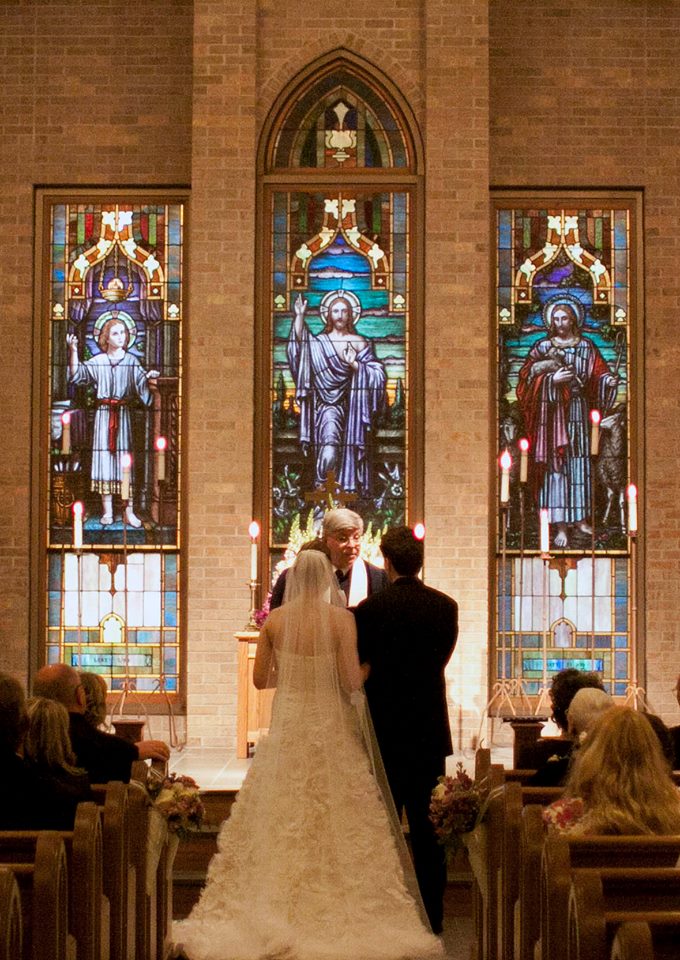
For what it’s worth, I married my wife a year and a half ago in a Methodist Church in Louisiana (picture below). But even if I was all of the things he described, that would have zero bearing on whether my message would still be worth spreading. If you think getting a few replies is trolling, maybe you should calibrate your Troll Meter. What you fail to realize is that Homeschoolers Anonymous, our message, and our contributors do not fit into a simple box with clear-cut labels. So if your only response to our advocacy is that I’m a homo, I’d say get in line with the scores of other people who have tried to dismiss me with name-calling.
Part Nine: I Am Ashamed Of TeenPact, by David Chapman
I have really struggled to write about TeenPact. My history with the organization goes back to 1996, when I first attended a Georgia state class as a student, in only its third year of existence. I continued to serve as a staffer through 1998, working on the early state classes in Alabama, New Mexico, and New Hampshire. Then, after college, the most intense part of my TeenPact history occurred between 2002 and 2004, when I served full-time with the ministry, first as a traveling “Assistant Director” (a position we later renamed “Program Director”), then as Operations Manager—basically second-in-command to the founder/president—at the ministry’s headquarters located in rural northeast Georgia. I had a long relationship with the ministry in its first decade and with many of its most influential early members. Please note: I have had almost no contact with the group in its last ten years and I am certain the ministry has changed drastically since I was involved. From what I see of its website, however, most of the core values have remained.
As a former insider, now ideologically opposed to TeenPact in every way, I thought that I might write scathing exposés about how ministry leaders in my day skirted ethics, exploited underage labor, underpaid their full-time staff, used ministry resources to support local, state, and national politics, and so on. But my many false starts on these topics all felt wrong. I was myself culpable in a few of these. I taught these practices to others. I was an ideologue, the same as all the others in the ministry. Compared to my office mates at TP HQ, I was paid rather obscenely well for a recent college grad with no experience and no particular expertise (I had been a piano performance major).
The truth is this: I am ashamed of my time at TeenPact. I don’t acknowledge it on my resumé. I describe it to my current colleagues as “the time that I worked for the right-wing conspiracy” and then I say little more. I wish I didn’t even have to talk about it, because I wish it had never happened. But strangely I also feel compelled to write about it, especially since my therapist has recommended doing so for my ongoing depression.
When I read others’ stories, I note key differences between their memories and mine. They remember being told their blouses were too busty or their attitudes were somewhat less than obnoxiously enthusiastic. Ministry leaders like me assessed these black sheep as rebellious and obstinate, definitely not TeenPact staff material.
In truth, they simply saw through the B.S. rather more quickly than I did. I was in charge of TeenPact. I told my staffers all these things myself and instructed them to say such things to their students. I was not the first nor the only person to teach these things at the time, but I certainly helped perpetuate them as a ministry leader.
My memories of TeenPact are certainly angry and righteously indignant, as are so many others’, but for me they also involve overwhelming feelings of guilt and shame.
I recently realized that this malaise was the root of my writing block when a familiar name started popping up on Facebook via my new network of Homeschoolers Anonymous friends. I’ll not identify her specifically, but she was one of my interns while I was in charge of ministry operations. It occurred to me that, if she and others like her have ex-TeenPact (XTP?) stories of their own to tell, some probably involve me. Seeing this former intern’s name made me realize how inappropriate it would be to criticize the ministry when, for her and others, I may have been part of the problem.
Perhaps this is not her opinion at all, or perhaps it over-inflates my importance. But I once googled mine and the ministry’s name to see what mildly incriminating evidence might be out there. I found a message board where someone said something like: “ugh, TeenPact… that David Chapman and I did NOT get along.” Thousands of students like this person, as well as hundreds of staffers and dozens of interns, passed through the ministry while I was in charge of it. Many of these became TeenPact zealots (ministry leaders expected no less). Many did not drink the Kool-Aid and some of these might cite my leadership as part of the reason, as this anonymous commenter did.
I fear the day when my work at TeenPact comes back to bite me. Some day, some former student or intern of mine will say something reprehensible in public (Sarah-Palin- or Glenn-Beck-style) and I will have to endure knowing that I contributed to that person’s disgusting ideological education in some way.
Or else someone will write their own exposé and name me as the villain in the story.
For the record, I am thrilled beyond words (proud, even?) whenever I learn that former students and interns of mine have repudiated much of the TeenPact ideology and are forging their own path through adulthood. I am impressed that they are doing so much earlier than I did. In fact, I’m a bit jealous of them. I was still toeing the line for TeenPact into my late twenties.
There are recordings floating around that would truly embarrass me if they resurfaced: speeches, lectures, and sermons I gave while still in thrall to the conservative, evangelical, Republican, nationalist, homeschooling movement. If anyone has those, I beg you to destroy them. You might still like them, but almost everything I said was wrong. I repudiate and disown them. If anyone finds them and is disappointed in me, please understand that they were the work of an immature and stunted thinker. I’ve grown a bit since then.
Also for the record: I am now a liberal, an agnostic, a feminist, the parent of a child in public school (no regrets!), a pessimist, and a humanist. As of May 2013, I can also say that I am a Ph.D. Soon I will be one of those college professors that I was always warned about by homeschoolers, evangelicals, and conservatives like those in TeenPact.
I do want to say more in future posts about why I became disillusioned, about the things I observed during my time in the ministry, about the terrible ideas that I helped to instill in others, and about the ways that TeenPact and organizations like it failed me.
But I was once TeenPact.
I was acting and speaking in the best way I knew how, but I was wrong.
Crosspost: When Fred Butler Thinks Abused Kids Deserve A Beatdown
HA note: The following is reprinted with permission from Julie Anne Smith’s blog Spiritual Sounding Board. It was originally published as “Christian Homeschool Dad Takes on LGBT Former Homeschooler” on June 11, 2013.
“Why is Fred Butler proposing Pastor J.D. Hall do a ‘beatdown’ of a group of kids who are really struggling with life right now and trying to come to grips with some real abuses?”
It’s not always easy growing up in a Christian fundamentalist homeschool environment. I have been seeing an increasing number of homeschool graduates “coming out” in more ways than one. Speaking as a Christian homeschooling mom of over 20 years, we didn’t think about our own kids coming out sexually. That just was not an option that was discussed in our fundamentalist circles. A lifestyle other than heterosexual was not a consideration. Well, it’s happening. Some former homeschool kids (HKs) are in fact coming out. Some are doing it quietly, others are more bold and telling their stories publicly or online. They are experiencing responses from their Christian fundamentalist parents, some not so positive.
Some background for consideration: I am a homeschool graduate, now in college. I identify (right now) as queer and [transgender]. I no longer practice my parents’ religion, but I grew up in a conservative-evangelical Christian community. Certain aspects of that culture have not only made it difficult for me to understand and accept myself, but also deeply harmed my relationship with my parents.
I realize that Christian/homeschooling parents may not be eager to take parenting advice from someone like me, someone who turned out very differently than my own parents expected and hoped I would, but…my parents did their best to give me a Christian education. To raise me to serve Jesus. I became who I am anyway, in spite of their efforts to control my future. I hope that parents in this culture can try hard to listen to the stories my peers are bravely sharing, so they can learn healthier ways to love and parent their kids.
As a Christian homeschooling parent, I understand it would be a challenge to read those words. Out of our brood of seven, three are adult children. We have seen our adult children make mistakes that sometimes make us cringe. This parenting thing is tough. One adult daughter has spoken publicly about leaving her faith and walking away from her conservative Christian upbringing. Does this bother me? You bet it does. It’s difficult to see a child abandon the faith/morals/convictions we as parents tried to instill in our children. Do her choices make us love her any less? Of course not. Is it difficult to maintain a relationship with someone so different from us? Yes, it can be.
How do we bridge that gap? In Theo’s article, he speaks directly to parents. He is attempting to give us insight into what will draw homeschool kids like him to us. Don’t we want our children to be able to have a relationship and connect with us? After our children become adults, that concept is not a given, it is a privilege. I repeat – it is a privilege and a gift to have our adult children be a part of our lives.
Here are a few of the ways Theo mentioned that we can support LGBT adult children:
• Create an environment of approachability.
• When you tell us that you love us “no matter what,’’ prove it.
• Treat other LGBT people in your life with kindness and respect.
• Don’t interpret any point of divergence as a personal attack.
Those ideas seem reasonable, don’t they? Actually, they would line up with Jesus’ basic command for Christians to love. This seems almost too basic. Parents should be able to handle these suggestions, shouldn’t we?
Well, sadly, this is not so obvious or important to others. I was disappointed to read an article written by a homeschooling father who did not have kind words to say about Theo’s ideas. This article comes from Fred Butler. Butler’s Hip and Thigh blog is rated #244 in Jared Moore’s yearly top 250 Christian blogs. Here is Fred Butler’s bio:
My name is Butler. I’m a graduate of Arkansas State University and The Master’s Seminary. I currently live in the LA area and work at Grace to You, the radio ministry of John MacArthur, where I have the honor of coordinating and directing the volunteer ministries. My wife and I have five kids and we are all actively involved at Grace Community Church.
I began this blog in 2005 to have an outlet for my opinions both theological and secular. I don’t have any particular emphasis with my blog except for promoting a high view of God, the authority of Scripture, and a biblically grounded worldview.
I have another website called Fred’s Bible Talk where you can listen to some of my devotional teaching I give to my volunteers and I have a secondary blog called Biblical Premillennialism.
If you must get a hold of me my personal email isfivepointer (@) gmail (dot) com.
Butler begins his article by saying he is responding to Theo’s article. When reading the following quoted paragraph, try to pretend you are Theo, an LGBT former homeschool kid who was raised in a fundamentalist Christian environment. Tell me if you’re feeling the love from this Bible teacher and homeschooling parent. Butler describes Theo’s article:
It’s one of those cathartic rants dripping with emotion that complains about how “my life has been ruined because I was homeschooled by crazy Fundamentalist parents.” The Homeschool Apostates, I mean, Anonymous blog also cross-posted it at their place. I thought I would use it as a spring board to offer a rebuttal and response to the author.
and then this:
Look it. We all understand that you were raised in a wacky, Fundamentalist atmosphere. You’re ashamed and embarrassed about your past. Now that you have freed yourself from the shackles of your Fundy upbringing, you believe you have ascended to a fuller life. We get it, okay.
Apparently in an attempt to build a bridge between himself and the LGBT author, Butler then gives his religious background from childhood to adulthood, saying he started off in the United Methodist church and then in high school, moved to Arkansas where he attended a Baptist church. All niceties come to an abrupt stop there.
Here is the new tone:
You seriously need to keep in mind that your so-called new found “faith journey” is just as warped and twisted as your parents[sic] Fundamentalism.
If I may, let me offer seven truths I think you need to seriously ponder. I warn you now that they will sting; but you need to read them.
Butler condescendingly shares with Theo seven truths of his own. Here is a quick sampling:
• Consider the fact that you may be wrong – fatally so.
• If you are actively involved with a “faith community” now, you are blindly being led to the destruction of your soul.
• Treat the Evangelical Christians in your life with mutual love and respect.
• Don’t interpret any pointed criticism as an ignorant, bigoted attack against you.
You get the idea of the tone. Did he say treat Christians with love and respect? Ok. Just checking. Here’s more love and respect from Mr. Butler. Oh wait, I forgot, Butler wasn’t talking about himself loving and respecting, but the LGBT kid.
You believe your shunning of your parents and their ways is sophisticated, so if they shun you in return, then the feeling is mutual.
Maybe Butler doesn’t realize that many of these fundamental homeschool parents actually shunned their adults children long before their kids shunned them. How do I know? I have read their stories online.
It is nothing new for adult children in their late teens and early twenties to separate from their parents physically, emotionally, and spiritually, and begin to question how they were raised, what they believe, and question what the future holds for them. But I question the heart and attitude displayed by Butler, a current homeschooling father. By the tone reflected in the article, it does not appear that Butler is really trying to build any relationship or reach anyone’s heart. His attitude would probably push any homeschool kid further away. We’ll know more in a few years, if/when perhaps some of Mr. Butler’s grown children eventually distance themselves from their dad.
But that doesn’t seem to matter to Butler. As long as the truth is told, that’s love, right? Butler forgets that these adult kids already know the truth. They have the scripts memorized. Remember, their parents taught them the way in which they should go spiritually. This is nothing new to them. They have all the verses still memorized from childhood. The old scripts aren’t going to work for them anymore.
But then again — is Mr. Butler really interested in souls after all? Maybe that list of seven truths is just all talk. Why, you ask?
In the first tweet at the top, there is the hyperlink to a website (bit.ly/109CVyu) that Butler refers to as asking for a “beatdown.” The link takes you to a blog called Homeschoolers Anonymous — a blog community interested in “sharing our experiences growing up in the conservative, Christian homeschooling subculture.”
If you spend some time reading some of the former homeschool kids’ stories there, you will probably read some heart-wrenching personal accounts of abuse and neglect by Christian homeschool parents. Many of the stories are not pretty. Up until now, there was no specific gathering place for former HKs to share their experiences, so this may be the first time HKs have come to realize they are not alone in their challenging and sometimes painful upbringing. Connecting with other with shared backgrounds can begin the process of healing for some. This community is an attempt to do just that.
So what do you suppose this tweet means? Why is Butler proposing that PulpitAndPen aka Pastor J.D. Hall do a “beatdown” of a group of kids who are really struggling with life right now (some even having attempted suicide) and trying to come to grips with some real abuses? You tell me, but it sure doesn’t sound appropriate for a Bible teacher and popular Christian blogger to treat hurting people in such a manner. I really can’t picture Christ behaving in such a way. I just cannot.
I’ve come to the conclusion that those seven truths may have some element of truth in them, but I seriously question the heart behind the entire article. Yes, Mr. Butler, what you did was a “snarky beatdown,” and this homeschool mom is calling it as she sees it: R.U.D.E.
Children’s Rights and Homeschooling: Patrick Farenga’s Thoughts
One of the reasons John Holt, a secular founder of the homeschooling movement, decided to fully support homeschooling was his hope that parents would be more likely to work patiently and differently with their children at home than teachers in school can, and would therefore learn from the children what is and isn’t working. Holt’s ideas about homeschooling are probably very different from what many members of Homeschoolers Anonymous experienced: Holt didn’t want to bring the techniques and concepts of school—which he showed in his books weren’t working in school anyway—into the home. “Don’t turn your home into a miniature school,” Holt advised in 1981 when he wrote his only book about homeschooling, Teach Your Own.
After years of working in schools Holt was appalled at the gross incivility, mindless activities, and outright meanness inflicted upon children in the name of education. One of the ways he imagined that things could be improved for children was to promote children’s rights, since his own efforts made him realize the futility of trying to make meaningful change within the school system (which is still reforming itself 32 years since Teach Your Own appeared). Holt wrote a book that describes how and why giving children rights makes practical sense: Escape From Childhood: The Needs and Rights of Children (1974; reprinted 2013). It was controversial when it was published, causing both liberals and conservatives to condemn Holt’s ideas that children should be allowed to do pretty much what any adult may legally do.
Up until 2012, 9 out of 10 of Holt’s books were still in print. Escape From Childhood is the only one of Holt’s books that I have never been able to interest another publisher in; all editions of the book have been published by HoltGWS since the original publisher let it go out of print. Clearly, this is not a topic mainstream people want to engage with but, as I’ve learned over the years, it is vitally important if we want to find other ways to help children and their families get out of bad situations besides creating more layers of child protective service agencies.
Many of the ideas Holt puts forth in Escape are to prevent tyrannies at home and in society, and they are based on our Bill of Rights, thereby grounding all people to the same rights and responsibilities. However, Holt adds a new dimension to the concept of rights to account for children’s inexperience and their need to learn from the choices they make over time. Rather than just give children the rights of citizenship all at once beause they have turned 18, Holt offers a framework where children are able to move in and out of the “walled garden of childhood” as they feel ready and able to, so they can test the waters of responsibility and swim, or decide to wait for another day if the responsibility is too heavy on them now. Holt felt the best way to get good at making choices is to make a lot of genuine choices and determine what worked best for you. Right now our society denies young people responsible choices, while expecting them to assume this same responsibility at an arbitrarily determined age. This is the essence of Holt’s argument, though I urge you to read his book and learn about the history of childhood and all the nuances about rights, children, families, and primary and secondary guardians that Holt presents.
The issue of children’s rights is large, but I want to focus specifically on child abuse and homeschooling. Holt deals with abuse from several angles in the book, including the adult points of view. For example, he discusses the burden of having children and how the authority of the old is diminishing, but Holt presses the case for why adults need to relinquish some of their authority in order to provide children the opportunity to grow independently.
. . . to expand protection against abuses of authority without diminishing authority, is impossible, a contradiction in terms. There can be no adequate protection against the abuse of authority, of parents or the state, except to give the victim the right to escape it.
The authority that Time has in mind when it talks about the “psychic benefits of parental authority” is not natural authority but only the power to compel, threaten, punish, and hurt. The fact is that children can be and are regularly punished, by parents and the law, for any of the reasons, and the same reasons for which slaves used to be punished—for talking back, for “disrespect,” for disobedience, for being at large without permission, for running away—in short, for doing anything that might imply that they think they have any freedom or rights at all. (p. 153)
Escape From Childhood is full of examples of how children, from the mentally challenged to compliant overachievers, are often hurt or neglected by adults who, “for their own good” force them to do things the children would rather not do, so I won’t labor the point here. However, it is important to note that Holt wrote this in 1974, not knowing anything about homeschooling as we know it; he saw all children in society as being mistreated. Holt was willing to take the chance that by supporting homeschooling some children will be raised by parents whose views of children and education are radically different from the self-actualizing vision of learning Holt supports. Holt hoped that most homeschooling parents would not be so obedient to the demands of modern educational theory or religious dogma and would instead learn directly from their children what was and wasn’t working for them, and make adjustments accordingly.
Unfortunately, many adults seem willing to sacrifice their relationship with their children upon the altar of education and dogma, so I’m not surprised that now, as adults, children whose lives were insecure and violent at home now want to sacrifice homeschooling upon the altar of education and dogma. However, I urge you to take a step back and reconsider strategy and tactics.
It is easy for me to imagine Homeschoolers Anonymous becoming a typical political group, uniting anti-homeschooling forces under the banner of regulating homeschooling to protect homeschooled children from abuse. This will certainly result in an increase of professional educators’ and government reach into people’s homes, which will lead to the exact opposite of what Holt advised: our homes will become miniature schools run by the state. Your anger at being physically and emotionally abused as children, and then, as adults, being outcast by the homeschooling community for publicly noting your suffering and wishing to ameliorate it for a new generation of homeschooled children, is perfectly understandable. However, homeschooling does not cause child abuse. Being a tight-knit or loose-knit family doesn’t cause child abuse; child abuse occurs in public and private schools, churches, sports, the entertainment field, in all professions. It is a problem that is much bigger than homeschooling and we should treat it as such.
I urge Homeschoolers Anonymous to recognize the fluid nature of homeschooling regulations and laws in the United States and how many of the court decisions that allow alternatives to compulsory attendance in public schools are based on religious exemptions that are tied to preserving traditional ways of life (Amish, Mennonite, and so on). It is unlikely at this time in our history that the courts are going to rule against religious freedoms. Further, many adults in the United States appear to support corporal punishment—paddling is explicitly allowed in public schools in 19 states—and its widespread, though no less punishing, variant: time outs in closets, padded rooms, and so on. It also needs to be noted that invasive practices such as electro-shock therapy for “difficult” children are permitted in many private institutions in states that otherwise ban corporal punishment in public facilities, so the situation is not easily solved by changing existing laws.
Rather than battle homeschooling regulations head on, with the real danger of creating more regulations for secular homeschoolers and strengthening the religious exemptions that permit families to prevent their daughters from aspiring to high school or college and keep their sons in line with stern obedience to authority, Homeschoolers Anonymous can build on the do-it-yourself model that homeschooling embodies. The prospect of increased scrutiny by outsiders keeps many abusive situations from being publicly acknowledged, and homeschooling is no exception. However, I think Homeschoolers Anonymous is correct to sound the alarm now so we can create awareness and solutions about this difficult issue that is different than what we’ve seen to date from other institutions. Like the leaders in the Vatican, the BBC, Penn State, and numerous other institutions, homeschooling’s leaders can easily fall prey to the means (ignore or cover up the abuse) justifying the ends (the institution continues to flourish despite the ongoing abuse, which the institution says it is handling in its own mysterious way). Like you, I refuse to see homeschooling freedoms preserved upon the broken bones and dashed hopes of children, and I hope we can get others to agree to offer help and enforce existing abuse laws rather than accept the status quo as the only way to preserve homeschooling freedoms.
Child abuse is a major, ugly issue that is difficult to discuss, especially among homeschoolers who are fearful of government intrusions into their lives. We tend to dismiss child abuse in homeschooling circles because most of “us” are “good people” or “good Christians.” But the reality is there is some child abuse going on in homeschooling, just as it goes on in schools and homes all around the world. To have the courage, as Homeschoolers Anonymous does, to stand up and call out an injustice being done to an unrepresented minority, children, is an important first step. Showing how this injustice is perpetuated in practice can help parents and children see that their situation is not normal and they are stuck in a bad homeschooling situation. Homeschoolers Anonymous can then provide support for dialog within their family, healing, or escape routes, among other options. It is important to let children and spouses know they are not alone and that others have navigated this path. The Underground Railroad was built and functioning for many years before the Emancipation Proclamation was made law, and I think we need to remember that.
Building the moral and legal case for children’s rights should not be a single, high-stakes courtroom battle focused on homeschooling, but a tactical approach focused on helping children and spouses find ways to get out of abusive situations and a strategic one of uniting with other groups that seek to end corporal punishment—not homeschooling—for children in society. We have a long tradition at HoltGWS of being against corporal punishment (scroll to the bottom of the page) and the list includes a Christian homeschooling group opposed to hitting children (Parenting in Jesus’ Footsteps).
I thank Homeschoolers Anonymous for the opportunity to express some of my views on children’s rights and homeschooling. There is so much more to say; I’ve only just scratched the surface with these remarks. However, I look forward to seeing the creative and powerful solutions you will make regarding children’s rights based on your collective experiences.
Escape From Childhood will be also available as a printed book from Amazon as of June 1, 2013.
About the author:
Patrick Farenga.
Patrick Farenga started work with John Holt in 1981 and published Growing Without Schooling magazine and numerous other publications related to homeschooling, unschooling, and learning outside of school from Holt’s death in 1985 until 2001. Farenga and his wife homeschooled their three daughters, who are now adults. He continues to keep Holt’s ideas alive by writing, speaking, and publishing through HoltGWS LLC and www.JohnHoltGWS.com.
The following post by Shadowspring was originally published on her blog Love. Liberty. Learning. She describes herself on her blog as, “a home school mom near the end of my career home schooling and looking forward to what life has to offer next. I am a follower of Jesus and a lover of freedom, as it is for freedom that Christ has set me free (Gal 5:1).” This post is reprinted with her permission.
I am so proud of all the home school graduates I have met!
Without exception, they are all strong-willed, courageous people who are finding their own authentic way in life. I think that no matter the quality of one’s educational experience, or the degree of emotional nurture vs. emotional neglect or abuse even, home schooling in itself transmits these qualities by its very nature. To home school is to go against the flow of larger society, and children who are home schooled constantly hear that decision praised. Even the religious home schools (maybe especially the religious home schools?) are continually hearing that going against what is easy and popular when conscience calls you to do so is a good thing, the right thing, the best thing.
So it is no surprise then, that these home school graduates have a strong sense of responsibility to improve the lot of those who come after them.Homeschoolers Anonymous is a web site dedicated to sharing the stories of home school graduates that will not be featured at home school conventions or plastered on the cover of Practical Homeschooling magazine. (These stories need to be heard, too!) It was created by home school graduates, to help improve the lives of home schooled children who come after them. Their goal is to improve things by the shining the light on areas that need improvement. All of the stories shared there are authentic, written by home school graduates themselves. These stories need to be told, and the home school community needs to listen and learn.
New home school parents especially, be wise! Take notice! Don’t just listen to the home school salespeople trying to get you to be just like them. Do not be foolish, only listening to those whose children are still at home. They have the option of still believing they are doing everything right and because of that, they can predict how life will turn out for their children. Those whose children are already grown adults, that’s who you should be seeking out for advice.
You are in a much better position than earlier home school parents, because you have the opportunity to inspect the fruits of the labors of home school parents who came before you. Make the most of that opportunity! As scripture counsels (Proverbs 18:17, Luke 14:28-33), get all sides of a story before you decide. Really investigate what you are trying to accomplish. Check out what has already been done by other people so you can figure out what you want to do differently and what you want to emulate.
I realize this will be difficult, for many reasons. One is that when a family experiences “failure” — any result that is outside the advertised shiny, bright, happily subservient, doctrinally and sexually pure teenager — that family will disappear from most home school support groups. Sometimes they are kicked out, but more often they drop out. These parents may feel ashamed that the product of their home school didn’t turn out as advertised. They may be asked to leave, especially if the results they are experiencing don’t conform to the religious side of expectations. A poorly educated but morally upright teen/young adult is not nearly so embarrassing to many home school support groups as a teen/young adult who is seen as morally compromised.
On the other hand, they may leave the support group because of disillusionment. When their marriage is falling apart, their teenager turns up pregnant, or is caught doing drugs, shoplifting, looking at porn, etc. then they may wake up to the fact that they have bought into and been promoting a lie and want no part in it anymore. Or they may be compelled to put their children in public school because of any number of reasons — a severely ill parent, financial constraints that require the home schooling parent to work — and so leave the home school support group. All home school support groups require that a family be home schooling to belong, so any family that stops home schooling for any reason will not be at support group meetings sharing their stories. You will have to search them out.
And the final reason that talking to home school graduates, and parents who have graduated all their students, to see where life takes them, is the passage of time. You won’t hear about gay home schooled Christian teens because they don’t come out to their parents until years have passed since leaving home. You won’t hear about atheist home schooled graduate of Christian home schools because they don’t leave the faith for years after leaving home. In fact, you won’t hear about any of the graduates who go off script after leaving home unless their dong so actually involves criminal activity that splashes across the headlines, like the Couty Alexander story in Louisiana.
A summary of the Couty Alexander story: A home school boy dutifully marries the courtship bride his and her parents decided upon. His wife gets pregnant right away because they follow the script and don’t use birth control. Coudy goes to work, and interacts with people outside of the home school movement for the first time. He falls in love with a co-worker, quite unexpectedly I am sure. He has never experienced such strong attractions before, as he was assigned his wife and wasn’t allowed to even date. He and the co-worker begin a romance. And somehow, truth always outs. His young bride finds out about the affair. Maybe he even told her himself, I don’t know. As she is packing to leave him, the weight of the shame that will fall on him from his community overwhelms him, and in a panic, he kills his young bride. That is a direct result of the Christian home school fantasy and the expectations he felt to fulfill them as a star of the movement. He was never allowed to just be Couty, and figure out who he was at heart and what he wanted. His life was dedicated to doing what his parents wanted, because somewhere along the line the Christian home school community became confident that what they wanted, God wanted. It ended in heartache.
All of the Christian home schooled youth want to please God. Those whose parents and churches claim to speak for God the most adamantly are the ones whose children are at most risk of leaving the faith eventually. You can not control their environments forever, and eventually they will start to run into the mysteries of life and find the pat answers they were taught are insufficient. You will read many stories along this vein at Homeschoolers Anonymous but you won’t hear them at your home school support group. They won’t be brought up onto the platform at home school conventions (though some were paraded there back when they were still teens at home) to tell their story today. They will not be featured in home school magazines.
All of which is a real shame. The inquiry for truth seems to have been abandoned by the home school movement’s leadership. They believe they know all truth, and so they just dismiss and ignore all reality that exposes their “truth” as a lie. Instead of being smart enough to listen to the adult children, children raised by all the standards and methods the movement promoted, leadership is just doubling down on the standards and methods that have failed. They turn deaf ears to anything that doesn’t support what they want to believe. That isn’t right. Home schooled children deserve better!
Finally, the absolute worst stories out there, the ones we as home schoolers want to ignore and should not, are the stories of child abuse. Sexual abuse, physical abuse, emotional abuse, spiritual abuse is happening in the home school community, and the home school community had best address it! It’s no use trying to explain it away with the True Scotsman defense. Our adult home schooled graduates are well versed in the dynamics of logic and debate. No, it’s happening. It happened under our watch, under my watch. So, what are good home school parents going to do about it?
HSLDA’s response to these stories of neglect and abuse? Silence. Denial of being in any way responsible for these children. Not shock, not horror, not remorse. Instead of leading the charge to put distance between nurturing home schooling families and abusive home schooling families, something that can only happen with transparency and accountability, HSLDA is trying to make it easier for abusive parents to home school. Witness this recent attempt to remove all transparency and accountability from the home school law in Iowa. The current regulations are not burdensome and they are working well.Why would HSLDA be working to remove all accountability and transparency from Iowa home school regulations?
That’s a question every home schooling parent, every home school support group leader, every home school support group member, should be asking themselves. I know I never had anything to hide, and was in fact proud of the education and the home environment I was providing. If you, home schooling parent, can’t say the same, you shouldn’t be home schooling. You should make sure your children receive lots of love, good nutrition, emotional nurture and educational opportunity every day. If you are doing that, and I believe most home schooling parents are doing just that, then you should be open and transparent to the community in which you live about what goes on behind your closed door.
Live such good lives among the pagans that, though they accuse you of doing wrong, they may see your good deeds and glorify God on the day he visits us. ~ 1 Peter 2:12
The public needs to be able to see your good deeds. Being transparent and accountable honors God. Don’t seek to hide in the darkness of obscurity, be eager to show the world the wonderful work that your home school in accomplishing! Do it for the children, because Jesus calls us to love children (all children, not just our own) and treat them with dignity and care. Read carefully Matthew 18:1-9.
It’s time for the home schooling community to cut out and cast away families that abuse their children!The only way to do it is to come out in the open and show the world what’s happening in all our home schools. The righteous will be rewarded, the wicked will be found out, and all of society will be better off for it.
Lead the way, home schooled graduates! Lead the way, new home school parents! Don’t let the old guard lock you into making the same mistakes they (we) made. Do it not only for your children, but for all children. Heads up! You are the new face of home schooling. Please let it be an open and honest face, publicly displayed, that has nothing to hide and much about which to proudly smile.
I Feel Like I’m Getting Crap From Both Ends: Amy Mitchell’s Thoughts
HA note: The following post by Amy Mitchell was originally published on April 25, 2013 as “About that homeschooling thing” on her blog Unchained Faith. She describes herself on her blog as a “family woman, feminist, LGBT ally, reader, writer, and nerd. Progressive Christian skewering church and culture one blog post at a time.” This post is reprinted with her permission.
“The fact that a web site like Homeschoolers Anonymous even exists–out of necessity–cuts me deeply.”
I don’t talk about homeschooling very often. Part of the reason is my kids–I prefer not to discuss them without their permission. Since homeschooling is, by nature, about my daughter, I tend not to write much. When something general comes up, however, I find myself wanting to respond.
The latest is a series of posts written by former homescholars. I don’t begrudge them needing their space to talk about the frightening world from which they came; I believe safe space is vital. My problem is not with Homeschoolers Anonymous, or even with some of what they’ve written. My problem is with the response it has generated.
Before I begin, let me go on the record saying that as a homeschooling parent, I do not feel like an oppressed minority. I may be in the actual minority, but that doesn’t make me oppressed. We love our school district (our son is a public school student, and our daughter will likely be one eventually). We have a great working relationship with them. We’ve borrowed materials, including text books, and the teachers are always more than willing to give us suggestions. Later this morning, I will be dropping off my daughter’s third quarter report and staying a few minutes to chat with the security guard who accepts it for transit to the office. I can’t stress enough how much we appreciate what they’ve done for us. Keeping that relationship good is what enables us to enjoy homeschooling our daughter.
That said, it makes me angry when I feel like I’m getting crap from both ends. Many of my fellow homeschooling parents have been critical of the fact that we are working so closely with the district–they believe we’ve somehow given up our “rights.” Others find it distasteful that we don’t use a specific, prepackaged curriculum. A few even turn up their noses at our lack of “faith-based” instruction. And among those who don’t care about any of those things, we’ve taken heat for not living a more “organic” lifestyle to go along with our homeschooling. It hurts, but as a result, we’ve never found a homeschool group that felt like home. We’ve stuck with individual friendships (I’m so beyond blessed that one of my best friends also homeschools her daughter) and have enrolled our daughter in other activities. She’s a Girl Scout, takes two dance classes, and participates in other activities as we find time.
On the flip side, there are the Angry Ex-Homescholars. Again, I don’t want to take away from their very real pain. But comments about how people can “spot a homeschooled kid a mile away” and rants about how it’s “damaging” to the kids make me unbelievably angry. What makes me angry is not so much that people think those things but that a certain subset of the population has given them reason to think them.
When I hear about the way the Homeschool Legal Defense Association (the legal activists) have put pressure on families to refuse to comply with social workers or the way that some parents have used homeschooling as a tool of abuse, I want to scream. I want to cry when I hear from adults who were homeschooled that they never learned proper math or that their parents, for religious reasons, refused to teach them about human sexuality. I want to punch something when I see some of the crap that passes for science in “Christian” homeschool materials. The fact that a web site like Homeschoolers Anonymous even exists–out of necessity–cuts me deeply.
When we began our journey more than five years ago, we had a purpose in mind. Our son, who came out of the womb with the energy of a lightning storm, was reading at a third grade level at age four and a half. The combination, we knew, would be lethal in a classroom. The original plan was to keep him home until middle school. When first grade rolled around, we had already discovered that he didn’t fit in well with other homeschooled kids (he was bullied, believe it or not, for being a dancer). As a family, we’re pretty different from most. On top of that, he needed to be around other people almost constantly–he’s the definition of an extrovert. So we sent him off to a great public school, where he has continued to thrive.
We offer our daughter the option every year. So far, she has chosen to remain at home. I have maintained my drive to ensure that she develops high-level skill in reading and math (so far, so good) and that she finds ways to pursue her passions. I refuse to use Christian materials, because they are long on religion and short on actual science. I have a girl who is interested in keeping our natural world and our animal friends safe–if I want to draw her back to her faith, what better way to do it than to help her understand that God made all these beautiful things? We don’t need Bob Jones or A Bekka to help us do that.
We can’t afford private school full-time, and the only schools offering a la carte classes are the Christian schools–which for us is a big no. I won’t allow my daughter to be taught science by a teacher who denies evolution, believes in a literal 6-day creation, and insists that humans and dinosaurs must have co-existed. So if my daughter decides to stay home longer than middle school, we will be searching for ways to supplement what I can do so that she isn’t behind in any way come graduation.
There are several things I need people to understand about homeschooling:
1. We are not all families that believe a woman’s place is barefoot and pregnant. 2. We are not all like the HSLDA folks. 3. Not all of us weave religion into every aspect of our day. 4. Many of us want our kids–especially our girls, who may or may not experience this even in public school–to study math and science. 5. Our children are not all easily recognizable as homeschooled kids. People are constantly surprised to learn that my daughter is homeschooled. I guess they don’t expect her to be socially or academically competent, or perhaps they think she doesn’t fit their stereotype of “weird.” 6. Not all of us think education is one size fits all. Being a half-n-half family works well for us; it’s different for other families. 7. When anti-homeschooling people and HSLDA members alike fight over this, it hurts everyone. Many of us don’t want to be civilian casualties in your war; please don’t use us as pawns.
I write often on my blog about how we need to get to know the people we are judging. Please don’t make assumptions about me or my family without knowing us. When you make sweeping statements about what homeschooling families are like (or about what public schooling families are like), you are causing pain to those who don’t share that view. Work to make it safer for all kids; work to get legislation in place so that abuse can’t be covered (including among public- and private-schooled kids). But don’t do it by saying nasty things about what you think we’re up to in our household. Chances are, you will be wrong.
A Call for Contributions to HA’s Upcoming Self-Injury Awareness Series
By R.L. Stollar, HA Community Coordinator
*****
Update, 06/04/2013: We will be starting this series on Monday, June 10. So if you are interested in contributing, please try to get your submissions to us by Saturday, June 8. The series will be running for all of the following week, so that’s not a “it must be in by then or you can’t contribute” deadline. Just send us an email and let us know if you need more time beyond Saturday.
*****
I vividly remember the day when cutting struck close to home.
The year was 2004. I was a junior in college, and visiting a friend at Point Loma Nazarene University in San Diego, California. I remember the evening when he started telling me who among the debate clubs we coached cut themselves. Actually, I should rephrase that: he did not tell me who; rather, he gave me the list. Because there was a list. There were that many.
I remember what I was eating. Because I was eating In N Out. Living in Oregon where In N Outs do not exist, I looked forward to eating it as much as possible while in San Diego.
I remember what I was eating because I instantly lost my appetite. My stomach clenched into a knot of pain. I would describe that pain as dull chainsaws hacking at my insides.
My stomach clenched not only into a knot of pain, but a knot of fury.
I could not articulate to anyone at that time why the pain mingled with fury.
But I can tell you now: I was furious that we had grown up, and were growing up, in a culture that tried so hard to be perfect but failed miserably and could not admit its failures. I was furious that homeschooling was paraded around as this children-first movement when in fact children were so often subjugated to the ideologies of their parents, to the point that children’s needs were being ignored. I was furious that these children did not feel safe enough to express their needs to their parents. I was furious that I knew I could do nothing — that I was powerless to help.
I cannot think about homeschooling without thinking about self-injury. I know they are not inherently related, but they are psychologically related in my own mind because of my personal experiences. I think about my friends who cut themselves because they had no other outlet to express their pain; I think about my friends who drank themselves into stupors, or overdosed, because the pain was overwhelming; I think about my ex-girlfriend, who would regularly lock herself in the bathroom to bang her head repeatedly against the wall or access her razors while I would beg her to please come out, that I would do anything I could to help — but again, I was rendered helpless.
I know there are many stories out there, many more than the ones I know. I know from my relationships with my friends how difficult it can be to struggle with self-injury, and how hard it is to overcome. But I also know that it can be done. I have seen people find strength to overcome and find healing for their pain.
This is honestly one of the most important subjects for me, personally, to bring awareness to. So I would like to do a self-injury awareness series at HA.This series would welcome contributions on any form of self-injury/abuse awareness. I know this can be a very difficult subject to talk about, but I am hoping that, in talking about it, we can shed light on this issue and maybe bring hope and healing for other homeschoolers.
If you are interested in contributing, here are some ideas for what you could write about:
1) Your personal story of struggling with self-injury
2) Your personal story of being a friend to someone struggling
3) Your thoughts on the relationship between your homeschooling experience and self-injury
4) Your advice, as someone who personally struggled with self-injury, to other homeschool kids who are currently struggling
5) Your advice, as a parent to a kid who personally struggled with self-injury, to other parents who have a kid currently struggling
You do not have to pick just one topic. You could combine several of these ideas, or bring your own ideas to the table, or — if you have a lot to say — contribute several pieces on a variety of these topics. There is no deadline as of yet. We are just putting out feelers to see if people would like to be a part of this and share their stories. At some point soon we will come up with a concrete deadline.
As always, you can contribute anonymously or publicly.
When I first sat down to write this piece, I had never really asked myself what role I thought that homeschooling played in my life with regard to my sexuality. I knew what role I felt Christianity has played, but in my experience homeschooling isn’t synonymous with Christianity of any type, even conservative fundamentalism. And as I have created a virtual pile of crumpled up attempts to put my thoughts into words, I’ve been confronted over and over again with the fact that my homeschooling experience is, just like everyone else’s on this site, unique to me.
In our family, homeschooling was a way of structuring our studies; the overall way we were brought up had more to do with our faith than with our choice in educational styles. I know that if we hadn’t homeschooled, we probably would have been at church almost as often, I would have been just as introverted and nerdy, and many of my issues with faith and sexuality still would have manifest themselves in my life.
In other words, I realized that I can’t blame “homeschooling” or even “the homeschooling movement” for the majority of my struggle in coming to accept and love the person that I am. What I can (and want to) do is explore the ways that my experience as a homeschooler accentuated that struggle. In the end, I hope that this piece will outline some of the challenges homeschooling brings for people like me that identify as lesbian, gay, bisexual, or trans*. (* Why the asterick?)
I didn’t know what “homosexual” meant until I hit puberty around age 13. But once I was informed of its meaning, I distinctly remember a thought crossing my mind: “That’s what I am.” At the time I didn’t fully comprehend the implications of that realization, but I knew that it wasn’t a good thing.
In many ways, I grew up a stereotypical “gay boy,” interested in cooking and reading and playing house with all of the girls in the neighborhood. I studied ballet and loved theatre and choir. I designed my dream house in my head and loved interior decorating shows like Trading Spaces. I played with dolls and stuffed animals. All of the “signs” were there, but really the only thing that mattered is that I never once looked at one of my female friends and developed a sudden case of the butterflies. Instead, I crushed on the boys at Scout meetings or youth group or children’s choir.
To their eternal credit, my parents never stifled my creativity or my passions. I remember several lectures about my limp wrists and walking like a man (no hip-swaying), but those were more about external appearances and protecting me from the comments that they heard far more than I did. And despite having a father who was in the military, I was never subjected to parental chats about “manliness,” because my parents were far more concerned with my character than any external trappings.
But from the moment I learned what “homosexual” meant, I knew that I would never truly be the person they wanted me to be, because I knew that I was inherently flawed. And as is often the case with things like this, once I knew what the word meant, I began noticing it everywhere. But in the conservative Christian circles (including homeschooling support groups) I was a part of, it was rarely something I heard in its entirety. Instead, it was like something just out of the corner of my eye, a fleeting shadow in the midst of a conversation. It was that-sin-which-must-not-be-named.
Even though nobody wanted to be the one to say it, it came up over and over in conversation, often in the form of discussions about “manliness” and masculinity. What was and wasn’t appropriate for men to do, how men should dress, how men should behave. I was once asked, in high school, to have a discussion with two younger boys about their “effeminate behavior” and remind them that it was how “the homosexuals” behave. And it was in moments like that, when the shadowy topic stepped squarely into my field of vision, that the fear was the strongest.
I often equate growing up gay to growing up in a warzone, where bombs fall all around you day after day after day. Eventually the abject terror you feel when one lands nearby fades into a constant clenching in your stomach that you don’t even realize, because while you can’t entirely relax, you can’t afford to run at full alert at all times. I saw and heard so many gay people attacked and condemned by the people I grew up with that my stomach was perpetually clenched, terrified that their rhetoric and doctrine would be used to attack me if they ever found out.
I did everything I could to try and “fix” myself, including looking into electroshock therapy, though thankfully I had to have a parent’s consent and there was no way I wanted to tell my parents. Eventually, after a failed attempt to turn myself straight by dating my then-best-friend (a woman) in college, I reached the end of my rope.
I fell into a deep depression, was suicidal on multiple occasions, and through it all was desperately trying to reconcile my faith (and thus the large majority of my friends and family) with my sexuality. Eventually, through the grace of God and the support of my parents, I came out of the closet. It was not a firm step; it was more of a feeble stumble. But it was a freeing experience, and one that was filled with a peace and understanding that I have come to know as the peace of God.
Since then, my faith has become stronger, but my human relationships have drastically changed. Many of the people I knew when I was growing up are people that I voluntarily disconnected from when I came out, terrified of how they would react. After all, I knew people who verbally and publicly advocated the death penalty for people who identified as gay. And I stopped teaching in the homeschooling community (I was a debate coach), because I was scared that the incorrect but prevalent rhetoric I heard so often in that specific community linking child molesters to homosexuality would be used to try and accuse me of hurting the students I worked with. Thankfully in the time since, I have found people, both former homeschoolers and non, to support me in my faith and my sexuality
So which pieces of my struggle are related to growing up in a conservative Christian environment and which are related to being homeschooled? This distinction is important to me because, again, the form of academic education I received was, in many ways separate from the spiritual education I received, and I think that many of my struggles would have taken place even if I had been public schooled. But there are some differences.
1. Homeschooling allowed for a more insulated environment. While my faith and my academic structure were separate, the support groups and social activities we engaged in as a family were almost exclusively groups that were conservative Christians and homeschoolers. While there is always the potential for cliques in public or private school environments, you are exposed to a wider array of students and of teachers, simply because of the sheer numbers. As a homeschooler, I interacted with the same group a lot and had fewer opportunities to meet and interact with different people.
2. Homeschooling’s smaller social circles meant that word traveled fast. While this is true in any contained environment, the lack of anonymity that might be possible in a larger educational environment mean that it was much harder to justify having conversations about topics that made people uncomfortable, such as sex and sexuality. For this reason, any and all sexual topics were taboo and “dirty.” This created a significantly sex-negative environment that still has repercussions for me today.
3. Homeschooling’s all-encompassing nature gives little reprieve. While my parents always endeavored to teach us to think first and foremost, the constant presence of both family and other homeschoolers meant that you had little time away from those influences. This was positive in some ways, but as a result could leave you with little opportunity to process and deal with issues related to those people you were around for so many hours of the day. This is, perhaps, one of the greatest drawbacks I see to homeschooling, and the precise reason that so many parents I knew chose to homeschool: tight, constant control over their children’s lives and educational experiences.
4. The homeschooling environment was so repressed in so many ways that my “eccentricities” often went unremarked on by many of the people I interacted with. Perhaps my parents received more concerned comments, but the contained environment in which I grew up in many ways explicitly rewarded my “sensitive” nature while implicitly criticizing my “manhood” and “manliness.”
Many of the other parts of homeschooling that I might connect to my struggle to reconcile my faith and my sexuality are, in my opinion, more strongly linked to conservative Christianity, so I’ve left them out for now.
In the end, would not being homeschooled have made my coming out easier? I don’t know. In some ways, I think so, in that I would not have felt so insulated and tied to a relatively small number of people who collectively made it known that my sexual orientation was unacceptable. My parents have been so incredibly supportive and loving during my coming out process, but I sometimes struggle to differentiate between the things they specifically taught me at home and what the homeschooling community as a whole contributed to my development.
This is why I am so grateful for efforts like H.A. The isolation and insulation created by homeschooling is so powerful that it can be dangerously enticing to parents who hope that their children will live in a certain way. If the potential for that isolation is not balanced in some way, either from inside or outside of that community, the results can be disastrous.
That is the reason I felt it was important to both write this story down and put my name on it: because I know that there are hundreds and thousands of homeschooling youth struggling with the same questions I did. They are probably feeling isolated and insulated and alone, just like I did. They are likely severely distressed at the thought that they have to choose between the (relatively few) people in their lives that they interact with regularly and being true and honest to who they are.
It is for them that I hope my story (and those of the other H.A. contributors) can help raise the questions that need to be asked to help make homeschooling a better environment for all.





 Homeschoolers Anonymous