I Am A Testament To Homeschooling’s Power: R.L. Stollar
Do you want proof that homeschooling can be awesome?
Then look at Homeschoolers Anonymous.
Seriously.
Along with Nicholas Ducote, I have organized an online community that — in less than five months — has received national media coverage, garnered over half a million views, received both the praise and the wrath of educational activists, and engages in dynamic social media activism.
I don’t attribute that to myself. I attribute that to homeschooling.
Now, some of you might be thinking, “Well, Ryan, of course you attribute that to homeschooling! You hate homeschooling. If you didn’t hate homeschooling, you wouldn’t have organized this community. How is that a positive?”
First, I don’t hate homeschooling.
Second, sure — if I did not experience negative experiences and observe other people have similar experiences, I would not have made Homeschoolers Anonymous. I’d be on the other side of this whole debate, scratching my head and wondering, “What is everyone upset about?”
But that’s not what I am saying.
What I am saying is that the skills necessary to pull this off – the skills of community organization, advocacy, communication, debate, and social media — I directly credit to my homeschooling experience. All things considered, my parents gave me an excellent education. For example, my mother is an amazing writer and editor. She put an extraordinary amount of effort — and skilled effort, not just energetic effort — into my writing abilities. We read awesome books as kids. We were encouraged to write our own stories.
I was even encouraged to write my own plays.
I wrote a full musical when I was twelve — “The Fun Factory” — and my mom cheered me along. Which is very gracious of her, in retrospect, because the musical is highly embarrassing to me now. My dad constructed an entire theater stage — a real one, with curtains and everything! (my dad worked for a furniture construction company at the time) — for me in the backyard. Along with other kids from our homeschooling group, my siblings and I put on a full-blown production.
That’s awesome homeschooling right there, folks.
I wrote a musical, my dad built a stage, a bunch of kids were creative and self-driven, and we put on a legitimate production for our parents. We even charged an admission fee that covered the costs of the production materials and the food provided during intermission.
That’s Writing, Drama, Wood Shop, Leadership Dynamics, Music, and Economics right there.
I was encouraged to be creative. I was encouraged to think differently. I learned to write and express myself. I did speech and debate. I was taught to pour my heart and soul into research and advocacy. When I wanted to learn html so I could create websites, my parents bought me a book. When I wanted to make research books as a summer job, my parents underwrote my business. When I wrote controversial things for my research books, my parents stood by my side.
And here I am, years later, using these very things — using creativity, technology, communication, and inner drive — to do what I believe in. This drive and these skills I owe to my parents and the homeschooling environment they created.
When I critique the Christian homeschool movement with well-phrased sentences and well-placed screenshots that go viral, I am a testament to homeschooling’s power.
When I am not afraid to stand up and denounce the leaders of the movement who value ideas over children, I am a testament to homeschooling’s power.
That power is not mine to claim.
I had a severe speech impediment for years as a child. No one understood me except my older brother until I was an adolescent. I went through intensive speech therapy. And to make life even more complicated, I was abused by one of my speech therapists. And if that was not enough, I am also an introvert. I am extraordinarily sensitive. I was even a kleptomaniac as a kid. I started shoplifting when I was 6 or 7. I didn’t know what I was doing. I was just a broken, confused, and scared little kid.
And yet through the love and selflessness and dedication of my parents, through personalized experiences that supported me and my unique temperament, I became a national award-winning debater who taught thousands of other kids speech and debate when I was but a teenager.
Me, the kid who couldn’t speak basic syllables correctly.
Note from Faith: I originally wrote this article and posted it on my old blog in November 2012. I’d been meaning to revamp it for Roses & Revolutionaries, but was finally catalyzed to do so when I found that Katelyn Beaty at The Atlantic linked to my original post in the article “Toward a New Understanding of Modesty.” This is the updated version of my original blogpost.
*****
Sometimes it can be hard for men to understand why women are so upset about rape.
What’s the big deal? Rape’s not that much of a thing, right? Mostly it’s just cues being misread or hysterical prudes who just need some dick or unsatisfied women after a night of bad sex crying “rape” because they didn’t like the guy, right? And if even one person suggests rape shouldn’t happen, or that rape had happened to them, or that someone shouldn’t tell rape jokes, or so forth, they should get raped to teach them a lesson, right?
And this is what is known as “rape culture,” defined by Wikipedia as:
Some men are very upset by the claim that rape culture exists. But I promise you it does. I know it does every time I can’t walk alone at night. I know it every time I’m walking to my car at night with my key stuck between my fingers in case I need an impromptu weapon. I know it when every rape survivor has to answer a litany of questions about where she was, who she was with, whether she was drinking, what she was wearing. I know it every time a guy thinks “no” means “just convince me a little more,” which is disturbingly often. I know it every time I hear of another leader (religious, political, atheist) who faces rape allegations being unquestioningly supported by his fans, followers, fellow leaders, and mentors.
The idea, in our society, is that if you’re a woman, your body exists to be exploited by men. The burden is on me to defend myself, not on men to be respectful of my privacy, my bodily autonomy, my right to say no, my right to live a life free of sexual violence and my right to present myself however I choose without being judged, shamed, or taken advantage of for it.
Christian purity culture is in many ways a reaction against sexual permissiveness masquerading as a reaction against sexual predation.
This shirt counts as modest by most evangelical standards – note the formlessness and high neckline.
The levels of sexual predation within the church give the lie to that claim. A special niche of purity culture is deeply concerned with modesty. The idea is, a really self-respecting woman will dress herself in such a way that her body will not be the focus at all. Sermons, conferences, books, even T-shirts all advocate this notion that modesty is a prime component of sexual purity and therefore (paradoxically) desirability (to the proper sort of Christian gentleman of course). There are endless debates on what constitutes modesty. The general consensus is, however, a woman’s clothing must not be too revealing of either flesh or figure (too scanty or too tight). Quibbling about inches and guidelines takes up an amazing amount of time and energy amongst modesty advocates, but the idea is the same: Good girls are modest.
And modesty is for everyone’s protection. Men are less tempted sexually when the women around them cover up. Modest women are less likely to be taken advantage of, whether just by ogling on the street, by men pressuring them to have sex, or by rape (so goes the story, anyway). Do you feel a little judged, a little meddled with, when a stranger tells you how to dress? Don’t. They really have your best interests at heart. They want you to “respect yourself” by doing your best to control other people’s reaction to your body. And they can’t be held responsible for what happens when you don’t dress modestly enough.
You should see some of the correspondence already.
Here’s the first ugly truth: as soon as a woman falls outside the standards of what is perceived as modest, those advocating modesty culture immediately join rape culture.
They shrug and say, “Whatever happens is on her. She’s asking for it.” They’re not actually concerned about all women, only women who are willing to conform to their standards of modesty. It gets worse: When a woman is a victim of sexual violence, it matters much less to “modesty culture” than to current American “rape culture” how she dresses or acts – “modesty culture” will assume much more quicklythat it is somehow her fault, probably because their standards for how “good girls” dress and behave are so much higher.
Second, both “cultures” have a very problematic stance on men; it’s not as bad as their view of women but it’s another of the shocking similarities between the two.
Why does “modesty culture” try to get all women to cover up? Because men, according to “modesty culture,” cannot help themselves. Since actually sincere Christians want their men to be sexually pure as well as their women (or at least they say they do, but of course the onus for keeping men pure is put on the women), all temptation must be removed. For even seeing a flash of skin he ought not to have seen will make a man think all sorts of lusty and rape-y thoughts.
That’s the gist of it – I’ve read modesty books that go into great detail on how men’s chemistry works, essentially saying that if he catches just a glimpse of a woman’s body he will be sexually turned on in an instant and after that he is incapable of controlling his mental/physical reaction. (and it is only a woman’s body that will create this reaction…modesty culture is heteronormative to the point of denying that real homosexual attraction even exists). So both rape culture and modesty culture envision men as drooling hound dogs with everlasting erections. (As a side note, modesty culture is also made up of people who think men ought to be the ones running the world, and that the male gender holds all spiritual authority. No wonder women should stay in the kitchen, we can’t have the lords of creation suddenly turned into slavering animals while they’re trying to do important political and religious leadership type things.)
But how can a “culture” that ostensibly seeks to protect women from sexual exploitation be fundamentally the same in assumptions as a “culture” that accepts sexual exploitation and violence as the norm? It’s simple —
Fundamentally, they are both based on the exact same principle: Objectification.
Just showing off a sand castle…and more skin than any modesty advocate would ever condone.
Here’s how it works. Imagine that I am on a beach on a very hot day, wearing a bikini. I look at some cool algae that’s washed up on the beach and I say to the two men standing next to me, “I didn’t know algae could be purple, I wonder what causes that?” Man number one is “rape culture man” and man number two is “modesty culture man.” Neither man really registers a word I’ve said. “Rape culture man” reaches for his camera (there’s a lot of people on the beach so he’s not actually going to rape me, just take a picture to post online later; he’d also totally love it if I were to lose my top whilst swimming in the ocean). “Modesty culture man” panics, looks around and while averting his eyes grabs a nearby towel and hands it to me, saying, “Cover up!” Neither man has reacted at all to the thought I had just expressed, to the fact that I, as a human being, was trying to interact with them, as human beings. They didn’t even see another human being, they just saw body parts. Rape culture man wanted to take sexual ownership of those body parts, while modesty culture man wanted me to hide those body parts from his view so that he wasn’t tempted to take sexual ownership of them. But despite the different end result, their initial reaction was the same.
Whether the obsession is with seeing & exploiting a woman’s body or with the danger of being tempted by accidentally seeing it, it’s just two sides of the same coin. I become an object. I am considered not as me, not as a person with thoughts and feelings and ideas and a back-story, but as a simple trigger for lust.
Whether you are hoping to see a little cleavage or desperately avoiding the possibility of seeing a little cleavage, you’re still just focused on my cleavage, and you’re probably not hearing a word I’m saying.
I am still just an object, reduced to a body part, and by focusing so much on your own lust (feeding it or starving it), you’re reducing yourself to a body part too.
Though they’re based on the same view of humanity (men as lustful, women as objects), rape culture is still the worse of the two. But I dislike both. Objectification is just not okay and it’s happened for far too long. When will we see all people as people instead of just extras in the movie of our own personal life?
For the record, I’m just a little annoyed when it comes to me personally being objectified. Mostly, I’m like, whatever. How you react to me is your choice and it’s not my fault you’re making a dumb choice. (Not including sexual violence here; that’s completely different) But that doesn’t mean I don’t want to change cultural attitudes.
I’d love to see a world where victim blaming does not happen, where a woman is interacted with as a fellow human being no matter what she’s wearing, where no one assumes that anyone is “asking for” sexual violence.
I’d love to live in a world where assumptions about your ethics aren’t made based on your clothing choices or your personality. But I’m not going to let categories of “good girl” or “bad girl” change the way I act. I am not going to treat myself as an object; I am not going to listen to people’s judgments of me; my body is a part of all that makes up “me” and I’m not going to let any obsession with it take over my entire life.
And I’m also going to arm myself, because I do not yet live in a world where any woman can consider herself completely safe.
Sometimes, I still marvel at how I survived, and am able to function. I threw myself into extra-curriculars, speech, debate, work, volunteering — anything to be out of the house.
I now have been diagnosed with Post-Traumatic Stress Disorder, Obsessive Compulsive Disorder, depression, and suffer from panic attacks. It’s hard to emphasize just how much stress, anxiety, and pressure I was under. For years, the only dreams I could have were nightmares, and I developed eye-twitches and frequent illness from all the stress. I lived in a constant state of dealing with adult stress, all as a child.
I remember that I wanted to die young as a saint.
Maybe then, people would appreciate my life. Fleeting thoughts like, “You could die,” “You could cut yourself,” “You could kill Mom,” “Life would be better if Mom died or committed suicide,” crossed my mind unwillingly. They were my mind trying to find solutions to an impossible scenario. Of course, they only compounded my shame.
I didn’t know sophisticated ways to self-harm. As a distraction, I’d pick at cuts and bruises, pick and tear off my finger and toenails, or pull out hairs from my head. Starting in elementary school, I decided to become tough so no one could hurt me. I pulled out my teeth too early so they’d hurt, and walked barefoot on gravel or on the blacktop in 100 degree weather.
One day in high school, after a particularly terrible day, I was working in the sweatshop. In my sweaty palm, I held a gleaming, sharp sewing machine ripper to undo hours of stitching. In that moment, I didn’t fear my parents.
I just wanted to hurt, to escape, to get away from it all.
Somehow, I didn’t do it, and managed to keep pretending for several more years that I was ok.
Suddenly, a year into college, some memories hit me. I was floored. Day after day, I would have flashbacks and nightmares. It was exhausting, waking up shrieking into the night, trying to stay awake to avoid the haunting terrors that stalked my dreams, only to be beset by a new round of flashbacks in my waking hours. There was no relief.
I felt like a walking shell, a skeleton.
I remember thinking, “I must be going crazy. I am insane.” The next thought… “Dying has to be better than this, right?”
As soon as I thought that, I kicked myself into counseling.
As an adult, I stood up to my parents and protected my siblings like a mama bear. My parents threatened many times to kick me out for undermining their “parental authority.” I reported to CPS several times. Now, the reportable abuse has ended, my siblings are thriving in private school, and after many years of splitting up and reconcilement, my parents finally legally separated. They are less dysfunctional when apart.
The effects of the abuse don’t leave though.
Among us 5 kids, 4 have been suicidal, 4 have been in counseling, 3 have depression, 2 have run away multiple times, 2 have distorted eating and body issues, and 2 have self-harmed.
And yet my parents still do not see what they did as traumatizing! If these incredible effects don’t convince them, then nothing will.
As for me, I am on track to get a graduate degree. I have a great counselor, am on anti-anxiety meds, and have many coping mechanisms.
I’ve actually grown in my Catholic faith as well.
Having a higher power than my parents or the homeschool community gives me hope. In my darkest moments, I draw on my faith to give me strength.
I know I’m going to be ok. I would tell anyone in a similar situation that it gets better. The memories stay, and the pain doesn’t fully leave, but there comes a time when the pain doesn’t control you anymore. The waves don’t wash you out to sea, and you learn to stand strong amidst the soft ebb and flow of pain and joy.
So, if you’re struggling right now, I know how you feel. It is going to be ok. You will make it through. Reach out and tell someone you trust. It’s ok to need help. You are worth the help.
You deserve the best.
*****
She shook her tresses that were now darkened and saturated with the glistening orbs. The air smelled sweet, as it does just after rainfall. Each inhale was refreshing, rejuvenating, breathing life into her deflated bones. Sliding her feet through the thick grass, she balanced between the property line and the open world. Swiftly, silently, her right foot slipped across the barrier, followed by her left. Her bare toes clutched the asphalt, toeing the grooves.
She felt lost. She was lost. But she had herself.
She had her life. Perhaps it was just a shell and this was all a mystery. Who cared?
The cosmos would go on in its cosmic cycle with all of its boring striped pageantry. All she had to do was breathe. The only important thing was the asphalt, the sweet smell of the rain, and the tug of that straight road.
Staring at thread and machinery, she allowed her exhausted shoulders to slump against the hardback chair.
With each repetitive motion, her hands deftly cut cut cut cut cut across the stiff grey table. Tic tic tic tic the machines whir endlessly, in and out, in and out. Rip rip rip rip!
Hours of work are undone by hours more work. Half-completed items lie in growing heaps. Reds, greens, blues, salts and peppers, all become a muddy pile of blah. Daylight dims as the girl strains her neck forward. Red eyes betray stray tears that struggle down her face leaving a salty presence among the rows upon rows of pretty yellow prints.
Her hair falls tiredly across her face. The soft skin of her feet are pricked and pierced by the pins, needles, and scraps that litter the floor. Each calloused finger burns from the glue that cements itself to her fingertips. Of course she longs for freedom. But her owners need not chain her leg to the chair. The girl cannot escape. She has nowhere to go.
The poor child does not even know she is a slave. They have lied to her.
*****
I was trafficked into slavery for forced labor.
Yes, you read that right.
I was trafficked into slavery for forced labor. As a teen, my mother asked if I wanted to do a craft business with her. After the physical, sexual, emotional and spiritual abuse and neglect, obviously it was an offer I couldn’t refuse.
If I had, I knew there’d be hell to pay, and I’d still have to do it.
Boom. I found myself working in a sweatshop 13 hours a day sewing for two months straight, and then for weeks at a time afterwards. I was a literal slave. Mom would not let me do school while I sewed, saying that this was my school (never mind the fact that she called it a business when it suited her).
“I found myself working in a sweatshop 13 hours a day sewing for two months straight, and then for weeks at a time afterwards.”
I spent hundreds of long hours sewing, cutting cloth, embellishing each tiny item with complicated finishes. Furthermore, I was in charge of our website, web store and blog content, and all business records.
To add insult to injury, a person from the newspaper came, interviewed us, and made a story, with me smiling a painted story, telling lies, and gritting my teeth pretending it was fun.
Mom rarely lifted a finger to help me with “our business.” I cried so often. My nerves were shot. Even now, it’s hard to speak of. I wrote in narrative because somehow, that’s easier.
In between, I spent so much time trying to catch up on missed time for school. After hundreds of hours, I was never paid a cent. It broke at least 7 child labor laws in my country. Nevertheless, I was a passionate abolitionist. Through speeches, and human trafficking cases, I poured my soul into the hope that someday slaves would be free, even as I was a slave myself.
I finally escaped with the help of my dad at 16. Somehow, my pleading broke through to him, and he stood up to my mom, telling her it was over.
Even now though, I cannot bear to hear the sound of a sewing machine.
For both of my parents, I served as a surrogate spouse.
I mediated their fights, hoping they wouldn’t escalate to violence. They would come to me as their confidant. Dad would complain to me about Mom, sharing his quandaries, wondering how to deal with her.
He even consulted me as to whether he should divorce my mom when I was 14, or if he should take her to a psychiatric hospital when she was suicidal.
My mother, on the other hand, was a lonely soul. Many nights, she’d climb into my bed with me and spoon me. Then, she’d complain about my father, their sex life, how she was abused by her family and my father. At 13, my mother declared that my father raped her. My father denied it. I was so shocked and torn, not knowing who to believe. To appease her, I would sit on her bed daily, listening to hours long diatribes about her marriage problems.
She would expose her naked body to me, change in front of me, climb in the hot tub with just underwear, have me give her shoulder and feet massages, bring me into public restrooms with her, use excuses to see my body and make comments from the time I was a tot until I was 17 and more.
I had no voice, no way to say no.
She was my mother. I didn’t like it, but had no idea it was sexually abusive. I did not know females could be sexual abusers. I thought this was normal for mothers to do. I thought all girls knew what their moms looked like naked.
My mom was chronically and mentally ill, and slept most of the day, leaving us unsupervised. If she got up, it was to rage, dole out beatings, blame us for how terrible she felt, and then to sit in front of the computer screen. I’d sit with her, patiently watching her computer screen, hoping she’d appreciate me then. But normally, she’d ignore me.
So, I took over as parent and ran the house. Eventually, I was in charge of watching, caring for, and tutoring my younger siblings, cooking all family meals, picking up and cleaning our huge house, and doing dishes. I taught my youngest sibling to read, write, do math, use scissors, play, everything. At age 9, I was calling for all the appointments, hotels, stores, rides, and play dates for my family… everything an adult would do, I did. On top of this, I was my mother’s caretaker. I made her meals, checked on her hourly, and cleaned her room.
The best way to describe it is that I parented my mother and all of my siblings.
With the belief in the homeschooling community that teenagers don’t exist, my mom called me a “young adult” at 12. I was the oldest girl, the responsible one. I just wanted approval and respect, and to keep the peace as much as possible for survival. Indeed, it seems that our parent’s love was conditional on our love. Our value was tied to our obedience, to our service, to our usefulness, resourcefulness. But with so many adult pressures, so much fear of violence, and our worth conditional to reception of love, there was a terrible price to pay.
I was taught to abuse.
I was taught to beat my dogs…hit, kick, shock them with the shock collar, all while the poor dogs cowered and yelped in pain, struggling to escape. I hated it, but did not know it was wrong. If I refused, I would be in trouble. Either way, I was damned.
With my 4 siblings, I started raising them from the time I was 8. Growing up in such an isolated, violent environment, violence was one of the few ways I knew to handle problems.
Being taught Ezzo methods did not help.
Yelling or name-calling could keep them in line. If they didn’t cooperate, I would grab, push, drag, smack the back of their heads, slap them, or kick them (I always told myself it was a light kick, so it was ok). I thought all siblings did this. I thought all families acted this way. Due to my extreme isolation, I did not know I was a bully until I was 16 years old! When I found out, I cried bitter tears of guilt and shame. I apologized profusely, and made amends to them. It pains me to this day that I could not take back what I’d done.
We were trained to keep silent about the fights and abuse at home or face severe punishment.
Moreover, there was so much shame surrounding it. I made it my responsibility to be the guardian of outgoing words. Concurrently, I was my parent’s pawn. I believed them. They forced me to be an apologist for the very things I despised. Therefore, to preserve my sanity, my mind forgot the abuse. I told folks what great parents I had, and gave my parents cards saying “#1 Dad” and “Best Mother in the World!”
I stood up for spanking rights, parental rights, homeschooling rights, courtship, no kissing before marriage, and so many other things that I internally was at war with myself over.
New occasions teach new duties, time makes ancient good uncouth,
They must upward still and onward, who would keep abreast of truth.
~James Russell Lowell, 1845
I ordered David Noebel’s booklet “Christian Rock: A Stratagem of Mephistopheles” from Summit Ministries in Manitou Springs as a teenager sometime in the early ’90’s.
I needed to know that Gothard and my parents weren’t crazy, that other intelligent adults had reasonable arguments with which to oppose Christian rock.
From the back cover: “It is The Summit’s purpose to arm Christian young people with facts and information concerning God, home and country so they will be able to hold fast to the true and the good in building their lives for the future.” I wanted facts; I wanted information.
And it turned out that Noebel supported my parents’ position:
“The church is beset with a relentless beat which weighs on the nerves and pounds in the head. And the syncopation evokes a most basic sensuous response from the body, since it is purposely aimed at the physical and sensual.”
“Squeezing in a few ‘thank you, Jesus’ or ‘Hallelujah, it’s done’ in rock music does not cleanse rock of its evils. Indeed, the lyrics were not its main sin for some time. The beat of the music was its evil.“
Noebel presented 30 reasons, plenty of Bible verses, a study involving houseplants, and claims about applied kinesiology by a John Diamond. He quoted Henry Morris (a civil engineer and ardent young-earth creationist also opposed to modern art) and had a lot to say about sex and Marxism. Additionally, he linked the rock beat to atheistic Soviet communism and objectionable art styles like cubism and surrealism.
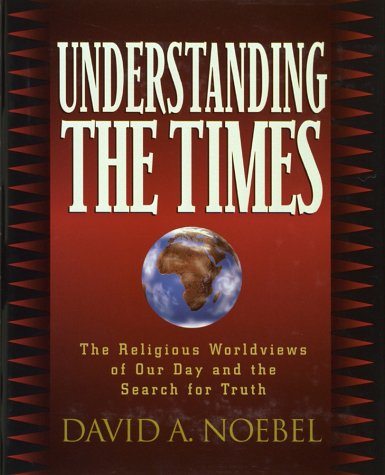
David Noebel is the author of “Understanding the Times,” a book popular in evangelical and homeschool circles.
In one reviewer’s words: “Noebel is compelling because he’s intelligent, coherent, and well-researched, despite being absolutely paranoid and utterly mad. Aside from some inconsistent use of the Oxford Comma, he has a clear, if discursive thesis:
“Rock ‘n’ roll is turning kids into gay, Communist, miscegenators.”
Billy James Hargis was a right-wing evangelist and radio and television ranter long before Rush Limbaugh. He saw communist plots everywhere: in the NAACP and the civil rights movement, in the assassination of JFK, in water fluoridation. According to TIME magazine (Feb. 16, 1976), he founded American Christian College “to teach ‘antiCommunist patriotic Americanism'” from the city he called the “Fundamentalist Capital of the World”. From there, he promoted a hard line against drugs, homosexuality, sex education, abortion and the Beatles and toured with the college choir.
David Noebel was an aide to Hargis for twelve years, speaking around the country, founding The Summit in 1962 as a Christian Crusade program to combat anti-Christian teachings from secular universities (like the University of Tulsa) and contributing to Hargis’ television show where together they decried marijuana use and rock music. Later, Noebel became Vice President of Hargis’ new American Christian College in Tulsa.
In 1974, Noebel was staggered when students confided to him that Hargis, ardent promoter of traditional morality and father of four, had had sex with several of them.
Eventually four men and one woman exposed Hargis’ sexual abuse and manipulation over a period of years. TIME reported on the scandal in 1976, Hargis was forced to resign, and the school closed its doors the following year. Noebel went on to effectively “fold” Christian Crusade into Summit Ministries, building it into a successful international worldview training/brainwashing center targeting all ages, but teenagers in particular.
Noebel was an aide to Billy James Hargis, a right-wing evangelist and radio and television ranter who saw communist plots everywhere.
Postmodernism has replaced communism as the bane of our times. According to an article by Summit’s Steve Cornell,
“[The] pre-modern era was one in which religion was the source of truth and reality…. In a postmodern world, truth and reality are understood to be individually shaped by personal history, social class, gender, culture, and religion…. Postmoderns are suspicious of people who make universal truth claims…. Postmodern thinking is full of absurdities and inconsistencies.”
As a postmodern myself, I find it ironic that the decades have softened Noebel’s hardline position on Christian rock.
Apparently Mephistopheles has released it for other uses. Students at Summit’s youth conferences speak of the meaningful “corporate worship“, which now includes rock songs like “How Great Is Our God” by Chris Tomlin and “Jesus, Thank You” from Sovereign Grace Music.
The teens attending the worldview lectures today were not yet born when David Noebel penned Stratagem and would likely be surprised to learn that the religious anthems they find so powerful are actually “estranging them from traditional values”. According to the now retired, but still involved and revered, “Doc” Noebel, “although the lyrics might acknowledge the concept of true worship, the music itself expresses the unspoken desire to smash it to pieces.”
Summit’s John Stonestreet writes, “Truth does not yield to popular opinion. Unlike postmodernism, the biblical worldview can withstand all challenges and still speak to the dominant culture.” This belief is at the core of Summit’s “worldview” training.
And yet, Lowell’s line rings more true: time does make ancient “good” uncouth. Morality and truth are, in fact, shaped by history and culture.
As Summit’s stance on Christian rock illustrates so well.
Maybe, in another 30 years, Noebel’s successors will stop fighting same-sex marriage and even give up warning kids about “the gay agenda” as they “keep abreast of truth”? One can always hope…
HA note: The following is reprinted with permission from Julie Anne Smith’s blog Spiritual Sounding Board. It was originally published on June 15, 2013 with the title, “Adult Children Shunned by Homeschool Parents: Selah’s Story.”
On my blog we recently discussed the challenges that some former homeschool students face when they leave their home. This story is quite different from the last story, but it, too, deals with painful and strained relationships with fundamental Christian parents who were influenced by the subculture of the Homeschool Movement.
The pseudonym, Selah, was chosen for this personal account: ”a Hebrew musical word that merges the modern concepts of pianissimo and fortissimo.” For those not familiar with musical terms, pianissimo is a dynamic marking indicating the music should be played very softly, and fortissimo, very loudly. Selah continues, ”In Jewish worship it is that moment of silence to mediate on what’s past, but an admonition to prepare to be dynamic.”
I love that description. It will come more clear why she chose the name when you read her story.
I had the opportunity to talk with Selah and she shared her disturbing story with me. Selah is 30 years old and left home 7 years ago. Her parents had dysfunctional backgrounds, but both wanted to get things right in their lives and attempted to do a good job living their faith. Selah’s family was one of the first families to begin homeschooling in their small community. In fact, her family was ostracized for doing so.
Her family went from church to church trying to find the perfect church. They eventually traveled to all churches within a 30-mile radius of their home, a total of 23 churches in all. They dabbled in the Shepherding Movement, had church in their home for several years, experienced some pretty destructive churches with affairs and sexual abuse occurring by church leaders. R.C. Sproul, Jr., was among her father’s influencers.
Eldest children in homeschool families often get burdened with a lot of childcare responsibilities and Selah’s family was no exception. Selah is the oldest of six children. While her parents worked, Selah took care of her younger siblings. She had an outside job, but took the responsibility of making her siblings breakfast in the morning, went to work, and then came home to make sure they had their lunch, later giving them baths and putting them to bed. Selah was the one who took most of the responsibility for caring for her two youngest siblings, yet her parents complained that she didn’t do it right.
Through her teens, Selah experienced suicidal thoughts and depression. At the age of 19, Selah took a full-time job, but wanted to go to college. Like many homeschool families, her parents embraced the courtship model for Selah and wanted to oversee all aspects of her romantic life. At the age of 23, Selah’s parents interfered in the relationship with her boyfriend and eventually kicked her out of the home.
Currently, Selah is living away from her parents, but struggles because she wants to have a relationship with them and her younger siblings. God has provided other people in her life, but the void of her family is ever-present. This was the comment that Selah posted on the Spiritual Sounding Board Facebook page:
What do you do when the Spiritual Abuse comes from the home? I have left. I have no contact with them, which is their choice, not mine. And in a recent letter to my boyfriend, my mom (who is at the crux of this) stated that I am a threat to them and has stated to my pastor and other friends that I am mental.
I have been on my own for seven years, hold a good job and regularly attend church. They refuse to go to church stating that the corporate church is apostate. They state that until I am married, they should have the final say in my life.
I must esteem and honor them, and any perceived deviation from that has repeatedly gotten me expelled.
If they were ‘just a church’ or ‘just some people’ I could maybe just let it go. But it’s my mom and dad, and my five siblings.
There is nothing harder than telling the man you want to marry that he can never know his inlaws and that your children will never know their grandparents.
Is there a solution to this? Or will it look like this forever?
This is really heart wrenching. What adult child deserves to be abandoned by their parents? Why is it that some fundamentalist Christians are willing to completely sever ties to their adult children when they don’t measure up to their Christian standards?
What kind of love is this?
Let me share with you what I found on Wikipedia on shunning with regard to family relationships:
A key detrimental effect of some of the practices associated with shunning relate to their effect on relationships, especially family relationships. At its extremes, the practices may destroy marriages, break up families, and separate children and their parents. The effect of shunning can be very dramatic or even devastating on the shunned, as it can damage or destroy the shunned member’s closest familial, spousal, social, emotional, and economic bonds.
Shunning contains aspects of what is known as relational aggression in psychological literature. When used by church members and member-spouse parents against excommunicant parents it contains elements of what psychologists call parental alienation. Extreme shunning may cause trauma to the shunned (and to their dependents) similar to what is studied in the psychology of torture.
What can we as a church body do to help people like Selah?
How can the church body respond to her?
I cried unto the LORD with my voice, and he heard me out of his holy hill. Selah.
At a post conference party in Texas, I met a man who used to be part of the NCFCA/CFC scene. He was well into his twenties and I was seventeen. We talked for a bit and ended up exchanging numbers. Our relationship happened mostly via text and IM, and it was a case of trouble attracting trouble. We never dated, but our relationship was really creepy and weird. One night after I had taken loads of my Xanax and other meds, he drunk texted me and over the course of several hours, ended up talking me into sending him naked pictures of myself. Despite this creepiness, I ended up disclosing a lot of my life’s story to him and I told him about my father abusing me. He really encouraged me to tell Mrs. Moon about the abuse. A few weeks later we ended up sexting again – eventually my mom found out about him and threatened to have him put behind bars if he ever talked to me again.
Towards the end of tour, I really started to fall apart (as if I wasn’t falling apart before.) I started to stress about having to return home. Things got so bad that I did end up telling Mrs. Moon and several of the other interns about my father molesting me. I don’t know what an appropriate reaction is when a teenager tells you that her father molested her, but what happened was far from a right response. We were at a conference in TN when I told Mrs. Moon about the abuse, and she had me tell my two younger brothers about the abuse, and then she had me tell my mother. My memory of this conference is pretty fragmented, but I remember crying a lot and feeling absolute horror about what was going on around me.
At the time, I really didn’t have words to describe the abuse. People kept badgering me and asking me questions about exactly what happened, but I was in no emotional state to talk about it. I felt like I was on the verge of having a mental breakdown. My behavior got more and more erratic and shortly after I told my family about the abuse, Mrs. Moon kicked me off tour.
We were in Pigeon Forge, TN and Mrs. Moon told me that she had asked my mother to drive down to TN to pick me up. I would not be able to finish the last two weeks of tour. Apparently, she had finally realized that I was in no condition to be on tour. The Moons had a goodbye breakfast for me at a little diner in Pigeon Forge. At this breakfast, I said goodbye to all the people who had been like family to me. The Moons promised that they would stay in touch with me and help me and that if I ever needed to talk about anything that I could call.
I was completely numb at that breakfast. I cried a lot and I remember several of the other interns crying. Very few of them really understood what was happening or why I had to leave. I hardly understood why I had to leave – in a way, I felt like I was being punished for speaking up about the abuse. I was on vacation last week, and I ended up driving through Pigeon Forge – to this day I hate that place.
After being kicked off the internship, I didn’t return home. I went to live with some family friends until my mom decided to divorce my father. Life got really rough after that. I attempted suicide again just a couple months after leaving tour. I also started drinking all the time and I started using more prescription drugs. I felt like my whole world had crumbled. The following is an excerpt from an email I wrote to Mrs. Moon the day I left tour:
“Saying goodbye to the team was the worst thing I think I’ve ever had to do. Arriving in North Carolina was even worse. It occurred to me that I might be stuck here for a long time. I really, really, really hate it here. I don’t know anyone. I’m lonely, depressed, teary, and scared out of my head. Life is so confusing right now. I hate this….All I want to do is go home. I have no clue what home is right now, but I know I want to be there. I just wish I could be somewhere where I knew people and where I felt safe and cared about. I’ve yet to see what that would look like in practice…”
I tried to keep in touch with the Moons and with the people I toured with, but shortly after leaving tour, one of the other interns told me that none of the people I interned with would be allowed to talk to me. As it was explained to me, Mrs. Moon felt like it was best that they not be in contact with me. I later contacted Mrs. Moon and received a similar answer from her. I can’t even begin to explain how much this devastated me. These people were my friends and support system and all of a sudden it was all yanked away from me. The Moons stopped talking to me shortly afterwards. On tour I was treated as a problem to be ignored – when that problem got too big to ignore, I was dismissed from tour. Once again, I could be ignored, as I was now someone else’s problem.
Needless to say, I was not invited to the annual Masters conference. A week before Masters I was diagnosed with meningitis and was hospitalized. I was told later that when Mrs. Moon heard I had meningitis, she was relieved because she would be able to use that as an explanation for why I wasn’t at the conference. When she heard I was in the hospital, I was told that her exact words were, “Oh thank God.”
Several months later, my mom emailed Mrs. Moon and asked if I could use her as a reference for another internship I was applying for. I should have known better. This was part of the reply she sent to my mom:
“I have not really had a chance to experience the Krysi that is dependable, trustworthy, honest, respecting of authority, a team player – many of the qualities I would expect an internship director to look for. I am optimistic that these character qualities can become a part of how Krysi is known. I currently have no real frame of reference for making that type of recommendation. I recall receiving only a few pieces of communication from Krysi shortly after she left the team complaining about her life and her options…”
The email to which the last sentence refers is the one I quoted previously. As to the rest of it… what did she expect? I was an emotionally traumatized teenager put in an impossible situation. Tour was one of the most stressful environments I’ve ever been in. Mrs. Moon knew I was unstable and she still allowed me to intern – when that didn’t work out, she took away the only support system I knew. I’m really not sure what other outcome she would have expected.
Six months after I left the internship, I sent an email to a friend and tried to explain to her how tour was for me. This was part of what I said:
“People put way too much pressure on 17 and 18 year olds. This was what damaged me the most, I think. Everyone expected all 13 of us to be absolutely perfect. On the platform and at conferences, we did a great job of meeting those expectations. After a while though, it become sort of soul killing. I’d go to a conference and feel absolutely dead – no one really knew me. They thought they did, but they had no idea about my life.”
That’s the thing, the one person who had an idea about my life (Mrs. Moon) accepted me to intern – being fully aware of my mental health problems – and then put me on a platform and expected me to act, look, and behave perfectly. When I didn’t measure up to those standards, I was rejected. I really don’t understand the reasoning behind any of it.
The last contact I had with the speech and debate world was during the spring of 2010 when I went to an NCFCA tournament to judge. I showed up with an orange juice bottle full of vodka. I was completely drunk and I gave alcohol to several of the competitors. After that I never went back.
I’m definitely not proud of all my actions over the years. I know I’ve made some mistakes, but then again, so have the responsible adults in my life. What happened on my CFC internship definitely messed with my head – I learned that nothing in life is permanent, that people will eventually abandon you, and that talking about trauma is unacceptable (and even punishable.)
Post tour, I got into a decent amount of trouble and did some crazy stuff (I was a wild one). I rejected Christian fundamentalism, in large part because of the hurt I experienced in the “Christian community.” About a year ago, I started to work on my trauma and substance abuse issues. It’s been a journey, but I’m finally in a good place. I’m happier than I’ve ever been, I have a great job, and I have people in my life who don’t abandon or reject me when I act a little crazy. It’s the first time I’ve ever known what stability looks like. I’ve re-embraced spirituality; I don’t consider myself a Christian – I’m just trying to figure out what it looks like to follow Jesus. I still screw up a lot and make mistakes, but I have people who love me through those mistakes rather than rejecting me.
I’m sure that there are people who will be angry for the things I’ve said about CFC/ICC, and I’m okay with that. I’m past the point in my life where I feel like I have to pretend everything is okay.
I’ve spent a long time trying to figure out what I would say about my CFC tour experience if ever given the chance. It’s a lot to try and put into words. CFC was one of the first places where I felt a sense of family and acceptance. It was also one of the first places where I experienced the rejection and hypocrisy that seem to go hand in hand with conservative homeschooling groups.
Krysi Kovaka’s staff picture from her 2008 conference tour with Communicators for Christ.
To give proper background to this story, I first have to explain a bit about my childhood. I grew up in a conservative Christian middleclass family. On the outside, everything about my childhood was perfect (albeit a bit unconventional.) My parents chose to homeschool me and my four siblings. I was given a great academic education, but school is really only a very small part of any discussion relating to homeschooling. My father molested me while I was growing up, and given the insular community of which I was a part, there were very few people who would have been able to spot any signs of abuse. Nobody found out about the abuse until much, much later.
When my public schooled peer group was playing sports, doing ballet, or marching band (or just being normal teenagers) I was busy doing competitive speech and debate. I started doing speech and debate when I was eleven and I went to my first CFC conference. After that, I spent the majority of my time going to NCFCA tournaments, researching debate resolutions, and attending CFC conferences.
The thing is, I never quite fit the mold of what a conservative homeschooled debater should look like. I was a bit different; I liked to dress differently, dye my hair weird colors, and do anything else I could think of to stand out from my homogenous peer group. I think part of this was personality (I’ve always been a bit quirky) and part of it was my attempt at a cry for help. I was a very troubled teenager; despite (or maybe because of) my Christian homeschooled upbringing, I had problems with cutting, eating disorders, depression, and substance abuse. Of course, when I was competing in NCFCA tournaments and attending CFC conferences, very few people had any idea about my problems.
To adequately explain what happened on my CFC internship, I have to rewind a bit and talk about the winter before I went on tour. Christmas break of 2007 I was put in a behavioral hospital for attempting to commit suicide. I was radically unhappy at home, so I tried to overdose on over the counter pain medicine. I was in the hospital for nearly two weeks before I was discharged, just a few days before Christmas.
Several weeks later (January 2008) my mom was hosting a CFC Masters conference in my hometown of Louisville, KY. Prior to my suicide attempt, I had been accepted to be an RSA (staff assistant/all-purpose slave) at this conference. For reasons that still baffle me, the adults in my life decided that I needed to attend the conference and pretend that everything was okay. While I should have been in therapy, I was busy cleaning bathrooms, setting up for banquets, and doing any other menial task that came my way. Child labor laws where never even talked about.
During this conference I spent a lot of time holed up in bathrooms either cutting myself or making myself throw up. It’s interesting now for me to look back at pictures of myself at that Masters conference – it was evident from looking at me that there was something deeply wrong. Still, no one talked about it or asked about it. Depression, suicide, and mental illness are not socially acceptable topics among conservative homeschoolers.
To illustrate the polarity that was my life, I was awarded the Raudy Bearden scholarship at this Masters; in one minute I would be in a bathroom trying to hold myself together and in the next, I would be up on a stage accepting an award or giving a speech. Prior to the awards ceremony where I was awarded the scholarship, I was in the bathroom making myself throw up.
It was also during this conference that I decided I wanted to apply for a CFC internship. It wasn’t so much that I loved CFC or that I loved public speaking – I just wanted to leave home and this seemed like a perfect opportunity. The week after Masters I filled out an application to intern – I was pretty sure that getting accepted would be easy since my sister had interned twice. Turns out that I was right. I had a phone interview with Mrs. Moon, and despite the fact that she knew all about my mental health background (including my recent suicide attempt) she accepted me to intern just a few weeks after the phone interview. I told her that I was on psych medication but that I would be fully competent to tour the country in a motorhome with a dozen other people. To this day, I’m not sure why she took my word for it.
That spring and summer was a blur – I remember a lot of emails and writing a lot of classes. I remember having to go shopping for tour clothes (all of us interns had to wear color coordinated outfits.) I remember feeling a lot of pressure to perform well at that year’s NCFCA national tournament.
August rolled around and it was time to go to prep week and start tour. Over that summer I had spent a lot of time at counseling and therapy, but I was still in no mental or emotional condition to be in such a stressful environment. On tour you are expected to look perfect at all times, teach multiple classes in a day, give speeches, and function on very little sleep. At this time I was still dealing with an eating disorder (which I tried to hide by saying I was a vegetarian), I cut myself regularly, I was very depressed, and I was starting to abuse alcohol. I tried to hide all of these problems and put on a brave face as I got up on countless stages and spoke about the benefits of communication training and homeschooling. I felt like a performing monkey.
My internship wasn’t all bad – I made some great friends and I felt a real sense of community with a few of my fellow interns. I got to see the country and I got to get away from home. I loved not being at home.
Tour was a very stressful environment though, and I started to crumple under the constant pressure to be perfect. I would get up on a stage to speak and the second I got off stage I would run to a bathroom (bathrooms were the only place I found privacy) and hurt myself. I started having really bad anxiety attacks during this time, so a doctor (who was a friend of the Moons) prescribed me Xanax over the phone. I promptly started abusing this medication and nobody attempted to monitor my use of the pills.
What really amazes me about all of this is how few people took notice of my troubling behavior. Of course, there were a couple of my fellow interns who knew that something was wrong, but they were only teenagers themselves. None of the adults in my life took any notice. I can only attribute this to the fact that I was in a homeschooled bubble – I assume that the people I was around were sheltered to the point where they didn’t know what to look for. The other explanation is that the people I was around purposefully didn’t take notice of my behavior.
During the second half of my internship I began self-medicating with alcohol more frequently. One night, me and one of the other interns separated from our group. We were in Boston and we decided to strike out on our own to explore the city. We found a couple of homeless men and we had a fascinating conversation with them about life and God. During this conversation, I shared their vodka. Yes, I did that. I really didn’t see a problem with sharing vodka with homeless people. When we got back to the group no one noticed that I was slightly inebriated (or they pretended not to notice.)
On another occasion, I and two other interns raided the liquor cabinet at our host family’s house. We got black out drunk that night and ended up playing a risqué game of truth or dare. That night was the first (but not the last) time that I got sloppy drunk with a boy and made decisions I regretted later. The next morning we three were nursing hangovers, but we drug ourselves to the motorhome and tried to pretend that we were fine. I’m sure that one or two of our fellow interns noticed, but no one said anything. That was the culture we lived in – pretend that everything is fine, don’t make waves, and ignore problems.
I feel that we need to sit down with a cup of coffee or tea and just chat about something. If you move in the same circles I do, you’ve probably heard about this post from Made in his Image. There’s a lot of good things being said about how destructive the modesty culture can be, so I’m not going to rehash a lot of that here. I wanted to shine some light on the biggest problem with this specific post.
I got sunburned on my ass a few weeks ago, when nothing else on me got sunburned at all. We were only at the beach for an hour, and I ended up having to spread aloe vera all over my butt for a week and sit down funny for a few days. Why did I only get sunburned on my bottom?
Because it’s the only part of me that’s never, ever, seen the light of day.
I grew up in Northwest Florida– the part of Florida known as the Emerald Coast. It is a stunningly, breathtakingly beautiful beach. We rarely ever went– only when family came to visit, usually, and those visits were sparse– because it was considered ungodly to go the beach. And if we went, I wore a t-shirt and culottes. My mother made swim-culotes out of a really light, swimsuit-type material.
Even in college, when I’d left a lot of those childhood beliefs behind, I couldn’t bring myself to wear a swimsuit to the beach. I bought an amazingly cute tankini– I still think it’s cute, even today– and it generously covered my badonk-adonk, but I still felt incredibly nervous wearing it. I ended up wearing cute-off shorts on top of it when I went to the beach with some friends, and faked being asleep when I overheard them making fun of me for that choice.
Yup. “Modesty” is a sacrifice. It’s a sacrifice I made for most of my life, and paid for my standards with humiliation and embarrassment.
But, when I went to the beach with my husband a few weeks ago, I wore a bikini for the first time. It wasn’t “skimpy,” not that it matters, and I was able to take off my cover-up without shame, without the sharp knife in my gut telling me that I was dressing as the “strange woman” from Proverbs. It was a victory for me– a small triumph over the shame and oppression I’d known for over half my life.
That’s the only thing the modesty culture does.
It doesn’t stop men from ogling us– not even Christian men. I’ve gotten cat calls, jeers, shouts, obscene gestures, propositions, and whistles all while “modestly” dressed. I’m talking full-blown “modesty.” High-necked t-shirts, a-line and loose knee-length skirts. Sometimes I looked cute, sometimes I looked dumpy. It doesn’t matter. How I’ve been dressed has never made a difference whatsoever in how men have treated me. I was raped while wearing a knee-length skirt and a long-sleeved, loose and flowing top that covered my collar bone. Modesty has never, in my experience, stopped a man from doing whatever he wanted to do with my body– whether it was physically manhandle it, goosing me or grabbing my vagina through my skirt in the middle of chapel, or simply objectify it.
Let me say it again: men could not give a flying f*** how a woman is dressed. She’s a woman. She has boobs and a vagina, and that makes her public property in a world where I’ve been screamed at, cursed at, for refusing to even acknowledge a cat call from a car.
When I started dressing however I wanted, modesty be damned– when I started wearing shorts and tank tops, for example, none of that sort of behavior increased. It stayed exactly the same.
But, this article, like every other article I’ve read on modesty, emphasizes that it a woman’s obligation to help protect men from our bodies. It’s our duty to make sure that we make it possible for men to forget that we’re a woman– which is, frankly, impossible. I don’t care how loose your clothes are– if you have T&A, there’s no getting rid of it, there’s no hiding it.
So what happens?
We have articles where the author has to stubbornly insist that she’s not “insecure about her body,” and clarify that she is “independent in her swimwear choices.”
We have articles where the author compares women to an ooey-gooey chocolate cake.
And let’s look at that for a second. Rachel has this to say about her metaphor:
Now, let’s pretend that someone picked up that chocolate cake and followed us around all the time, 24/7. We can never get away from the chocolate, it’s always right there, tempting us and even smelling all ooey gooey and chocolate-y. Most of us, myself included, would find it easy to break down and eat the cake. And we would probably continue to break down and eat cake, because it would always be there. Our exercise goals would be long gone in no time.
I’m going to try to be fair here: Rachel was probably, in her head, only referencing masculine lust here. When she wrote out this dandy little metaphor, she was probably only thinking that “breaking down” didn’t mean anything besides a man thinking less-than-platonic thoughts about the woman in the bikini.
However, regardless of what I’m positive were the best of intentions, Rachel has just contributed torapeculture.
Because, in this metaphor where a woman is a chocolate cake, the woman has no choice. A woman, plain and simple, just is a chocolate cake, and the fact is that, as a woman, there’s nothing she can do to change that.* She doesn’t have a say in the matter. She’s a woman. She’s ooey-gooey and smells like heaven, and so she gets eaten. No one asks her if that would be ok. No one asks her if that’s what she wants.
Because she’s a cake.
She exists to be eaten.
*I would like to point out that gender and sexuality are a sliding scale– I’m not trying to exclude transgender people, just dealing with the essentialist and gender binary nature of the article.







 Homeschoolers Anonymous