Rewriting History — History of America Mega-Conference: Part Five, Messiah States and Mega-Houses

Rewriting History — History of America Mega-Conference: Part Five, Messiah States and Mega-Houses

HA note: This series is reprinted with permission from Ahab’s blog, Republic of Gilead. For more information about Ahab, see his blog’s About page. Part Five of this series was originally published on July 9, 2013.

*****

Also in this series: Part One: First Impressions | Part Two: Doug Phillips on God in History | Part Three: “Religious Liberalism” And Those Magnificent Mathers | Part Four: Kevin Swanson Is Tired Of Losing | Part Five: Messiah States and Mega-Houses | Part Six: Doug Phillips Rages Against the 20th Century | Part Seven: Christian Vikings, Godly Explorers, and Strange Bacon | Part Eight: Closing Thoughts

*****

On Friday, July 5th, I observed an afternoon workshop entitled “The Rise of the Messiah State: From Wilson to Johnson”. Geoffrey Botkin of the Western Conservatory of the Arts and Sciences delivered a talk on the supposed ills of social safety nets and the evolution of the so-called “Messiah state”. Botkin, a long-time ally of Vision Forum, has a controversial history with Great Commission Ministries, according to commentaries at Under Much Grace (see here and here).

At the start of his workshop, Botkin explained to his audience that a major challenge is to communicate how society should be organized to a culture unused to thinking theologically. “All history is theological,” he insisted, echoing the sentiments of other speakers at the conference.

Botkin complained that the U.S. is comfortable with a “Messianic state” now. Quoting Christian Reconstructionist thinker Gary North, he claimed that the “welfare state” died when the Roman Empire fell in 400 AD, but reemerged in the 20th century. From 1913 to 1973 — from the Wilson administration to the Johnson administration — America’s social order changed theologically to a “welfare-warfare state with fiscal and moral deficits of crushing … consequences,” Botkin claimed.

Botkin understood the state, church, and family to be God-created institutions, each with their own sphere of influence. However, the modern American state is so divorced from God’s will that its power to do good has decreased, he said. Over the span of a few decades, “the power of the state to do evil” allegedly grew.

Botkin shared quotes from Christian Reconstructionist authors on the alleged evils of an overbearing state. One quote from Gary North claimed that the “welfare state” is defended as a network of social safety nets, in which business profits are seen as a tax base for the welfare state. Another quote from R. J. Rushdoony caricatured humanists as revering the state as their lord and savior. Revealingly, Botkin’s presentation shared another quote from Rushdoony which accused society of succumbing to the “heresy of democracy”. In Botkin’s eyes, “statists” cannot revere God because they revere the state instead.

“Messianic statism”, as Botkin defined it, is an organization of men who provide answers to all of humanity’s problems through reorganization of society under the scientific/secular/socialist state, rather than Christ. The state, in effect, replaced God in people’s minds, he explained. Changing, man-made laws result in society’s “moral dissipation”, he claimed, making the state a “maternalistic necessity”. As a result of Messianic statism, men become “emasculated”, unable to take responsibility in their lives, Botkins claimed. A cycle of dependency emerges, where the more men descend into moral dissipation, the more they need a “nanny” or “mommy” state to care for them.

Emasculation? “Maternalistic necessity”? Mommy states? Someone has masculinity issues, I thought.

Tastelessly, Botkins used natural disasters as an example of dependency on the state. When a hurricane causes devastation, everyone whines “Where is my Messianic state!?”, he sneered. His utter callousness to the suffering of disaster victims and disdain for any safety net to help them recover startled me.

Botkins proceeded to caricature the policies of U.S. presidents from Woodrow Wilson to Lyndon B. Johnson. He reserved special animosity for income taxes, Social Security, the New Deal, Lyndon Johnson’s Great Society, and public education, which he derided as “free babysitting”.

His diatribe was peppered with fundamentalist commentary and disgust for real or perceived immorality. For instance, he described Woodrow Wilson as an agent of “totalitarian experimentation” who did not trust the authority of scripture. He defended Warren G. Harding as a president striving for normalcy in a country destabilized by jazz music, movies, and prostitution. He spoke approvingly of the Hays Code, claiming that it prevented entertainment from undermining society, as it allegedly does now. Tellingly, he painted women’s organizations lobbying for pensions for mothers and widows during the Coolidge administration as “less productive” people seeking to exploit the system by looking for handouts.

In his conclusion, Botkin likened the Messianic state to ancient god-kings and notions of divine kingship. He shared a quote from R. J. Rushdoony likening state worship to Moloch worship, calling both examples of “political religion”. Like the ancient god Moloch, the Messianic state demands total sacrifice from its subjects, he warned the audience.

I don’t think Botkin grasps the purpose of social services or a social safety net. Such measures are not the sinister tentacles of a “Messianic state”, but a means by which governments and communities help people in need. The mark of a civilized society is its willingness to help its most vulnerable members gain self-sufficiency. Frankly, I do not want to return to a society where the downtrodden are without recourse. A country without a social safety net, with charities in the place of fair programs, would have a devastating impact on the populace, as S. E. Smith recently observed. The callousness with which Botkin demonized the U.S. social safety net struck me as cold-hearted.

I also found Botkins’ workshop highly ironic. A man trumpeting Christ and scripture while ignoring Jesus’ teachings on compassion left me shaking my head. Whatever happened to “For I was hungry and you gave me something to eat, I was thirsty and you gave me something to drink, I was a stranger and you invited me in, I needed clothes and you clothed me, I was sick and you looked after me, I was in prison and you came to visit me”? Whatever happened to “whatever you did for one of the least of these brothers and sisters of mine, you did for me”? Matthew 25:31-46 is lost on such people.

*****

Later that afternoon, Vision Forum director Doug Phillips and Weir Capital Management founder Erik Weir spoke at a workshop entitled “How Architecture Helped to Shape the Character of the American Family”. Phillips posited that a symbiotic relationship exists between architecture and the family, influencing each other in countless ways. This relationship isn’t a function of income level, he insisted, but of vision, making it applicable for tents and palaces alike. Phillips listed three foundations — aesthetics, design, and architecture — for designing homes.

Phillips argued that modern-day architecture is diverging from the past, elevating form over function, often abandoning aesthetic principles, and neglecting to consider the family. He looked askance at the deconstructivist school of architecture, contrasting photos of eye-catching deconstructivist buildings with a photo of Monticello.

C’mon Doug. A little architectural experimentation is perfectly fine, I thought.

Phillips stressed the importance of bringing every aspect of the home into obedience to Christ. He asked aloud if a home is to be designed to unite families in common spaces, or to cocoon them in separate bedrooms. Colonial and frontier homes, he observed, were organized around a central hearth where the family interacted, for example.

Monticello held special appeal for Phillips, who praised it as a reflection of Thomas Jefferson’s worldview. Monticello functioned as a place to entertain guests, a site of industry and production, a personal study, and a setting in which the new American spirit would be modeled. I noticed that Phillips conspicuously left out Monticello’s underground slave areas, where unseen slaves produced food and sundries for Jefferson’s guests. This, too, was a reflection of Jefferson’s worldview (specifically, his acceptance of slavery), a stain that Phillips left out.

Phillips also praised Montpelier, the historic plantation of James Madison. He described Montpelier’s central core, in which children were educated, parties hosted, heads of state entertained, and the family business operated. Montpelier, like other estates of the era, was built with the assumption that future generations would live there an exert an ongoing influence on the area.

Phillips contrasted the communal homes of the past with the homes of the present, which he likened to “flophouses”. In the past, it was common for three or more generations to live under the same roof, either out of custom or necessity, he said. He contrasted such multigenerational homes to the dwellings of the “selfish generation” which segregates its elders. Today, families are getting smaller while houses are getting bigger, so families tend to share less space. By living and working near each other, families experienced less infidelity, closer ties existed between parents and children, and more economic incentives to perpetuate family life.

I chuckled to myself at Phillip’s assumption about infidelity, as the reality was far less pleasant. Less infidelity? Hardly. Slave owners sexually abused slaves in that time period. Plenty of men patronized brothels in that time period. There was plenty of infidelity.

Phillips stressed the importance of generational thinking regarding architecture and the home. For example, he encouraged listeners to avoid faddishness and cheap quality in home decorations and furnishings in favor of long-term, durable furnishings that will last for many years. In choosing and designing homes, Phillips encouraged listeners to consider multiple considerations: geography, climate, space use, flow, and many others.

It occurred to me through the talk that Phillips’ home advice, while well thought-out, would only be applicable for well-to-do families. If families are struggling economically, they won’t be able to afford the durable, long-term furnishings. If families are limited in what kind of housing they can afford, they may not be at liberty to base home or apartment choices on a wide range of considerations. In an ideal world, everyone could consider furnishings, geography, and flow in their home choices, but we do not live in an idea world.

This realization grew stronger as I listened to Weir’s part of the workshop. Weir’s wealth was evident as he described his home, Magnolia Hall Plantation, inspired by the Oak Alley Plantation in Louisiana. His family chose a large property that would allow space for future growth, including a row of oak or magnolia trees and on-site housing for his children, he explained. Sharing photos of his home, he proudly pointed out the “manly” Doric columns they chose instead of “flutey” Corinthian columns. As photos from the inside of the home flashed on the screen, Weir explained that he wanted to create an inviting interior. (The foyer, while sleek and pristine, struck me as cold and a little too perfect, however.) Weir and his wife chose fine wood for their floors so that guests with children wouldn’t have to worry about sullying a carpet with spills.

This is great, but … how does this apply to middle and working class families? I thought. Most of the people in the audience probably can’t afford to make these choices.

In short, the workshop on architecture was a paradox, an example of intricate thought and little thought. On one hand, Phillips and Weir clearly spent time reflecting on aesthetic values and home functionality, demonstrating a level of forethought that I respected. On the other hand, they seemed oblivious to the fact that only well-off people could meaningfully apply these principles. Weir’s home, while lovely and well-planned, is the home of a wealthy man. How relevant would Weir’s description of his home be to a couple struggling to feed and clothe multiple children? After taking in Botkin, Phillips, and Weir that afternoon, I wondered how often they reflect on the middle and working class.

Stay tuned for more on the History of America Mega-Conference!

*****

To be continued.

Rewriting History — The History of America Mega-Conference: Part Four, Kevin Swanson Is Tired Of Losing

Rewriting History — The History of America Mega-Conference: Part Four, Kevin Swanson Is Tired Of Losing

HA note: This series is reprinted with permission from Ahab’s blog, Republic of Gilead. For more information about Ahab, see his blog’s About page. Part Four of this series was originally published on July 9, 2013.

*****

Also in this series: Part One: First Impressions | Part Two: Doug Phillips on God in History | Part Three: “Religious Liberalism” And Those Magnificent Mathers | Part Four: Kevin Swanson Is Tired Of Losing | Part Five: Messiah States and Mega-Houses | Part Six: Doug Phillips Rages Against the 20th Century | Part Seven: Christian Vikings, Godly Explorers, and Strange Bacon | Part Eight: Closing Thoughts

*****

After celebrating July 4th, I returned to the History of America Mega-Conference on July 5th to observe more workshops. On Friday morning Kevin Swanson presented a workshop entitled “Why 19th Century Literature Was at War with God”. Swanson, host of Generations Radio, has a long history of eccentric comments documented by Right Wing Watch, and he was no different in person. I’m not sure what troubled me more: Swanson’s acidic tone, or the hyperbolic content of his talk. His seething hatred for The Scarlet Letter, Nathaniel Hawthorne, Mark Twain, and other 19th century writers was both irrational and unsettling.

Swanson began his talk by lamenting that America is not the Christian nation it supposedly once was and is not doing as well as it had in the past. The United States is breaking down, he claimed, because the Western world is slowly “apostatizing” as families and civilizations disintegrate.

Swanson reserved special rancor for liberal professors. Citing Ken Ham’s 2011 book Already Compromised, he told listeners that liberal arts professors in Christian colleges are highly likely to believe in evolution because of their liberal leanings. Apostasy always begins in the liberal arts departments of Christian colleges, Swanson insisted, adding that many liberal arts colleges are “corruptible” because of their very foundations. Harvard and Princeton have already been “compromised”, and many professors at Wheaton College voted for Obama, Swanson said with regret.

Swanson further caricatured liberal arts studies with bombastic words. He sneered at liberal arts departments for their admiration of Karl Marx, whom he called a “Satanist” and “atheist” with an wrong-headed epistemology and a flawed view of history. Swanson also looked askance at liberal professors for their love of Harry Potter books and the gay Dumbledore character. Society is locked in a battle between worldviews, one with battle lines laid out in liberal arts departments where the next generation is receiving its education, he said.

“I am tired of losing!” Swanson shouted. “Is anyone else tired of losing?” The audience applauded.

Swanson proceeded to rant disjointedly against Catholics, LGBTQ persons, and other people he blamed for “apostasy”. The Roman Catholic church represents so much “apostasy” from the Christian faith is because of its liberal arts heritage, starting with Thomas Aquinas, he claimed. He wondered aloud how America went from the Christian primers of its early history to children’s books such as Heather Has Two Mommies.

Swanson seemed baffled that America has allegedly come to lead the “Neronic* agenda”, his term for the LGBTQ equality movement. Even “pagan” leaders in Africa were disgusted by the “hatred toward God” expressed by President Obama’s support for same-sex marriage.

The root of the present situation, Swanson posited, is that powerful intellectual men, “many of whom were possessed by the Devil himself”, introduced dubious ideas into universities. Swanson called these men nephilim (a reference to human-angel hybrids in Genesis 6:4 and Numbers 13:33) because they led to the destruction of the world through the Great Flood in the Bible, just as they are destroying society today.

Feverishly, Swanson launched a polemic against Thomas Aquinas. In Summa Theologica, Swanson explained, Aquinas separated sacred and philosophical knowledge, with philosophical knowledge based on human reason. This division of knowledge gives man the ability to “think autonomously” apart from God, which Swanson blasted as Aquinas’ greatest error. Over a span of 400 years, thinkers such as Locke and Descartes celebrated philosophical knowledge and the supremacy of the human mind, which Swanson branded as toxic to faith.

In the 1700s and 1800s, tension between the Bible and classical writings — the beginnings of “apostasy” — could be found in the writings of the Founders, Swanson asserted. By the turn of the 19th century, most Americans rejected the idea that God holds authority over human actions, Swanson claimed. Such was the idea undergirding 19th century “cults” that rejected the idea of the Trinity and embraced Arianism, he insisted.

Swanson was furious that in today’s world, science says that the universe is billions of years old, parents are discouraged from spanking children, and the Bible is being rejected because it doesn’t jive with humanism. Ethics, philosophy, and science have been divorced from the Bible, he lamented.

Swanson pointed to Emersonian Transcendentalism as a powerful influence on 19th century American religion. Emerson’s aunt raised Emerson in the Hindu religion, Swanson claimed, describing Emerson as a pacifist who encouraged others to follow their hearts and make it up as they go along. Swanson further caricatured Transcendentalism as a system in which man allegedly defines his own ethics as he goes along and creates his own reality.

Swanson was especially livid over the popularity of Nathaniel Hawthorne’s The Scarlet Letter in high school and college literature classes. He accused Hawthorne of hating his Christian heritage and dying a nihilist who allegedly saw no purpose in life. He further blasted Hawthorne for allegedly attending seances, marrying into one of the worst “progressive” families of his era, and having ties to Horace Mann, a supporter of public schools. Hawthorne allegedly mocked Christianity in his writings, referring to Cotton Mather as a devil. Finally, Swanson accused Hawthorne of allegedly doing enormous damage to America’s Christian heritage with his writings. Events such as the History of America Mega-Conference have such small attendance because people have read Hawthorne and become corrupted.

And here’s where things get … weird.

Swanson believed that Hawthorne’s sister was “demon possessed” and sought to see Hawthorne’s children possessed as well. He claimed that an unearthly force moved Hawthorne’s hand as he wrote The Scarlet Letter, a story “forged in Hell”. Outrageously, he claimed that both Hawthorne and Herman Melville admitted to being demon possessed (!?).

Swanson shuddered at the alleged power of The Scarlet Letter, warning listeners not to underestimate the ways that its “Satanic effects” can change nations. Attacking the novel as “stupid” and a “farce”, Swanson claimed thatThe Scarlet Letter represents two gospels. The gospel of Dimmesdale, he claimed, preaches repentance without faith in Christ, as Dimmesdale finds self-atonement rather than substitutional atonement for his adultery. The gospel of Hester, on the other hand, is one of love divorced from law, thus rendering love meaningless, he said.

Swanson’s wrath toward the fictional Hester was brutal. He called Hester a “prophetess” of adultery in a later age, when high divorce rates, premarital sex, and out-of-wedlock births would surge. Swanson also accused Hester of being the predecessor of Margaret Sanger, Margaret Mead, Gloria Steinem, and other feminists with “unyielding and rebellious hearts”. Hester, in short, was the harbinger of a “feminist world” in which the family is crumbling.

As the workshop churned on, Swanson’s gave voice to more visceral hatred ofThe Scarlet Letter. The moral of the novel, he insisted, was that witchcraft, homosexuality, incest, and feminism are better than Christianity. The Bible commands the death penalty for adultery, but Hawthorne and today’s average Christians loathe the death penalty.

Wait a minute. Did I just hear Swanson defend capital punishment for adultery? I thought. The audience sat rapt, apparently unfazed by Swanson’s rant. Are you people okay with this? Hello!?

Swanson observed that many Christians are embarrassed by what the Bible commands regarding adultery, homosexuality, and witchcraft. Such Christians love Jesus but hate his law, he said, and thus American religion is solidly anti-Biblical law.

Swanson lobbed similarly hateful accusations at Mark Twain, stunned that so many homeschooling families have Twain’s books in their homes. According to Swanson, Twain was an “apostate”, communist, atheist man who hated the Biblical God and was possibly possessed by Satan (!?). As proof of this, Swanson said that Twain allegedly acknowledged he was writing letters from Satan himself when he composed Letters from the Earth. Twain also encouraged women to commit adultery, Swanson asserted with no small amount of disgust.

Predictably, Swanson blasted Huckleberry Finn, criticizing the eponymous main character for not fearing God and mocking the notion of divine judgment. The novel, he explained, was about slavery, with Huckleberry Finn choosing to help his enslaved friend at the risk of his eternal soul. Rather than praise Finn’s moral courage, Swanson launched into a diatribe about vast numbers of Americans being “enslaved to the welfare state” today. He branded “Muslim” slavery, in which people are kidnapped and sold, as evil, but said that he wished he had time to discuss a Biblical view of slavery. 

Huh? I thought. Slavery is wrong, no matter who practices it. Full stop. I don’t care if there’s a “Biblical” form of slavery. It’s wicked. What is wrong with this man?

“Do not read the heathen stories to your children,” Swanson warned the audience. He urged listeners to teach their children the Bible first, instead of giving them a “Greek” education. “Give them the Bible! Let them know the book of Deuteronomy better than they know The Scarlet Letter,” he demanded, to which the room erupted in applause.

Deuteronomy? I fumed. You mean the Deuteronomy brimming with bloodshed and genocide? The Deuteronomy with guidelines for owning slaves? The Deuteronomy that allows warriors to take conquered women as sexual booty? The Deuteronomy that instructs communities to stone rape victims and women who don’t bleed on their wedding nights? No, Kev, I’m NOT teaching THAT to a child.

Swanson concluded by encouraging listeners to give their children a “war of the worldviews”, to give them Biblical context for supposedly ungodly classics they might read. A 14 year-old is not ready for Plato and Aristotle, he claimed; rather, parents should give their children Christian ideas and writers first, then expose them to “heathen” works in their late teens. That way, children will understand how evil such “heathen” ideas are.

In short, Swanson was advocating a closed information system for homeschooled children, in which parents shield their offspring from non-Christian ideas until they approach adulthood. In my opinion, this approach could only produce children who are utterly disconnected from their cultural heritage, from mainstream America. When such isolated children reach adulthood and leave their bubble, how will they navigate American culture if so many important ideas have been either demonized in their eyes or left out of their education altogether?

Then again, maybe I should be more optimistic. In an age of book stores, libraries, and the internet, young people are likely to encounter ideas outside of their upbringing and read books such as The Scarlet Letter.  Swanson and his ilk may find that creating a closed information system for children will be harder than they imagined.

Later, as I recuperated from the workshop in a nearby pub, I tried to digest what I’d just heard. Demon possessed authors? Capital punishment for adultery? Biblical slavery? A closed information system meant to stifle the minds of children? This is sick, I thought. This. Is. Madness.

Swanson’s feverish words, and the audience’s approval, impressed upon me a disturbing truth: Christian Reconstructionism and superstitious hysteria are alive and well in small corners of our culture. People like Swanson earnestly embrace a fundamentalist worldview, and have every intention of inflicting it on the next generation of homeschooled children.

Stay tuned for more talks from Vision Forum’s History of America Mega-Conference!

* A reference to the Roman emperor Nero.

*****

To be continued.

Rewriting History — The History of America Mega-Conference: Part Three, “Religious Liberalism” And Those Magnificent Mathers

Rewriting History — The History of America Mega-Conference: Part Three, “Religious Liberalism” And Those Magnificent Mathers

HA note: This series is reprinted with permission from Ahab’s blog, Republic of Gilead. For more information about Ahab, see his blog’s About page. Part Three of this series was originally published on July 7, 2013.

*****

Also in this series: Part One: First Impressions | Part Two: Doug Phillips on God in History | Part Three: “Religious Liberalism” And Those Magnificent Mathers | Part Four: Kevin Swanson Is Tired Of Losing | Part Five: Messiah States and Mega-Houses | Part Six: Doug Phillips Rages Against the 20th Century | Part Seven: Christian Vikings, Godly Explorers, and Strange Bacon | Part Eight: Closing Thoughts

*****

On Wednesday, July 3rd, I took in two workshops at Vision Forum’s History of America Mega-Conference: “The Rise of Religious Liberalism” and “Puritanism and the Multigenerational Vision of the Mather Family”. The first was a swipe at progressive Christianity and 19th century spiritual movements, while the latter praised Cotton Mather and his forefathers for their piety and devotion to family life.

On Wednesday morning, Col. John Eidsmoe of the Oak Brook College of Law and Government Policy presented “The Rise of Religious Liberalism”. The workshop was a polemic look at the rise of Unitarianism, Transcendentalism, and other forms of “religious liberalism” in 19th century America.

Eidsmoe spoke warmly of early Americans who celebrated Christianity. The Constitutional Convention, he claimed, had mostly Christians in attendance and involved God in their work. He dismissed the deist Founding Fathers in attendance as “outliers”. He discussed the message of 18th century preacher George Whitfield, who did much to unite Americans under a common faith, he claimed.

Eidsmoe also smiled upon Benjamin Franklin for praising Christian preaching and social endeavors, suggesting that the Founding Father appreciated Christianity. However, I found his portrait of Franklin to lack nuance. While Franklin did celebrate the Puritan virtues of his upbringing and respect preachers such as George Whitefield, he also referred to himself as a Deist in his 1771 autobiography, embraced Enlightenment ideas, endorsed religious pluralism, and spent time at a London Unitarian congregation.

In the 1800s, despite the Second Great Awakening, America sees the emergence of Unitarianism. Eidsmoe pointed out that 19th century Unitarians were different from today’s Unitarian Universalists, describing them as “strongly moral” people who revered the Bible but did not believe in the Trinity.

The 1800s also saw the emergence of Transcendentalism, which Eidsmoe described as a belief in God’s presence within nature and humans. Transcendentalists, Eidsmoe stated, believed that all humans have a divine spark within them, and that by getting in touch with that divine spark, they can become godlike. According to Eidsmoe, Transcendentalists rejected the idea of original sin and did not see the need for a savior, thus contrasting them to Christians.

Eidsmoe didn’t seem to think highly of Transcendentalists, sneering at failed Transcendentalist projects such as Fruitlands commune. He briefly discussed major Transcendentalist thinkers such as Ralph Waldo Emmerson, who drew inspiration from German thinkers such as Friedrich Schleiermacher, Buddhism, and the Bhagavad Gita. Eidsmoe also discussed Henry David Thoreau in unfriendly terms, scoffing at Thoreau for trumpeting his return to nature inWalden while eating meals at his parents’ house and drinking coffee in town. Thoreau defended civil disobedience in his classic essay, but Eidsmoe claimed that this was actually a Biblical concept rooted in obedience to God over obedience to civil authority. (For a more in-depth, non-polemical look at Transcendentalism, click here.)

Practice eisegesis much? I thought.

Transcendentalism led to the rise of “religious liberalism” by leading Americans away from Biblical Christian principles, Eidsmoe argued. While he praised Albert Schweitzer for his scholarly and humanitarian work, he disagreed with his “liberal” view of Jesus in Quest for the Historical Jesus. Eidsmoe also disagreed with the work of Julius Wellhausen, who theorized that the Pentateuch was written by four authors in different time periods rather than Moses (later known as the documentary hypothesis or Wellhausen hypothesis). Wellhausen’s theory was rooted “squarely upon evolutionary thought”, Eidsmoe insisted, even though Wellhausen was not the first scholar to speculate that someone other than Moses penned the Pentateuch. Eidsmoe frowned upon the Wellhausen hypothesis, seeing it as an attack on the divinity of Jesus himself who acknowledged Moses as the author of the Torah. Finally, Eidsmoe was also disdainful of the alleged Darwinist worldview, which he caricatured as positing that humans started in the “slime” and evolved, rather than being created by God with moral responsibility.

These 19th century forces contributed to religious liberalism, which exerts influence even today, Eidsmoe argued. He criticized modern “open-minded” liberalism as being closed-minded to anything evangelical, and caricatured religious liberalism as having five characteristics:

  • Denial of absolute truth in favor of a view of truth as relative, subjective, and evolving.
  • Emphasis on man rather than God, with God as a servant of man instead of vice versa.
  • “Presumption against the supernatural” and miraculous.
  • Optimism about progress, public education, medicine, and democracy heralding a new dawn, before events such as World War I and World War II casts shadows on progress.
  • A belief that the Bible is accurate in its conclusions but not its details, or the belief that parts of the Bible are divinely inspired but not inerrant.

The fact that this does not accurately describe progressive Christianity, past or present, seemed to have escaped him. Progressive and moderate people of faith would not describe their beliefs as such, which also seemed to have escaped Eidsmoe.

Eidsmoe listed several alleged dangers of religious liberalism, including the supposed lack of a basis for morality, the supposed lack of basis for evangelism, and the reduction of Jesus to a mere man or to one path to truth among many. Religious liberalism supposedly leaves no room for freedom, he claimed, since it reduces humans to evolutionary animals rather than moral agents accountable to God. He accused religious liberalism of having no means of maintaining Christianity or perpetuating the faith, claiming that liberal Christian denominations are losing members. (Perhaps he forgot that many mainline denominations and religious schools are losing members too?) Germany serves as a model for what can go wrong with religious liberalism, he insisted, claiming that one-hundred years of liberal German thought gave rise to Hitler and the Holocaust. In short, Eidsmoe demonized religious liberalism, using straw man arguments to grossly misrepresent what liberal Christians actually believe.

Eidsmoe concluded the workshop by warning listeners that religious liberalism could seep into their churches. He urged the audience to stay alert for liberal trends in their churches and seminaries, and to stay faithful to belief in Biblical inerrancy. In short, his workshop was not so much a tour of 19th century religious thought as a polemic against non-fundamentalist Christianity, complete with caricatures, oversimplification, and fear.

*****

On Wednesday afternoon, Scott Brown presented “Puritanism and the Multigenerational Vision of the Mather Family”. Brown, a pastor at Hope Baptist Church in Wake Forest, NC and the director of the National Center for Family-Integrated Churches, praised the Mather family as a model of piety.

Brown’s workshop focused on three men in the Mather family — Richard, Increase, and Cotton Mather — whom he praised for the “fruitfulness”, citing John 15:5-8 and John 15:16-17. Three generations of the family “cried out for a rising generation”, Brown observed, celebrating the Mathers as a “beacon of light” for families.

According to Brown, the Mathers resolved to bring everything into obedience with the Bible. Every member of the family was dedicated to God and lived for something beyond themselves, he claimed. By looking to scripture alone, the Mathers knew who they were and what role they were to play in life, rather than asking “who am I?”

Brown delved into the individual histories of Richard, Increase, and Cotton Mather, with emphasis on their religious lives and concern for the next generation. I noticed anti-Catholic bias in Brown’s description of Richard Mather when he noted that Richard’s father almost allowed Catholic merchants to fund his education. The Catholic merchants “coveted” Richard’s gifts, and Brown considered it pivotal in Richard’s development that he was not educated by Catholic. Brown then drew parallels to modern times, when “great pagan institutions” allegedly “pickle” children’s brains by pouring “paganism” into them.

Okay, you guys keep throwing around the word ‘pagan’. I don’t think it means what you think it means, I thought.

Brown observed common themes of moral decline in the preaching of Increase and Cotton Mather. For instance, Increase scoured the Old Testament for patterns among the prophets regarding God’s blessing and judgment, Brown said. Increase was reportedly concerned about the “onslaught of wickedness” in his society, and preached sermons on the importance of teaching piety to the next generation. Likewise, Cotton Mather was said to be watching his society decline, and encouraged cultivation of piety in children, Brown stated. Cotton Mather taught parents that children belong in church and are part of the congregation, a belief that Brown seemed to admire.

Brown devoted much of his discussion to Cotton Mather’s admonishments for parents on the spiritual upbringing of children. According to Brown, Cotton urged parents to set good religious examples for their children, concern themselves with their offspring’s spiritual state, and “plead God’s promises” to their children. Moreover, Cotton penned a list of twenty-one resolutions for fathers, including praying for their children, preaching to the family, encouraging children’s self-reflection on their souls, and “marrying” their children to Christ.

At the conclusion of the workshop, Brown listed six lessons that families can derive from the Mathers’ example. Modern Christian families, like the Mathers, must strive to be families (1) dedicated to future generations, (2) possessing clear visions of home life, church life, and civil life, (3) aware of the times and responsive to them in both public and private ways, (4) dedicated to the prosperity of the church, (5) determined to honor each other even as they disagree, and (6) crying out for their sons.

In his haste to praise the piety of the Mather family, Brown ignored the dark side of that piety. He neglected Cotton Mather’s Memorable Providences, Relating to Witchcrafts and Possessions, a 1689 treatise on the dangers of witchcraft and demons that was widely read in late 17th century New England. Some historians speculate that Cotton Mather’s writings on witchcraft contributed to the anti-witchcraft hysteria that spawned the Salem Witch Trials. He ignored Cotton Mather’s zeal to convert black slaves to Christianity in The Negro Christianized: An Essay to Excite and Assist that Good Work, the Instruction of Negro-Servants in ChristianityThe 1706 treatise encouraged slave owners to convert their black slaves to Christianity, assuring them that Christianity permits slavery and will not bring about slave’s liberty. The transmission of piety to young generations must be done in a spirit of self-reflection, lest that piety lead to destructive ends as it did with Cotton Mather.

I can accept the idea that the Mathers longed to do well by their children and grandchildren, striving to raise them well and encouraging other parents to do the same. Given Increase and Cotton Mather’s ties to witchcraft myths and the Salem Witch Trials, however, I draw a different conclusion from their lives. When parents teach their children spirituality, that spirituality must also include empathy, humanity, and critical thinking. Piety without these elements can devolve into fanaticism, with unsettling results.

Stay tuned for more on the History of America Mega-Conference!

*****

To be continued.

Rewriting History — The History of America Mega-Conference: Part Two, Doug Phillips on God in History

Rewriting History — The History of America Mega-Conference: Part Two, Doug Phillips on God in History

HA note: This series is reprinted with permission from Ahab’s blog, Republic of Gilead. For more information about Ahab, see his blog’s About page. Part Two of this series was originally published on July 7, 2013.

*****

Also in this series: Part One: First Impressions | Part Two: Doug Phillips on God in History | Part Three: “Religious Liberalism” And Those Magnificent Mathers | Part Four: Kevin Swanson Is Tired Of Losing | Part Five: Messiah States and Mega-Houses | Part Six: Doug Phillips Rages Against the 20th Century | Part Seven: Christian Vikings, Godly Explorers, and Strange Bacon | Part Eight: Closing Thoughts

*****

On July 2nd, I observed the History of America Mega-Conference at the Radisson Hotel Harrisburg in Camp Hill, PA. The event is sponsored by Vision Forum, a ministry with a strong Christian Patriarchy slant that focuses strongly on “Biblical education” for children. On Tuesday evening, I sat among hundreds of Vision Forum supporters in the Raddison grand ballroom, where Vision Forum director Doug Phillips opened the conference with a talk about history, language, and forgetting. For nearly an hour, Phillips’ voice alternated between calm speech and shouting as he shared a narrow, fundamentalist view of  history.

On stage, reenactors in costume performed on bagpipes and drums, concluding their performance by circling the room. The introductory speaker praised America’s forefathers, reminding the audience that they are still part of the great American experiment. Ominously, he claimed that the world is watching to see if the U.S. will be chastened by God for forgetting its past. Next, another man delivered the evening’s benediction, praising God as “the only redeemer of sinners and cultures”. He praised Doug Phillips as one of the most important Christians in the country for recognizing the Christian responsibility to be a “civilization-builder” and restore “Christendom”.

Doug Phillips delivered the evening’s main talk, entitled “The Panorama of God’s Providence in the History of America”. Phillips thanked God for the nearly one-thousand people in attendance. He lamented that this generation has supposedly forgotten our fathers and the goodness of God. A theme he impressed upon the audience was “now is the time”, since the day may come when there are no longer opportunities to have conferences and monuments. I wasn’t sure how to interpret this — was Phillips envisioning a time when Vision Forum would not be hosting conferences, or was he trying to frighten the audience by claiming that a time of oppression and censorship would come? Given fundamentalist Christians’ predilection for claiming that they’re being persecuted, I lean toward the second interpretation.

Phillips provided an overview of the conference, discussing the historical reenactors in attendance, the Battle of Gettysburg, and the “War Between the States”. “War Between the States” is a curious term I’d hear throughout the conference, and it surprised me since I’ve never heard of the Civil War referred to that way. When Phillips announced a Saturday reenactment of the Lincoln-Douglas debate, he cheerfully boomed, “We brought Lincoln back!” Boos rose from a section of the audience. Please tell me those were just Confederate reenactors acting in character, I thought.

After a rendition of the “Star Spangled Banner” by Danny Craig, Phillips dove into theology. “God speaks to everything,” Phillips insisted, arguing that God speaks through every part of our history and culture as part of his plan. Phillips emphasized “the primacy of God’s providential history”, urging parents to teach God’s history to their children.

Phillips asked the audience what they would do if they lost their identity and didn’t know their name, parents, or nationality. Without any context for who they were, what would their lives be like? He shared the story of an elderly former admiral he met while visiting his ailing father. Even though the man had been a powerful military leader, his family wasn’t there and no one at the facility knew of his accomplishments, thereby reducing him to a man without context. That is us in modern America, Phillips said. The “might hand of God” can be seen in monuments around the country, but many people do not know they’re there. He likened Americans to the ancient Israelites when they forgot God, arguing that Americans have forgotten God, the names of their great-grandfathers, and their history. “The average schoolboy in the beginning of the 19th century knew more about history than the average college professor does today,” he claimed.

Americans have also lost their vocabulary, Phillips lamented, offering a dubious interpretation of one of the most famous lines in America’s founding documents.

“We’ve lost our vocabulary. It used to be that we used words that meant something. When we said, ‘All men are created equal’, for example, we didn’t mean that all men were created at the same income level. That’s a socialist concept. We didn’t mean when ‘all men are created equal’, that there were to be no hierarchy or differences within society. That’s a Marxist concept. When we said ‘all men are created equal’, we understood that to mean that we’re all judged by the same standard by the living God, the king and the pauper. Everyone has the same standard under God, and we’ve lost our vocabulary.”

Frankly, I don’t know how Phillips arrived at that interpretation, given that the line appears in the Declaration of Independence in a passage discussing inalienable rights and the consent of the governed.

Words such as “freedom”, “Christian”, “family”, and “marriage” are being redefined too, Phillips insisted, taking a moment to blast a recent Supreme Court decision striking down the Defense of Marriage Act (DOMA). He stated that ancient societies did not recognize same-sex marriage, ignoring overwhelming evidence to the contrary from pre-modern ChinaEuropeAfricaindigenous North Americaand other cultures.

“We’ve lost our meaning of freedom. We’ve lost the understanding of what it means to be free men. We have redefined the word ‘Christian’, and you understand, brothers and sisters, that whoever defines, wins the culture. You change the words, you change the culture. How about this one? ‘Family.’ ‘Marriage.’ How about that one? Do you understand that yours is the first generation in the recorded history of the world in which the state has sanctioned two men as legitimately being, quote, married. Oh, listen. There has always been perversion. There’s always been wickedness. There’s always been evil. But even the Romans didn’t call it marriage. Even the Greeks didn’t call it marriage. The most vile pagans didn’t call it marriage. Your president calls it marriage. That’s wrong. We’ve lost our vocabulary. We’ve lost our definitions.”

Wrong, Phillips could use an LGBTQ history course, I thought.

Phillips told the audience that they were at the conference to “pick a fight” over America’s language and history, lest “radical” forces such as evolutionists and feminists co-opt them.

“We are here to pick a fight this week. We are here to take it back. We are here to say that were are going to take it to the wall, and we are going to fight for those words, we’re going to fight for those definitions, we’re going to fight for the things that the Lord gave us, and we’re going to say Jehovah is our God. That’s why we are here this week. We do not want out vocabulary to be co-opted by Marxists, feminists, radicals, evolutionists, and others that would destroy it before our very eyes.

Using a common argument among Christian nationalists, Phillips claimed that modern American law draws heavily from the Bible, an argument I found dubious. The idea that the United States was not founded as a theocracy, that the American legal system draws from many ancient and contemporary sources, or that legal systems do not evolve in a straight line, did not factor into his argument.

“Every single time you walk into a courtroom and someone wants to enforce contract law, they’re getting it from the book of Exodus. Every single time someone says you just can’t go assault somebody, they’re getting it from the Pentateuch. Every single time you want to see order or civilization, they are hearkening back to a set of laws that a man by the name of King Alfred required becomes the laws of England that would ultimately transported over to America as part of what we would call, ultimately, our common law heritage, which was built on the word of God and the Bible. It was the Old Testament law applied to local custom … While we have lost the vocabulary, and we have lost the reference points, we still have all around us these reminders, oh, that came from God, that came from Jesus Christ. That came from the law of Moses, breathed by the Holy Spirit, and then applied by our Founding Fathers.

Phillips spoke at length about his late father, who read prolifically, gave history books to his son, and arranged for his son to meet historians and engaging figures. He warmly quoted his father’s advice on studying history, such as the need to recognize imperfect people in history and the dangers of hagiography (a pejorative term for uncritical, sanitized views of history). Hagiography is to be avoided as an “error of the revisionists” who change facts or fail to see God in control of history, he explained. The irony of Phillips’ words made me smirk.

History is about antithesis, Phillips claimed, arguing that history shows contrast and tension between those who obey Jesus Christ and those who do not. Every departure from Jesus in history is a move closer to a false understanding of reality, he insisted. God’s providence in history is the outworking of his character through which he shows his mercy, justice, and immutability, Phillips said. The work of Christ and his love for the church is the “centerpiece” of history. Whereas the ancient Greeks saw God as part of nature, God is actually above and beyond it, he argued.

WHICH Greeks? Greek thought wasn’t homogeneous on this topic, I thought. And if the Christian God is supposedly the centerpiece of history, where does that leave thousands of years of pre-Christian history? Or the rich histories of countless non-Christian cultures? Such historical tunnel vision could prevent someone from studying or appreciating world history, I thought to myself.

Phillips offered examples of God’s alleged work through history. The rise of the Roman Empire facilitated the spread of Christianity, while the 1588 defeat of the Spanish Armada meant that America would be a “reformation Christianity beachhead” instead of a Catholic land under Spain. Yeah, because those dirty Papists aren’t real Christians, right Doug? I thought.

Dedicated minorities, not majorities, shape history, he claimed. If the conference had 900 people in attendance who were “absolutely unswerving” in their mission, the world could be changed, he assured listeners.

Phillips painted America’s founding as one “drenched with Biblical Christianity”, arguing (dubiously) that America is indeed a Christian nation.

“Was America founded as a Christian nation? … It really depends on what you mean. If what you mean is was America founded such that everyone in it was a born-again, regenerate Christian, then I would suggest to you not only is that impossible … but your understanding of the terminology is completely wrong. It has never been that way, and that is not what determines whether something is a Christian nation or not. When we speak of America as founded as a Christian nation, we mean was America, in its inception, one perhaps though imperfectly which was dedicated to the God of the Bible, whose law systems were rooted in the holy scriptures, whose people perceived themselves as serving Jesus Christ of the Bible, where its basic ethical standards reflective of Christendom and the body of beliefs which we describe as Christian? Was this a nation in our laws, in our ethics, in our foundings, in our charters, in the hearts of our people one which was predisposed and dedicated at least in part to the God of the Bible? And the answer is emphatically yes.”

Phillips depicted the Christianization of the Native Americans and other non-Christian groups as overwhelmingly positive. He reserved special praise for the Christianization of Iceland, which purportedly ended the exposure of unwanted infants.

“This was a country that was historically visited by Vikings  … who may have very well have been Christians. You know, the very first Christian parliament did not take place in England. It took place about 999 in Iceland. You know, one of the very first laws enacted by a Christian parliament? You can’t kill babies. One of the very first laws, because that’s what pagans do. They kill babies. That’s what PAGANS do! PAGANS KILL BABIES! Christians protect women and children. That was part of the legacy of Christendom. And we look back and we say, oh God, how beautiful it was when our people came and saw the great commission as leading the lost to Christ. The Indian nations and the Englishmen who knew not God. How beautiful it was when they sought to declare your law as the foundational law.”

Actually, Christian men have mistreated women and children as well. Early Christians kept slaves that included women and children, and men perpetrated domestic violence in predominantly Christian cultures, both medieval and modern. Once again, Phillips’ pristine view of Christian history does not necessarily conform to historical facts.

As for Iceland, I suggest that readers take a closer look at the Icelandic kristnitaka before they attributes too many civilizing qualities to it. Phillips conveniently forgets the missionary efforts of Stefnir Thorgilsson, who reportedly destroyed non-Christian religious sites, and Thangbrandr, who reportedly had his critics murdered. He also forgets the actions of King Olafr, who reportedly threatened to kill non-Christians when faced with setbacks in converting Iceland to Christianity. (See the Íslendingabók, a 12th century account of Iceland’s conversion.)

As for the Christianization of Native Americans, Phillips conveniently forgets the dark side of those proselytization efforts, such as demonization of Native American religions, the 1883 Code of Indian Offenses, Indian boarding schools, and other chilling attempts at ethnocide. For Phillips to sugar-coat Christian history just a few minutes after discouraging hagiography struck me as darkly amusing.

Phillips concluded his talk by urging homeschooling parents to teach both scripture and providential history to their children. With this view of history, Christians can fight for their culture. The nation is on a trajectory that cannot fail, he stressed. As with other Religious Right ministries, Phillips understood children to be torchbearers for the agendas of their parents’ generation, urging parents to teach them in a manner that would continue that agenda. However, in an age of the internet, widely available books, and a rapidly shrinking world, those very children will likely be exposed to non-fundamentalist historical accounts at some point in their lives. Whether Vision Forum’s efforts to instill providential history in children will prove successful remains to be seen.

Stay tuned for more posts on the Vision Forum History of America Mega-Conference!

*****

To be continued.

Rewriting History — The History of America Mega-Conference

Rewriting History — The History of America Mega-Conference: Part One, First Impressions

HA note: This series is reprinted with permission from Ahab’s blog, Republic of Gilead. For more information about Ahab, see his blog’s About page. Part One of this series was originally published on July 3, 2013.

*****

Also in this series: Part One: First Impressions | Part Two: Doug Phillips on God in History | Part Three: “Religious Liberalism” And Those Magnificent Mathers | Part Four: Kevin Swanson Is Tired Of Losing | Part Five: Messiah States and Mega-Houses | Part Six: Doug Phillips Rages Against the 20th Century | Part Seven: Christian Vikings, Godly Explorers, and Strange Bacon | Part Eight: Closing Thoughts

*****

On the evening of Tuesday, July 2nd, I observed the History of America Mega-Conference at the Radisson Hotel Harrisburg in Camp Hill, PA. The event is sponsored by Vision Forum, a ministry with a strong Christian Patriarchy slant that focuses strongly on “Biblical education” for children. The History of America Mega-Conference features workshops on the past four-hundred years of American history, filtered through a conservative Christian lens. (More here.) The description of the event at the Vision Forum website left no ambiguity about the conference’s agenda.

“Are you and your children equipped to answer the politically-correct, historical revisionism that dominates higher academia and the mass media today — to defend our nation’s godly heritage with nuance and precision against the fierce onslaught of secular skepticism?

Antagonists to the Christian faith are stealing our history, and it’s time we take it back. The engaging messages given at this conference will arm your family with the truth to combat the lies of the Left — to have a sure foundation for the 21st century.”

This week marks the 150th anniversary of the Battle of Gettysburg, and given the proximity of Camp Hill to Gettysburg, many attendees dressed in Civil War era costumes. The costumes, while lovely, made navigation tricky. I almost fell over a woman’s enormous hoop skirt, then got accidentally whacked in the knee by a scabbard swinging from a passing man’s belt. When did Religious Right events become this hazardous!? I thought.

"The New Geneva Christian Leadership Academy table was stocked with books by Christian Reconstructionist author R. J. Rushdoony."
“The New Geneva Christian Leadership Academy table was stocked with books by Christian Reconstructionist author R. J. Rushdoony.”

About a dozen vendors were manning tables at the conference — mostly books, DVDs, and homeschooling curricula — and their titled amused me. The National Center for Family-Integrated Churches seemed keen on gender roles, judging by book titles such as Preparing Boys for Battle and Feminine By Design. At the Vision Forum merchandise table, alongside toy guns, toy swords, and books such as Large Family Logistics were DVDs with titles such as Tea with Michelle Duggar and Birth Control: How Did We Get Here?, a video on the evils of “child prevention”. I chuckled at the title of a video on food culture, Food Heresies: How to Reform Our Theology of Food Without Becoming a Selfish Marxist, a Radical Environmentalist, or an Imbalanced Vegan.

The New Geneva Christian Leadership Academy table was stocked with books by Christian Reconstructionist author R. J. Rushdoony, such as the colorfully named Noble Savages: Exposing the Worldview of Pornographers and Their War Against Christian Civilization. 

However, one display made my blood run cold. In the hotel’s grand ballroom was a display from Heritage Defense that read, “NO, YOU MAY NOT TAKE MY CHILDREN!” Sitting in the display were free DVDs such as CPS vs. the Family and How to Handle a Social Worker Visit. Upon reading the flyers at the foot of the display, I realized that Heritage Defense was casting child protective services as an opponent to Christian families. On its flyer, Heritage Defense claimed that it empowers Christian families by “uncovering social services abuses” and “holding abusive social workers accountable”. The flyer also celebrated the organization’s efforts to protect families from the following “threats” from social services:

  • Corporal Punishment
  • Sanctity of Life Decisions
  • Medical Choices like vaccinations and midwifery
  • Mandatory Reporters such as doctors, nurses, dental care providers, law enforcement, child-care services, nursery workers, coaches, counselors, and others…
  • Accidents in which children are injured
  • Premature Births or special-needs children
  • Anonymous Tips by those who wish to harm families
  • Harassment by extended family, neighbors, or mere acquaintances regarding disagreements concerning philosophical/religious direction and training of children
  • False reports generated by rebellious, disobedient, or indiscreet children within the home
  • Targeting of Profiling of Christian families because of faith, number of children, or other family dynamics
"Heritage Defense was casting child protective services as an opponent to Christian families."
“Heritage Defense was casting child protective services as an opponent to Christian families.”

Suggesting that mandatory reporters and anonymous tipsters are “threats” casts child abuse reporters as troublemakers rather than responsible citizens. To boot, the branding of children who seek help from CPS as liars or “rebellious, disobedient, or indiscreet” made me shudder. When child abuse occurs in fundamentalist families, where can victims find refuge if they’ve been taught that CPS is monstrous and that those who report are wrongheaded? When fundamentalists witness or suspect child abuse, could rhetoric like this make them reluctant to do the right thing? CPS is by no means perfect, but it does protect children from abuse and neglect, and thus this kind of demonization benefits no one.

Opening ceremonies for the conference began at 6 p.m., and hundreds of participants streamed into the grand ballroom. As the crowd filed in, I noticed several things about the attendees. First, the gathering was overwhelmingly made up of white families. Second, practically all of the women were wearing casual dresses or skirts, which I assumed had something to do with Christian patriarchy subculture. Finally, many of the families I saw had at least three children, often more, and babies were a common sight.

To be fair, everyone I met was gentle and helpful, and the families I observed treated their children with warmth. I struggled to reconcile these kindly people with the jarring messages I would hear from workshop speakers. It wasn’t just the workshop content that gave me pause — although polemic workshop titles such as “Why 19th Century American Literature Was at War with God” and “The Rise of Religious Liberalism” left me scratching my head — but the presenters of those workshops as well. I wondered how the women felt about a conference with only male presenters, or how anyone felt about a conference with all white presenters.

Stay tuned for posts on Doug Phillip’s opening speech and Wednesday’s workshops!

For more information on Vision Forum’s History of America Mega-Conference, visit the conference’s website.

*****

To be continued.

Vision Forum and “Historical Revisionism”

HA note: The following is reprinted with permission from Libby Anne’s blog Love Joy Feminism. It was originally published on Patheos on June 15, 2013.

American history today isn’t what it once was. There was a time when American history privileged the white, the wealthy, and the Christian, and ignored the stories of marginalized, the complexities of events like the American Revolution, and the genocide of the Native American population. This has changed, and universities today tell the stories of the marginalized and challenge traditional black and white patriotic narratives.Not everyone is happy with this, however:

Are you and your children equipped to defend America’s godly heritage against today’s fierce onslaught of historical revisionism? To help address this need, Vision Forum Ministries is pleased to announce the History of America Mega-Conference, an exciting five-day event to be held in Harrisburg, Pennsylvania. Join a faculty of distinguished scholars and thinkers delivering more than fifty stirring lectures on a host of topics concerning America’s past—all from a distinctively Christian worldview.

What all will the conference cover?

This conference will offer the most comprehensive overview of our nation’s history that we’ve ever given to date. Over five days, you’ll receive a thorough and biblically-sound examination of America’s past that you’ll search in vain to find in today’s college classroom. The academically-potent lectures will span four centuries — it’s an American history crash-course you won’t find anywhere else.

Antagonists to the Christian faith are stealing our history, and it’s time we take it back. The engaging messages given at this conference will arm your family with the truth to combat the lies of the Left — to have a sure foundation for the 21st century.

Were our Founding Fathers Deists? How should we view our government’s treatment of American Indians? What are we to make of the War Between the States? These and other raging controversies will be answered.

Here’s the video promo, complete with lots of shots in costume:

There are more videos here, most of which I have not yet watched.

Did I mention that Vision Forum only sells grey civil war cap, and not a blue one? Or that their description of a Civil War history tour is a bit, well, one-sided? And then of course there’s this picture of Doug Phillips’ son posing in front of a monument to the founder of the KKK and the racist blackface knickknack in the Phillips’ home. The most blatant, of course, is the fact that Vision Forum sells books by Robert Lewis Dabney, describing the nineteenth century southern theologian known for his racism and his influence in the post—Civil War South in glowing terms.

In an anthropological sense I think it would be fascinating to be a fly on the wall at Vision Forum’s upcoming History Mythology of America Mega-Conference, but at the same time when I think about what it is they’re teaching, and to a willing audience, I’m absolutely appalled.

Michael Farris’ Strange Allies

HA note: The following is reprinted with permission from Sarah Jones’ blog Anthony B. Susan It was originally published on May 13, 2013.

Michael Farris, chairman of the Homeschool Legal Defence Association (HSLDA) and president of ParentalRights.org, has established himself as a leading figure in the Christian homeschool movement.  His suspicion of the state and his emphasis on parental rights–his definition of liberty.

In my last blog post, I published documentation of homeschool parents’ reactions to revelations of abuse within the Christian homeschool movement. The themes revealed — anti-statism and a consuming, passionate belief that parents know best — reflects in micro the message Farris so effectively peddles at the national level.

These concerns make for some strange bedfellows, as a close examination of ParentalRights.org’s list of allied organizations reveals. Allies include AbleChild, an anti-psychiatry organization affiliated with the Church of Scientology, and Glenn Beck’s Black Robe Regiment. Several allies erroneously link vaccines to autism. These allies include the Canary Party, an anti-vaccination group. Given Farris’ belief that parental rights are absolute, even divinely derived, his alliance with organizations that lobby for the end of state interference in private affairs is not a surprise.

However, the other entries on this list of allies reveals a new facet to Farris’ parental rights advocacy. Nine allies lobby for fathers’ rights, either explicitly or under the guise of ‘parental alienation syndrome’ or ‘shared parenting.’ Superficially, these sound like benign causes. Nobody sane wants to deprive fathers of their rights, or alienate children from their parents. Shared parenting sounds entirely fair–and in many cases, it is.  But further research reveals another, more sinister reality. The overlap between the fathers’ rights movement and men’s rights activism has been well-documented by a variety of media sources. Both are often referred to as the ‘domestic abusers’ lobby’ and with reason. The leaders of Fathers and Families, listed as one of ParentalRights’ allies, actively lobbied against the passage of the Violence Against Women Act.

According to the members of Fathers Unite, another ParentalRights ally, the judicial system systematically discriminates against men in divorce and custody proceedings. This is a common complaint of men’s rights activists. According to the Fatherhood Coalition, yet another ally, this amounts to nothing short of a war on fatherhood itself.  And let’s not forget Farris’ association with Doug Phillips of Vision Forum, an organization that explicitly promotes extreme female submission and discourages the higher education of women. The enemies here are mothers, and by extension, a judicial system that supports them unconditionally.

So why would Farris ally himself with these groups? After all, he supports parental rights, and mothers are parents. The healthy families Farris promotes are, presumably, also free of domestic violence. His alliance with this movement therefore appears to be totally contradictory. But for those of us who grew in conservative Evangelical and fundamentalist families, the reason is obvious: Farris allies with these groups because the only rights he really seeks to preserve are father’s rights. His primary interest is the protection of the patriarchy. No fault divorce, the Violence Against Women Act, and current custody laws threaten paternal supremacy. Farris fights for limited government because the state’s interference in domestic affairs usurps the role his movement assigns to fathers. If Farris and allies succeed in their goal of establishing parental rights as a constitutionally recognized right, the cultural hierarchy he seeks to protect will be successfully embedded in federal law.

And let’s be clear: that is their ultimate goal. Homeschooling is merely a means unto an end.

Michael Farris’ unusual allies are further evidence that he, and the organizations he has founded, have no intention of addressing abuse within their ranks. They can’t. If they acknowledge that abuse is a problem, then the limitations of the cultural hierarchy they promote will become publicly evident and will become more difficult for them to successfully argue that it is superior to mainstream alternatives. Failures in leadership typically demand a change in leadership, and the patriarchy cannot sustain this. If homeschool parents are truly concerned for the well-being of children, it is therefore in their best interest to separate from Michael Farris, HSLDA and their allies.

The Southern Poverty Law Center has more information on the men’s rights movement.

End Child Protection: Doug Phillips, HSLDA, and the 2009 Men’s Leadership Summit

picture-11

 By R.L. Stollar, HA Community Coordinator

In 2009, an exclusively male group of conservative Christian leaders in the homeschooling world descended upon Indianapolis, Indiana. The event was the Men’s Leadership Summit. While its purpose was to draft a unifying vision for what they called “the Christian home education movement,” it included speeches on a variety of topics that were part of the vision.

These topics included the necessity of patriarchy: girls needing to have an entirely home-focused education,  the need to defeat “feminism” in homeschooling, and the concern that “the female sin of the internet” (framed as equal to “the male sin of pornography”) was blogging. Indeed, blogging could be the kryptonite to the homeschool Superman, the patriarchal Ubermensch. Men needed to take back their rightful place as head of their own households and as members of churches and homeschool groups through a new vision. Speakers at the summit claimed that, in doing these things, they could change the world. To the end of world-changing, submission of women and children was mandated and homeschooling was to be reframed as “discipleship,” the specific tool to accomplish world-change for generations to come.

This post is long and detailed and will include all of the information currently available about the Men’s Leadership Summit. This post will also focus on how this event’s goals transcended the narrow confines of entrenching Christian male superiority in the homeschooling world. In fact, it extended to their dream of ending public education entirely and and implementing their expansive conception of “parental rights.” It was at this summit that a former HSLDA attorney articulated a disturbing call: a call to end child protection as we know it. This call places the recent controversy between Libby Anne, the HSLDA, and Homeschoolers Anonymous’ #HSLDAMustAct campaign into an entirely new and much more urgent context.

A Brief History of the 2009 Men’s Leadership Summit

The Christian Home Educations of Colorado (CHEC) is a state homeschool organization founded in 1985. Directed by Kevin Swanson since 1999, CHEC hosted a “National Leadership Summit”  in 2006. This was a men’s only event, described by Generations With Vision as “a men’s leadership meeting…for home school leaders across the nation, in order to encourage home school dads to fully embrace the vision, and to launch a vision for the future of a movement.” There is nothing of particular interest on the Internet about this first summit. The same, however, cannot be said about its sequel.

In December 12, 2008, Kevin Swanson announced on the Generations With Vision blog a new summit, a “National Leadership Summit with Kevin Swanson, Doug Phillips, Chris Klicka, Voddie Baucham, Dr. Brian Ray.”

According to CHEC, this event — even though it was in another state — was officially hosted by the Colorado organization: “CHEC host[ed] a 2nd National Leaderhip Summit in Indianapolis.” It was allegedly co-sponsored by HSLDA, but I cannot find any verification of that from the little original source material that is available. The Men’s Leadership Summit had five headlining speakers, according to Generations With Vision: “Chris Klicka (HSLDA), Dr. Brian Ray (NHERI), Douglas Phillips (Vision Forum), Voddie Baucham, and yours truly [Kevin Swanson].”

Swanson believed this summit to be remarkable because, “We have [never], in the history of the movement drawn so many visionary leaders into one room at one time to discuss the home school vision.” Furthermore, he says, everyone is attending on their own accord, because they want to: “Every leader represented (including speakers) are volunteering their own time to this meeting.”

And what was the purpose of this historical summit of exclusively male homeschooling leaders? Swanson says, “The objectives of this 2009 Men’s Leadership Summit are first, to define a vision for the future of the Christian home education movement.” Not just a “vision,” though. There is another, more important objective of the summit: “the development of a Christian Education Manifesto statement.”

This, then, should be the most important, defining moment in the entire history of the conservative, Christian homeschooling movement. All of the movement’s visionary leaders will be there, he says, and they will be creating the movement’s very own vision and manifesto. As that is the explicit, publicized purpose of this summit, all these speakers — Klicka from HSLDA, Phillips from Vision Forum and previously from HSLDA, Ray from HSLDA’s NHERI, Baucham, and Swanson — will be attending to (1) create a vision and (2) create a manifesto.

It is curious, however, that — up until two days ago — I never heard of this summit. Even more surprising is that, apart from some serious digging, this seemingly most-important homeschooling summit of all time barely exists on the Internet. The website for the event, 2009leadershipsummit.com, no longer exists. There are no recordings, no mentions of this summit on Generations With Vision (save the one I just cited), or Vision Forum, or HSLDA. I had to go a good, old fashioned web archive service just to view archives of the original event website.

To save you the hassle of finding the right archive, I will detail what the now-expired 2009 Men’s Leadership Summit website said. But I will also provide links to the archived versions for your own perusal.

The 2009 Men’s Leadership Summit was held on March 5-7, 2009. It had a mission statement: “Defining a Vision for the Christian Home Education Movement.” The website’s home page explicitly stated the purpose of the event:

“In March of 2009, Christian Home Educators of Colorado will host homeschool leaders from around the country at a national gathering in Indianapolis. The Purpose? To lay out a vision for home education in the 21st Century.”

The About page of the website goes into further detail about the summit’s “vision”:

The homeschooling movement has entered challenging times . . .Challenging times require extraordinary leadership . . .Extraordinary leadership requires dynamic vision.

The time has come to define the vision. With the explosion of school choice and the increased accessibility of state-funded options for home educators, the time has come to define the vision that characterizes the Christian Home Education movement, thus unifying both national and state leadership and solidifying the vision for generations to come. As George Washington said at the Constitutional Convention, “Let us raise a standard to which the wise and the honest can repair; the event is in the hand of God.”

For Such a Time as This, in a Changing Political and Socio-Economic Climate . . .

Home education is poised to bear significant effects on the how we do education, economics, church, and politics in the years to come. As leaders, we feel it is important that we be self-aware of the direction we are headed.

The goal of the 2009 Leadership summit is to define a vision for the future of the Christian home education movement. Together, we must lay down a rock-solid, biblically-based vision for home education that will withstand the attacks of our current generation and preserve this precious vision for future generations. To accomplish this goal, we are assembling the key national leaders, authors, researchers, speakers and advocates who have framed the homeschool vision over the past generation (1979-2009).

Another objective for the leadership summit will be the development of a Christian Education Manifesto statement.

The speakers listed are identical to what Kevin Swanson said on the Generations With Vision blog: Chris Klicka, Doug Phillips, Voddie Baucham, Brian Ray, and Kevin Swanson.

Finally, the accommodations: As already stated, even though the Men’s Leadership Summit is “hosted” and “sponsored” by a Colorado organization, it is interestingly held in Indianapolis. Even more interesting is where: it is not held a normal convention center. Rather it is held “at the Indianapolis Training Center in Indianapolis, Indiana,” a facility “owned by the Institute for Basic Life Principles.”

Yes, the Men’s Leadership Summit was held at one of Bill Gothard’s IBLP/ATI training centersSpecifically: Indianapolis Training Center, 2820 N. Meridian St., Indianapolis, IN 46208. Although now that center appears to be a new IBLP project, the “Verity Institute,” a college created by Gothard and ATI’s Trent Thompson to “help students obtain a college degree without…losing their faith.”

So in 2009, an exclusive group of male homeschool leaders got together at a conference held at Bill Gothard’s training center, to be inspired by talks by frequent HSLDA guest Kevin Swanson, then-current (now deceased) HSLDA attorney Klicka, former HSLDA attorney Phillips, current HSLDA-affiliated researcher Ray, and Heritage Defense ally Baucham. And all of this was to culminate in one thing: a grand vision, or manifesto, for the future of what they themselves term “the Christian Home Education Movement.” And none of these organizations ever mention it happening.

Shall we take a look at what happened, then?

The “Manifesto” of the Men’s Leadership Summit

There is very little primary source material available for determining what happened. However, two bloggers — John Holzmann and Karen Campbell — have preserved a few items, which are extraordinarily important. 

A Manifesto for Christian Education

The first item is “A Manifesto for Christian Education,” which was handed out by Kevin Swanson at the end of the summit. That manifesto, as recorded by Campbell, is as follows:

A MANIFESTO FOR CHRISTIAN EDUCATION

The Basic Elements

First Proposition

The beginning of wisdom and knowledge in the education of our children is the fear of God.

The Worldview

All education assumes and presents a basic worldview, and Christian education is based on a biblical, God-centered worldview.

The Purpose

The primary purpose of education is to equip our children to live to the glory of God.

The Sphere

It is the family – not the state or the church – whom God has assigned the responsibility and attendant rights to educate their children.

The Teachers

Parents are the principal and primary instructors for their children.

The Content

The training in humility -and fear, faith and character is preeminent and inseparably integrated in the intellectual development of a child.

The Core Curriculum

The Word of God is the primary textbook for our children’s education.

The Summary

Therefore, we affirm that education is discipleship, and Christian Education is Deuteronomy 6:7. And thou shalt teach them diligently unto thy children, and shalt talk of them when thou sittest in thine house, and when thou walkest by the way, and when thou liest down, and when thou risest up. Deuteronomy 6:7

The main observation to be made about this manifesto is that, according to Swanson, education should utilize the Bible as its primary textbook. Not science books, history books, or mathematics books, but the Bible. Education equals discipleship. This demonstrates that education should not only be primarily religious, but — it seems — exclusively so. Children are also to be trained in “humility” and “fear.” And making one’s children humble and fearful is a task God has assigned not to state schools or private schools (or even church-based private schools) but to parents.

Cindy Kunsman from Under Much Grace has a good summary of this “Manifesto”: “I think it’s been another lesson in the wisdom of Solomon that there is nothing new under the sun, and there is nothing really new in patriocentricity and the Vision Forum driven CHEC…The MCE is essentially an outline of major points already contained in the Tenets of Biblical Patriarchy.” 

Transcripts of Swanson, Baucham, and Phillips presentations

The only copies of speeches from the Summit, that I can find, are preserved on John Holzmann’s blog. The Summit’s site is not up anymore; HSLDA, Vision Forum, and Generations With Vision do not have audio recordings or transcripts. At one point in time, there was a website — Resounding Voice — that sold the original audio recordings of the talk. (Resounding Voice is run by Joshua Erber, a homeschool graduate and Patrick Henry re-enactor.)

Holzmann purchased the recordings of the presentations of the Summit. He then linked to Resounding Voice so that others can also obtain the recordings. However, the links to the recordings now lead to “database errors.” And if you go on Resounding Voice’s website, there are no mentions of a Men’s Leadership Summit, there are no talks by Phillips or Ray or any of the speakers from the Summit, and — of especial note — there is not a single recording from Chris Klicka on that site in general.

So all we have to go off of to determine what was said at the Summit are presentations by Swanson, Baucham, and Phillips transcribed by John Holzmann. These presentations are divided into five parts. I will summarize Holzmann’s findings under each part’s link:

2009 Christian Home Educators of Colorado (CHEC) “Men’s Leadership Summit,” Part I

In Part One, Holzmann summarizes some of the themes throughout the conference: the Reformation; fathers are responsible for family discipline; homeschoolers should use “home discipleship not home education,” because “we out not be preparing our children for Harvard… but (instead for heaven”; gender roles via “biblical manhood and womanhood”; countering the rise of “feminism” in not just the culture at large but also within the homeschooling movement; the need to integrate religion into every school subject; the need to train daughters to be moms and supportive spouses, not leaders.

Of particular concern is this observation: “In an open forum Friday night, one of the participants at the conference asked three questions of Doug Phillips related to this obvious missing piece. One of the questions specifically asked for Phillips’ views concerning a woman’s ability to have a career in addition to being a great mom and a great spouse. Phillips’ response indicated that he believes it is unbiblical for a woman to have a career.

Holzmann ends Part One with this: “Bill Roach, CHEC’s president, introduced each speaker at the Summit. According to my source, before he introduced Kevin Swanson for Thursday Evening Session I, he said, ‘This weekend is to define what Christian Home Education is and to strategize our next moves.'”

CHEC “Men’s Leadership Summit,” Part II–“For Such a Time as This — The 1000-Year Battle Over the Hearts and Minds of the Next Generation”

Part Two is Kevin Swanson’s speech, “The 1000-Year Battle Over the Hearts and Minds of the Next Generation.” Swanson begins his speech by referencing the Father of Reconstructionism, RJ Rushdoony, and then claiming that the “Pillars of Homeschooling” — Harris, Klicka, and Farris — were the foundation for what he is about to say:

Let’s thank God for the men and women who went before us–the R.J. Rushdoonys, the Gordon Clarks, the Cornelius Van Tils–who created the materials that we are using today. I’ve also read some great materials written by Gregg Harris and Chris Klicka and Mike Farris. These guys were writing things in the 1980s that we are saying today. . . .

We here, today, stand on the shoulders of guys who went before us 20 and 30 years ago who started The Reformation of the 20th Century.

Swanson then goes to detail the problems with our world, including gems such as, “Men are not being men.” He also then says that the “Manifesto” — which, remember, was the point of this whole thing? — was going to be “put off.” But it is still necessary, for some rather bleak reasons:

By the way, we are going to put off the publishing of the Manifesto. We’re not doing it this week, because we don’t think we have cultivated it enough. We’re going to give you an outline, a preview of that Manifesto…

I think it’s about time we had such a manifesto because, number one, education is falling apart in America. Our culture is falling apart. And the culture, the social system, is a derivative of the educational system. And the political system is a derivative of the social system. And it’s all falling apart… Our world is falling apart!

…Call it what you will, existentialistic, humanistic, materialistic, whatever it is, it is enveloping our culture, our academic system, our universities, our economic system. It is raging. And if our little children even get one little toe in that river, it will suck them through and [make] them join the millions upon millions of Christian children who have been taken into this river.

To Swanson, our world is on the brink of extinction. But not just any extinction. It is the exinction of “The City of Man,” as opposed to “The City of God”:

I think we’re coming to the end of an about 1000-year project of building the City of Man.The City of Man is built by the Cains of this world, the humanists, those that refuse to fear and love and worship the living God. It is their project. And this project has been worked on for the last 1000 years.

The root of this is that we, I guess, have not integrated God into every school subject:

Guys, if you teach science, if you teach chemistry, . . . don’t you dare to do it without stopping from time to time and saying, ‘. . . Children, let’s worship [the God who made these things]. Get down on your knees and worship the God who made these things.

…Universities haven’t taught that way in hundreds of years. I’ll tell you, that’s what’s ruining chemistry and biology and science in our modern age. It’s a scary thing what’s happening. You teach science without the fear of God for a hundred years, I fear what they will do to that science. They’ll destroy it.

Swanson’s solution, naturally, is the Christian home education movement:

God says, “I want you to teach your children My truth as you sit in your house. You see, I want you to take the truth, the reality, the absolute truths, the ethics of God, the laws of God, the perspectives of God, and teach them My worldview, My truth, in the womb of relationship.” And I say we call that discipleship.And that, brothers, is the Manifesto.We are going to bring back the relevance of God. We’re going to bring back worship, bring back confessions, bring back relationships in the education of our children.

…We need to call [Christians] to use words like discipleship and nurture. Stop talking schools with me. Don’t talk about education with me. Let’s not talk about home education and Christian education, Christian schools. Let’s talk about discipleship. Let’s talk about a focus on faith and character. Let’s focus on the discipling of a child.

…So, brothers, let’s restore the concept of discipleship in our homes and in our families. Let’s take the arms of those little children and say, “Let me lead you to Jesus. Let me teach you about Christ.” Let’s nurture them in these relationships. Let’s nurture them in the algebra class. Let’s disciple them in the chemistry class. Let’s worship God in the physics class. And then we’ll shock everybody when we begin confessing our sins in the geography class.

That’s education!

CHEC “Men’s Leadership Summit,” Part III – “The Battle for Faith and Family”

Part Three is Voddie Baucham’s speech, “The Battle for Faith and Family.” Baucham begins by identifying himself with the family-integrated church movement, which is a movement, he explains, that is “committed, absolutely committed–in our structure, in our doctrine, in our practice, in our philosophy–to a very simple principle: we look men in the eye and say, “I double-dog dare you to disciple your family and we are not going to do anything structurally to put a net under you. It’s your job.”

Baucham then lists off all the normative statistics that so many of us in the homeschooling world grew to fear: how few Christians “possess a biblical worldview,” how few Christians say there is absolute truth, how the youth today are disenfranchised from Christianity, and so forth. And the zinger: “We are currently losing 70 to 88% of [the youth] by the end of their freshman year in college!”

Baucham says that questions people, including Christians, have about homeschooling — like “What about socialization?” — are rooted in evil:

They all ask the same questions. It’s a running joke in the homeschool community because nobody asks any other questions. And their questions all go back to certification, permission, and instruction. Why? Because they’re Marxist, secular humanists to the core disguised as Christians. That’s why. . . . The homeschool movement is now rife with parents who do not know their roles; do not have a vision for their families; are afraid to lead.

And then there is his ending:

When [people] say they can’t do [some]thing, I say, “You racist, you!”

And they look at me: “Wha-?!??”[

And I answer,] “If I took you to Africa or Asia or South America, and we preached the gospel and some people got saved, you’d spend two weeks there and find one of the guys with God’s hand on him, and you’d say, ‘Now, you’re the pastor and this is your church.’

“But you’re saying that God is not good enough for you. –You racist!”

CHEC “Men’s Leadership Summit,” Part IV – “A Vision for the Family”

Parts Four and Five are the most important to this exploration. They are the speeches from Doug Phillips, an HSLDA attorney for six years and the director of Vision Forum. Phillips begins his first speech, “A Vision for the Family,” by identifying the other speakers as his comrades:

They are my paisanos. They are men that we have had the privilege of being in many battles together, traveling around the country and sharing a synchronous message. Our hearts are linked together.

Phillips thus begins with identifying his message as synchronous with the messages of Swanson, Baucham, Klicka, and Ray. And what is this message? The heart of it is that his version of God is the beginning of knowledge:

The fear of the Lord not only gives us wisdom and knowledge, but it is true faith that tells us to believe when all the empirical data seems to be pointing us in the opposite direction. We must believe what God says when you cannot taste, touch or smell the victory, simply because God said it.

Phillips believes this is important because, he, like Swanson, sees our current time as an apocalypse due to very specific events:

You and I are presiding over the worst international cultural apostasy of the West in more than a thousand years. There [have] been terrible wars, terrible evil. Horrible things have happened…

Never have we had major nations, major cultures that once claimed to be Christian, fundamentally questioning whether marriage is one man and one woman for life…

It is on your watch, it is on my watch that the sodomites are redefining marriage in our land. Never before in history. First time…

More professing Christians want to thwart the womb, to pervert the natural function of the body, to separate life from love, than don’t. First time ever….

This is a judgment on our land. It’s not that America is about to have judgment; it’s that America is in the midst of judgment. This is a judgment. It is perverse. It is evil. It is wrong. And where is all this pointing to? The family!

…these judgments and horrors are the product of our worship of the false gods of our day, our idolatries . . . of self, of materialism; philosophical idolatries: evolutionism, social Darwinism, feminism, statism, Marxism, and hundreds of -isms…

In contrast to all this evil, Phillips brings up Jim Bob and Michelle Duggar as shining role models: “Jim Bob just radiates Christ.”

CHEC “Men’s Leadership Summit,” Part V – “Visionary Fathers”

In his second speech, Doug Phillips brings it all home. This is where Phillips sets forth his vision for the future of the Christian home education movement:

One of the most important things we can do is to have God’s panoramic presentation for us, looking at the past, standing in the present, with our eyes focused on the future. This is a critical component of preparing the next generation for leadership.

What does this future look like?

It involves a future where men take the reins of homeschooling back from women:

The birth of the modern homeschool movement gave us a generation of mighty ladies–ladies that fear the Lord, ladies that wanted to see great things happen to their families, ladies that walk beside their sons and their daughters and their men as well. But it was predominantly a woman’s movement.

Something must be done, before… we become like Massachusetts?

If we do not continue to grow and advance further on toward where God would take us next, we will become worse off, we will become like Massachusetts, like Boston, like New England, which, having had the glory and the blessing of the Gospel, ultimately rejected it and became one of the darkest places imaginable.

The solution is heavier doses of ideology:

Is every homeschooler that goes through a state conference getting a heavy dose of vision and presuppositional apologetics in the area of education? Because if they’re not, we are actually training them to be apostate…

I remember a day when we talked about fundamentals. And we need to be speaking about them again.

…Every subject from math to history needs to be reformed to incorporate distinctively biblical presuppositions about facts and the interpretation of facts.

We should be explaining to people that mathematics makes no sense in an atheistic universe. We should be telling them that Genesis 1 is the very first primer on basic arithmetic…

And now begins Phillips’ comments that are particularly concerning for those of us in the homeschooling community that are trying to represent moderate voices as well as stand up to child abuse:

We need to realize the state has zero jurisdiction in education. None!

….We understand that the core problem with Child Protective Services is its existence.

…At the end of the day, the problem isn’t simply Child Protective Services to get better; it is eliminating it altogether.

…It is the fathers who have a duty of lovingly leading their family, and fathers, not moms, will be overseeing the home education discipleship of their family.

…the movement within home education circles of creating an androgynous educational system where we view boys and girls as having the very same outcomes of careerism and world independence is contrary to the principles of the Word of God, which teaches that we should be training our daughters, ultimately to prepare themselves for the assumption . . . –and the assumption is, they will be married, they will be keepers at home.

…if we are not willing to talk about this, what it means is, we have been usurped by feminism.

Phillips at this point references Chris Klicka:

I’m quite confident that Chris [Klicka], my brother in HSLDA, . . . We all stand unified in recognizing that the greatest threats are not legal. Those are real and they have to be addressed, but they are not the biggest ones.

And then Phillips veers into something entirely bizarre:

We will lose this movement and this work of God, men, if we do not govern our households. And that means lovingly shepherding our wives. The less you love your wife and the less you shepherd your wife, the more you create an open door for the female sin of the internet. The male sin of the internet is pornography. The female sin of the internet is gossip-mongering…

…We don’t live in the type of communities where our wives tend to go from house to house gossiping. They tend to go from blog to blog gossiping. And they spend their day going from blog to blog gossiping. And some of you are letting them.

…The world is watching. When the lesbian, feminist, transgender publishing house Beacon Press decided to release their exposé this month on families that believe in large households, they knew exactly who to go for. Go to the internet assassins. Go to the blogosphere gossips and get the information to denounce and divide the homeschool movement directly from the wives who live on the internet, gossiping 24/7.

Phillips ends his speech by calling for casting out from the homeschooling movement those who disagree:

The homeschool movement can no longer tolerate, it can no longer handle, unassociated Christian members that are simply not willing to be part of formal biblical associations.

Why? Well, because of anthrax:

If we ever find ourself in a state of martial law; if somebody puts anthrax in one of our major water supplies; if there is a suitcase nuke, which is opened up in a major city, we could very well see panic break out.

So there you have it: the agenda of the 2009 Men’s Leadership Summit. Karen Campbell provides a helpful summary of what the “Manifesto” would look like based on the presentations:

1. Destroy the entire government-run school system and abolish Child Protective Services.

2. Reject and bring an end to church-based or church-run schools.

3. Reject college or any training for daughters that might lead to them being outside of the home.

4. Kick out homeschoolers that are not willing to be part of formal biblical associations.

5. Ensure mothers are not leaders in their homes and protect them from women internet bloggers who see godly womanhood in a different light and who speak out against patriocentricity.

HSLDA’s Doug Phillips on the CPS

In light of the recent controversy between Libby Anne, HSLDA, and Homeschoolers  Anonymous’ #HSLDAMustAct campaign, I’d like to refocus now on what Doug Phillips said at the 2009 Men’s Leadership Summit:

….We understand that the core problem with Child Protective Services is its existence.

…At the end of the day, the problem isn’t simply Child Protective Services to get better; it is eliminating it altogether.

Doug Phillips, a former HSLDA attorney, explicitly called for the destruction of child protective services as they currently exist. This should concern not only the homeschooling community, but also the entire United States. Phillips’ call did not go unnoticed. In fact, Karen Campbell — in writing recently about the #HSLDAMustAct campaign — references this fact:

I am not surprised in the least that this has been the posture of HSLDA. In 2009 they co-sponsored the Homeschool Leadership Summit where one of the goals listed in their manifesto was to get rid of Child Protective Services which I discussed in this podcast series on august 15 and 21, 2010. From the first time I saw that on the list, I was dumbfounded. While I do not believe the government is the solution to all of society’s ills, I do believe there are times when it must step in to protect children who are genuinely being abused. I know many godly parents who do understand this and have become involved in the foster care system in order to provide good homes for little ones in these situations. But to me, the message HSLDA is sending is that protecting the rights of parents to homeschool trumps protecting children (any children) from abuse.

Unlike Karen, I was sadly surprised to read Libby Anne’s series on the relationship between HSLDA and child abuse. While I grew up in the “Christian home education movement” and am intimately familiar with the fears we homeschoolers had of the CPS, and while I witnessed first-hand a lot of abuse experienced by fellow homeschoolers, I was oblivious to the specifics of the relationship. I never knew, for example, that HSLDA was moving from homeschool advocacy to the dismantling of some of the cornerstones of our child welfare laws: anonymous tips, mandatory reporting, and mainstream definitions of child abuse. I never knew the details of the Michael Gravelle case — that he had a history of abuse, and later divorced his wife after he assaulted her — and I did not know that Scott Somerville, an HSLDA attorney, called Gravelle a “hero.”

It is in this context of sad surprise, then, that I encounter the words of Doug Phillips and others at the 2009 Men’s Leadership Summit. Phillips, an HSLDA attorney (though not any longer, since he left HSLDA to run Vision Forum), made a direct threat against child protection and advocated a dystopian —almost Orwellian — dream of what homeschooling can “achieve” for him and other adherents to Christian patriarchy.

Doug Phillips spoke of wanting to gut the egalitarian goals of our society and destroy child protection as we know it.

Does Doug Phillips Speak for HSLDA?

When you have a national event like the 2009 Men’s Leadership Summit, it is difficult to determine how like-minded the speakers are. I remember that, during the California Home Education Association (CHEA) conventions that my dad ran in the Bay Area when I was a kid, there would be speakers of all sorts of ideological leanings. I particularly remember Reb Bradley, a courtship proponent, mercilessly tearing into Jonathan Lindvall, a betrothal proponent, for being “extreme.” Of course, everyone at these conventions shared a common vision for conservative Christian homeschooling. But doctrinal disagreements were everywhere.

But here is the difference between CHEA conventions and the 2009 Men’s Leadership Summit: CHEA conventions did not explicitly state their purpose was to create a grand, unifying vision and manifesto for the entirety of the Christian home education movement. The speakers attending did not agree to that; the speakers attending did not constantly reference each other as ideological comrades; and the speakers attending did not have their speeches mysteriously disappear after the fact.

The question then arises, when Doug Phillips calls for the destruction of child protective services in the United States — or really, any of the other extreme positions he has — where does HSLDA stand on that?

This is particularly important with the CPS question right now. HSLDA has — to this day — not condemned another one of their attorneys, Somerville, for calling Gravelle (an incestuous child molester and self-appointed warden of his own caged children) a hero. Also, HSLDA has visibly chosen to target child protection laws instead of focus on homeschool advocacy.

To determine the relationship between Doug Phillips and HSLDA, the best thing to do is just look at what Doug Phillips and HSLDA themselves say. According to Vision Forum’s website, Phillips “served for six years at the Home School Legal Defense Association in multiple capacities including staff attorney and Director of the National Center for Home Education.”

Phillips was thus not only an HSLDA attorney. He was the Director of HSLDA’s National Center for Home Education, now called the Federal Relations Department and run by William Estrada, former director of HSLDA’s Generation Joshua program.

A quick search of HSLDA’s website shows a number of results for Doug Phillips. In 1992, Phillips was a legal staffer for HSLDA who traveled to Ontario to speak at one of Gregg Harris’ workshops. By 1993, he was the Director for Government Affairs for the National Center for Home Education, tasked with lobbying against things like the UN Convention on the Rights of the Child, “all child rights bills,” and corporal punishment restrictions. In fact, when President Clinton signed the Religious Freedom Restoration Act (which Michael Farris drafted), Phillips attended the signing ceremony in Farris’ place when latter could not attend.

In 1995, when the extraordinarily divisive controversy in the homeschooling community over H.R. 6 erupted, Doug Phillips was at the center. It was Phillips who received the alert from Dick Armey’s office. According to HSLDA’s timeline of the H.R. 6 situation,

Doug Phillips assembles the team of ten staffers to blanket Congress, personally delivering the letter to each of the 435 Congressional offices….Doug Phillips meets with Martin Hoyt, the Washington, D.C., representative of the American Association of Christian Schools, to discuss the dangers of the Miller Amendment… Doug Phillips meets with Horace Cooper and Dean Clancy of Armey’s staff to strategize on how to obtain broad support for the “Home School/Private School Freedom Amendment.” …Christopher Klicka and Doug Phillips hold a press conference in Houston, Texas, attended by 100 home school support group leaders and three television networks.

And if you read Phillips’ own account of the fiasco, he is almost entirely the one responsible:

I was the person who received the phone call from the office of Congressman Dick Armey alerting the Home School Legal Defense Association of a threat posed by bill H.R.6…I was given the honor of serving as Director of the National Center for Home Education…I launched a national e-mail alert and physically gathered a brigade of valiant home educators to descend upon the Capitol en masse.

If this was not clear, then: Doug Phillips was the man behind one of HSLDA’s most important legislative moments in their history of advocacy.

Also in 1995, Phillips worked alongside Farris and Klicka “with a broad coalition of pro-family groups, including Concerned Women for America and Eagle Forum, to ensure that the freshmen of the 104th Congress will fulfill their promise to completely eliminate the federal role in education.” 1996 saw Philips training homeschool lobbyists as well as featured in HSLDA’s Court Report as one of “The Dads of HSLDA.”

He also was part of HSLDA’s National Legislative Strategy Day. Along with Farris and Klicka, Phillips “briefed the home school leaders on the latest developments and strategies concerning a host of federal issues. The topics included the Parental Rights and Responsibilities Act, the national registry and identification system in the Immigration bill, the United Nations Convention on the Rights of the Child, abolishing the federal role in education, and the Careers Act.”

1996 seems to be the last year that Phillips appears as an HSLDA attorney. But since then, HSLDA has made zero efforts to distance themselves from his viewpoints. In fact, almost a decade after Phillips left HSLDA to run Vision Forum, he was still featured by HSLDA as a peer. In 2007, HSLDA referred to Phillips as one of “the nation’s top leaders.” Also in 2007, Chris Klicka received an award from Doug Phillips and Vision Forum for his homeschooling advocacy. In 2008, HSLDA says of him that he is “one of the most popular conference speakers in the nation today because of his ability to encourage, inform, and inspire.” In fact, HSLDA proudly sponsored a reception at an event where he was the keynote speaker.

The official relationship between HSLDA and Doug Phillips is thus one of continued mutual admiration. There are several debates online about whether this “official” admiration is real or not. I have heard rumors that HSLDA considers Phillips to be “radical” or “extreme,” or that leaders in HSLDA consider things like ATI and Vision Forum to be “cults.” But in terms of official statements that are publicly verifiable, at no point has HSLDA distanced itself from Phillips’ ideas, and in fact on many accounts they are the same: ending public education, keep their ideas of corporal punishment legal, and so forth.

If HSLDA really was concerned with preserving child protection services, they have made no efforts to counter Phillips’ call for ending the CPS — a call made at the exact same summit where HSLDA’s research guru Brian Ray and fellow HSLDA attorney Chris Klicka spoke at, the same Klicka that Libby Anne has so well documented as being zealously dedicated in his own right to dismantling child welfare laws.

Conclusion

It has already been pointed out by Kathryn Brightbill that what Phillips said about child protective services is a sentiment shared on many levels by other HSLDA attorneys:

HSLDA seems to be arguing that even parents who are already known to law enforcement and CPS as abusive should still be allowed to homeschool. And here is another article where Christopher Klicka argues that the child abuse prevention system is too aggressive. Here is Scott Summerville claiming that parents who withdraw their kids from school to hide abuse already have social services on their trail. No suggestion that these parents should be prohibited from homeschooling if they’re withdrawing their kids to hide abuse, just an assertion that CPS will be watching.I am unable to find an instance where HSLDA has indicated that they believe that abusive parents should be prevented from homeschooling.

Brightbill wonders whether this might be part of some overarching legal strategy on HSLDA’s part:

The only thing that makes sense to me is that HSLDA is doing what they’re doing with abusers as part of a well thought out legal strategy with the end game being the Supreme Court ruling that homeschooling is a fundamental right that is subject to virtually zero regulations…The idea that HSLDA would be using children who have been abused by their parents as pawns to expand the right to homeschooling is too horrific for me to really want to contemplate. But yet, it’s also the strategy that makes logical sense if an expanded fundamental right to homeschooling is the goal.

Whether or not this is HSLDA’s intention, here is what we know: Two HSLDA attorneys attended the 2009 Men’s Leadership Summit, which included some of the most dystopian, nightmarish language about the future of homeschooling that I have ever encountered. The evidence of this fact has almost gone entirely unnoticed, and all the original evidence apparently has vanished. At that conference, Doug Phillips, a former HSLDA attorney, called for the destruction of the United States’ child protection system. A then-current (now deceased) HSLDA attorney, Christopher Klicka, was there. He never repudiated Phillips’ statement, and his career indicates that he, too, desired a similar dismantling of child welfare laws. Another current HSLDA attorney, Scott Somerville, called Michael Gravelle, a child and wife abuser, a hero.

This is no longer about homeschooling. The vision and manifesto laid out at the 2009 Men’s Leadership Summit should surely worry anyone with a vested interest in countering the extreme voices in the Christian home education movement. Laid out were misogynistic, educationally neglectful, and frankly dangerous ideas. And as Heather Doney points out, “This kind of perverse ideology has hurt too many unsuspecting families, too many men, women, and children already, including my own family. ”

But also laid out there was a vision that entails a fundamental redefinition of how our society thinks about child abuse. That fundamental redefinition would have extraordinary ramifications for all children in this country, just not homeschooling children. That redefinition, articulated so explicitly by a former HSLDA attorney, has only been echoed and enhanced by other representatives of HSLDA through their own words and actions.

If HSLDA fundamentally disagrees with Phillips and fundamentally disagrees with Somerville’s choice of words, then now is the time for them to speak up. For too long their silence has been complicity.

“We understand that the core problem with Child Protective Services is its existence.”

This is no longer about homeschooling and child abuse in homeschooling communities. This is about protecting every child in this country.
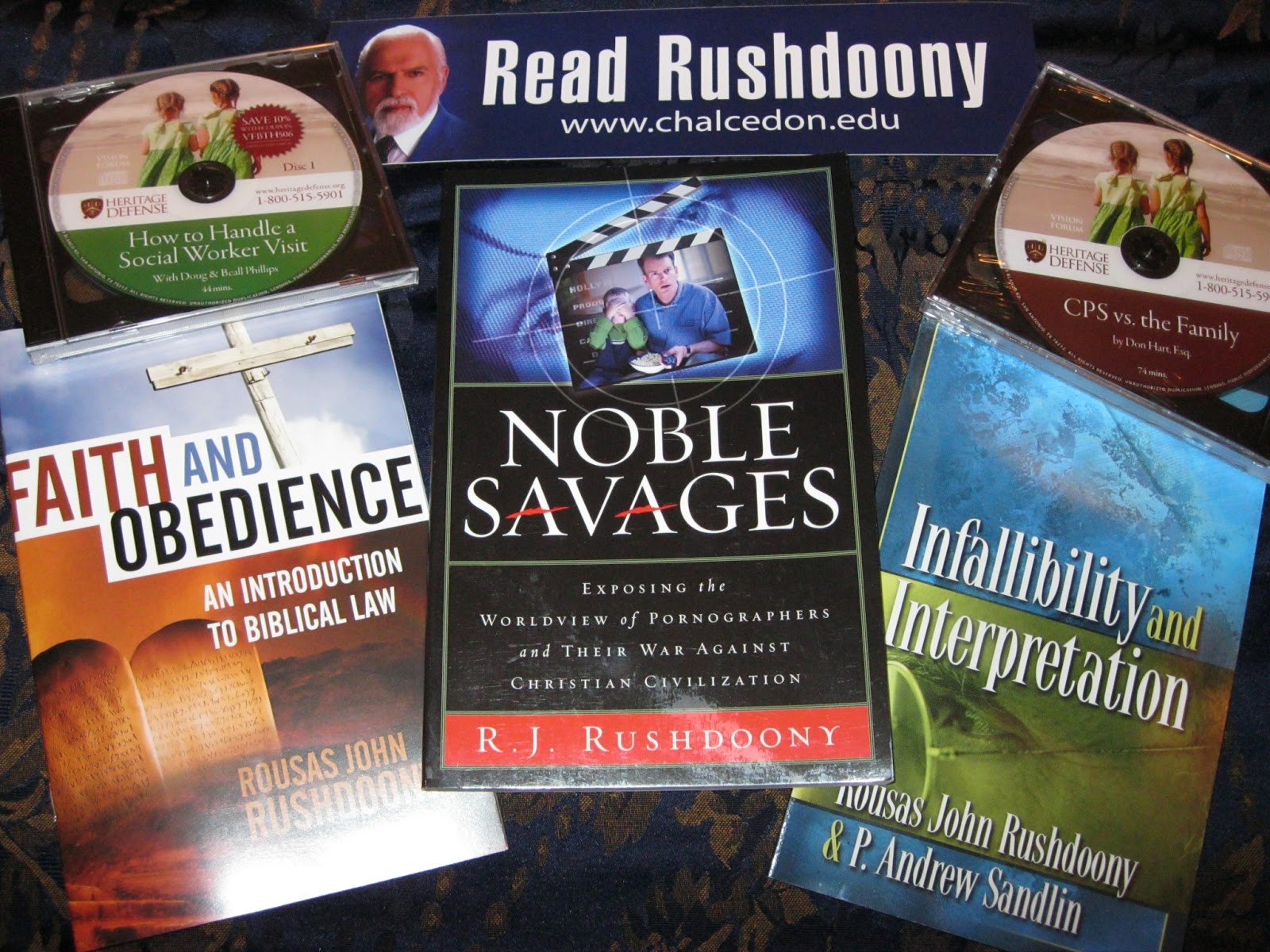
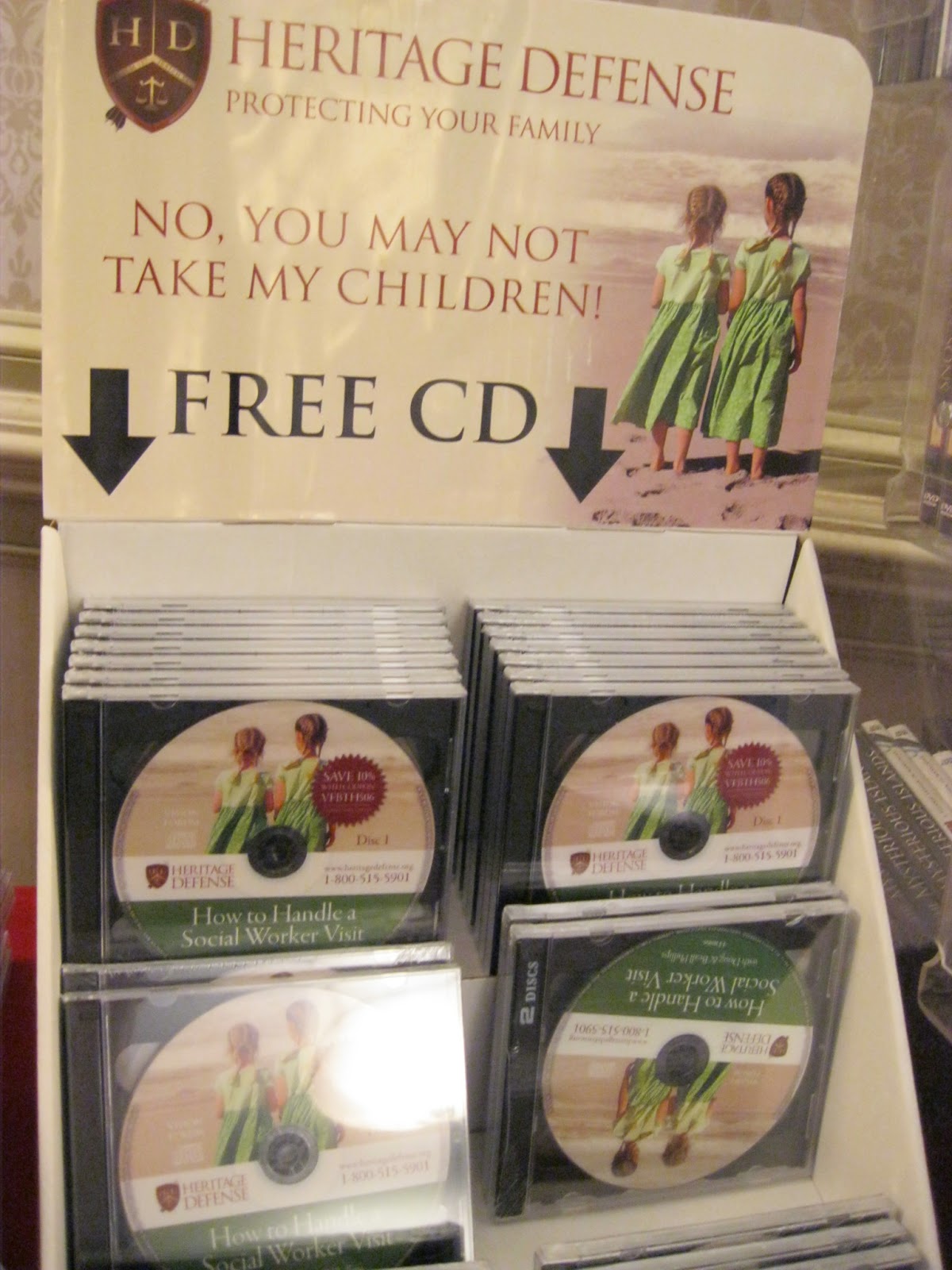
We Had To Be So Much More Amazing: Samantha Field’s Story

Samantha Field blogs at Defeating the Dragons, and she was recently featured in a Christianity Today story entitled, “Finding Faith After Spiritual Indoctrination.”

I’ve been reading the stories Homeschoolers Anonymous has published since it launched, and at first didn’t feel comfortable sharing my own experience with homeschooling, since it was unlike most of what I was reading. But, through reading these stories, it’s helped me come to grips with some of what I went through.

I’d like to start out by clarifying that my experience was fundamentally different– and yet, somehow, eerily the same. I spent most of my childhood in an Independent Fundamental Baptist (IFB) Church, and for that reason we were never part of the larger homeschooling movements — at least not organizationally. We didn’t use PACES, I’d never even heard of ATI until I went to Pensacola Christian College, we never went to any conferences, I didn’t travel in debate. In fact, reading about these stories made me slightly jealous; because of the cult-like environment of the church I was raised in, I never had the opportunity to interact with anyone outside of my church. I had one friend — one — from the time I was 9 until I left for college at 17.

But, until recently, I would have said that my experience with homeschooling was a favorable one. I started studying logic in third grade, I started studying Latin and Greek in fourth grade, I started reading the classics of the literary canon at nine. I skipped fifth grade entirely — fifth and sixth grade in math. I always tested extraordinarily well — I started testing on the graduate level in seventh grade, and I got a nearly-perfect score on the verbal portion of the SAT (I deliberately answered one of the questions “wrong” because I felt that the question was asking for a “liberal” political opinion). When I went to college, I maintained a 4.0 GPA my freshman year, and made the Dean’s List for every semester thereafter. I never needed to study — in fact, attending classes always felt like I was being “spoon fed” my education, when I had grown used to learning everything I needed to know simply from the reading. I went to graduate school and got a Master’s degree in English — and, again, did very well academically.

It took me a long time to realize that the academic excess I experienced had its good and ugly moments. The good was that I was an excellent reader, and I became a fairly decent writer and editor. It also gave me a lot of time to study music, and that paid for my first year in college.

There are a few ugly sides, and the first was the extraordinary amount of pressure I felt academically. I imagine many, if not most, homeschoolers can attest to the unbelievable amount of expectations we had to live up to. We had to be so much more amazing than any other kind of education. My parents were immeasurably proud of my achievements, and they lovingly wanted to “show me off,” but the constant pressure to perform resulted in a sense that the pressure followed me everywhere– even into college. I felt like I was constantly and unceasingly being evaluated by everyone I knew. I became an overachiever — to the point where several of my professors repeatedly had to tell me to calm down, relax, and do less work or I was going to kill myself.

Another facet of how homeschooling failed me was in mathematics, and I think my experience is fairly standard. Both of my parents are incredibly intelligent — my father works in a STEM field, and my mother did very well in math. However, while I was in high school, neither of them had a college education (a sacrifice my mother made, ironically, in order to stay at home and homeschool us) — and I was surrounded by an attitude that women didn’t belong in STEM fields because we’re just not suited for it. Our brains aren’t wired that way. So, I grew up believing that part of my identity of being a “good, godly, Christian woman” was being terrible at math. This became a self-fulfilling prophecy, even though I excelled in geometry and musical theory (which somehow were “artsy” so I was “allowed” to be good at them). When I met my husband, some of our conversations centered on his insistence that I would be good at math if I ever tried — and my insistence that no, I wasn’t. Until, one day, he explained algebra to me on a road trip. And it made perfect sense– so much sense, in fact, that I wondered why it had seemed like complete gibberish before.

And some of the things that get so heavily praised in the homeschooling movement ended up being unhealthy for me in the long run. We were isolated– we called it “being called out” and “separate,” and we laughed at people who asked us about “socialization.” We went to Wal-Mart in the middle of the day, and someone would inevitably ask what I was doing there. I would say that I was homeschooled, and without exception they would ask if I was “special needs.” And then, inevitably, I’d have to mount a defense for homeschooling.

As I’ve moved into my adult life, I’m beginning to see how deep the influences go. While we weren’t involved in any type of official organization, I grew up familiar with the Pearls, the Wilsons, and the Vision Forum. I read Beautiful Girlhood and believed that daughters should stay at home until they’re married. Now, I find it incredibly difficult to interact with people in a group setting, and it has nothing to do with not being familiar with “pop culture” (although that is occasionally a factor). I am completely hopeless at reading people, I don’t understand basic social interactions, I can’t navigate basic things like class discussions — even though I am articulate and outgoing. I’m frequently disabled by self-consciousness and nerves, and find it difficult to find a balance between silence or speaking too much. I don’t know how to do simple things like create boundaries with people.

I’m moving toward healthiness, slowly. It’s difficult, and hard going, but it’s happening. And part of my recovery is recognizing that even though I pretty much had the “ideal” homeschooling experience, it was still unhealthy.

Homeschool Movement and Abuse, An Introduction

HA note: The following is reprinted with permission from Julie Anne Smith’s blog Spiritual Sounding Board. It was originally published on October 4, 2012.

The lawsuit from my former abusive church has come and gone and I have been doing some deep thinking — trying to figure out what brought us to that particular church — what made that church appealing to us? I had to acknowledge that this church, like other prior churches, was strongly pro-homeschooling. In fact, if you didn’t homeschool, you may not feel very comfortable there. So, it made me go back further, all the way back to the very beginning — before we started homeschooling and were investigating. What I have discovered is alarming:  patriarchal teachings that are often times abusive, parenting styles that are often abusive, and ideas completely outside of mainstream Christianity are going on in the homeschool movement.

My husband and I have been married 27 years and have 7 children from 25 yrs down to our 6-yr old “caboose”.  We have always homeschooled.  We have always believed that this was the best choice for our family.  We have been to many churches due to my husband’s military service and job changes.  Many people have influenced us in our homeschooling, parenting, marriage, and our Christian life journey and right now, I am angry.   I am angry about what I have discovered looking over our marriage, looking at our parenting styles over the years, looking at decisions we have made, looking at people who influenced us — people we trusted to be godly, like-minded and who wanted the best for their children and families.

If you have not been connected with the homeschool movement and click on some of these links, you might say:  ”Um, yea, you drank the Kool-Aid long ago.”  If you’ve been in the homeschool movement, you will probably be nodding along and can reminisce with me. I will take you on a wild journey going back through what I have experienced or seen in the past couple decades as a homeschooling mom.  Here is a sampling, and not in any order, of the kinds of influences, beliefs, philosophies, practices we dealt with or were familiar with among the homeschooling movement over the years:

Why did we have so many children?  How do you know when your quiver is full?  Would we have had this many children if we hadn’t listened to specific teachings?  Who invented the jumper dress?  Why did I sometimes feel guilty if I didn’t wear my denim jumper?  I no longer own a denim jumper.  Who decided Gregg Harris or Michael Farris were the spokesmen for homeschoolers?  Why did so many homeschoolers flock to the articles and books of Mary Pride?

Is it okay to refrain from sex to not get pregnant or is that saying “no” to God’s blessings of children?  Did it really mean one isn’t trusting God if taking measures to prevent pregnancy after cycles returned 6 weeks postpartum (and round-the-clock nursing)?  How many blessings of babies did I prevent by taking matters in my own hands?  Is God mad at me for my “interference” of “His plan”?

What about all of those families who stop having babies after only 4 children or 2 children — are they disobeying God?  Why don’t they want God’s blessings?  Who is targeting the homeschooling community to convince them to pop out babies to overpopulate the world with Christians babies?  Why does this same dude bombard our mailboxes right before Christmas to encourage us to buy Christmas toys (gender specific boy toys for boy and girly girl toys for girls) when their family does not celebrate this “pagan” holiday?

How did I get to the point where I believed that I may be treading dangerously if I was not a member of the Homeschool Legal Defense Association? Who would protect me if someone from school district came to my door and wanted to find out why my children weren’t attending the evil government school down the block?  How many homeschool families printed out instructions on what to say to government officials  if “they” came unannounced to our door to interrogate?  How many of us had HSLDA phone numbers in a prominent place — just in case? Where did all of this fear come from?

Why was I corrected when I said “public” school instead of their preferred “government” school?  Is there an agenda going on? Who is feeding all of this? Who decided that boys should be owning their own home businesses to support their families?  Who decided that all colleges were bad until Patrick Henry College was founded by popular homeschool leaders in the “movement” and then all of a sudden it became “okay” and even “good” to send our kids away to college?

How did the homeschool movement influence my views as far as who I voted for or how involved I was in politics? How did they convince me that I was eating improperly and I needed to grind my own wheat and make my own bread?  How did the homeschool community have the inside scoop before my traditional-schooled friends from church when it was going to become the end-of-life-as-we knew-it during the Y2K scare?  Who brought that hype to the homeschool community?  Would you like to ask me how many homeschoolers I personally know who are still going through their stockpiles of grains? Seriously!

When did I get to the point where I looked down at my friends who were Christians and either sent their children to public or private schools when “they should” be teaching their own?  How did all of this happen?  Why do so many homeschoolers balk at immunizations? Why are some homeschoolers so proud?  Homeschooled kids were the smartest because they always won the National Spelling Bees, right? Who decided that homeschoolers should be involved with speech and debate? Why are so many families going to their state capitals and involving themselves in politics — because they were going to be the movers and shakers of world in the political arenas?  And why is my husband responsible for my faith and the faith of our children? And why do we have to go through him on spiritual matters?  Does God not speak directly to homeschool kids and wives?

Who told me about modesty and how I should be dressing and how my daughters should be dressing?  What does modesty have to do with homeschooling?  Why do all homeschool boys look alike with similar short haircuts?   Who convinced me that my children could never “date”, but must only “court” and that my husband gets to choose our children’s future spouses?  How did, “I Kissed Dating Goodbye” become such a popular book?  Who named the government as “evil” for wanting to know how our children are educated?  Why do homeschoolers assume the worst when they file their “notice to intent” with their local school district?

Why do they assume that the school district secretary doesn’t want to deal with homeschoolers and will instigate more trouble by wanting more information than required by law?  Who made up this purity ring ceremony — and that our teen daughters should wear their purity rings symbolizing their virginity until they replace it with their wedding ring?  Who started this thing where daughters shave their fathers’ beards? Below you will see an invitation to a Father Daughter Tea from Vision Forum. Fast forward to 1:37 to see daughters shaving their fathers. Um, really?

Who decided that boys should have their homes paid for before they get married?   And why are organized sports so wrong?    When did Young Earth creation become a primary issue to be a Christian and that if you didn’t believe it, you might not be Christian?   Why are scientists looked at as if suspect?  Psychology is of the devil.  What’s with all of those pictures of large families with matching clothes on the covers of homeschooling magazines?  Are my children supposed to be wearing matching clothes?  Who decided that was the right way to dress kids?  Who decided that women should only wear dresses?

And what about those who show up at conventions with head coverings — are we bad women if we don’t have them?   Who decided that family-integrated churches were better than traditional churches for our family?  Why is it that homeschoolers brag about their children being able to interact and socialize well, yet you can “pick them out” a mile away because they look and act so “different”?   Who has been instigating the us-vs-them mentality regarding so many of these topics?  Who decided that the only job that we should be teaching our daughters is to be “keepers of the home” and serving their fathers and then serving their future husbands?

Who decided a 1/4-inch plumber’s line was an appropriate tool for spanking?  Who taught us that if we had to repeat a command twice to our children, our children were being disobedient:  First-Time Obedience.   How did we let this group convince us that all infants should be able to go 4 hours between feedings.  What single man decided that fathers were an umbrella of authority over the family below God?  What same man also encouraged men and women to get vasectomies and tubal ligations reversed to allow God to control the size of their families and then paraded post-reversal children in front of the auditorium at conventions?

This is quite a diversion from spiritual abuse in the church, but I need to go there.  I now believe the homeschooling movement made our spiritually abusive church seem appealing to us.  Some of the above is just plain quirky, but other issues go much deeper affecting core spiritual beliefs and agendas.

My daughter, Hannah, is 25 yrs old and she was only homeschooled.  The first traditional school she attended was community college and last spring she became a college graduate. Her peers were from an early generation of the growing homeschool movement. More and more blogs are being published by young adults like my daughter who are “coming out” and sharing their homeschool experiences.  The stories are not pretty.    My daughter has shared some of her story.  And you can read the story I wrote about Hannah’s experience here.  In that story, you can get an idea of the controlling environment in which she lived and how she had to escape – it remains one of the most popular blog posts.

What she experienced at home has probably gone on in many homes.  I bear much responsibility for it.  I went along with it.  I have apologized to my daughter many times for it.   The abusive church we found also aligned with these philosophies of heavy-handed control of children, even adult children.  Hannah was 21 when she moved out.  She was not a child, yet we thought we owned her.

I assumed (yeah, I know about that word), that when we got into homeschooling that it was a safe community — a community where children’s best interest was at heart.  We wanted to have the primary influence in the education of our children.  That’s good, right?

But I have discovered that there is an underlying agenda in the homeschooling community that has been there all along — even years before I started — and it continues to this day. I believe that some of this underlying current — taken to an extreme — could be responsible for breaking up families, causing abuse, wreaking havoc on people’s spiritual life.

I firmly believe that God used the lawsuit in a powerful way to highlight the issue of spiritual abuse in the church.  He was there during the entire time providing amazing support for me.  My life is rich having gone through it.  But now I’m wondering if God is using another experience of my life to share here.

While I have spent countless hours writing blog posts about spiritual abuse in the church, I think there is a setup for spiritual abuse that originates in the homeschool movement. In our abusive church, we felt a “kindred spirit” (and all the homeschool moms just laughed at me with that phrase) in the church because of with like-minded teachings and beliefs. Some of these ideas need to be explored further.

I think it’s important to hear from these young adults who have lived it and are now trying to put the pieces together of their childhood together as they begin their families.