Relationships, A Series: Part Seven — The Five-Year Relationship Plan

Screen Shot 2013-07-29 at 9.52.55 AM

HA note: This series is reprinted with permission from Caleigh Royer’s blog, Profligate Truth. Part Seven of this series was originally published on June 9, 2013.

*****

Also in this series: Part One: What Is Courtship? | Part Two: We Were Best Friends | Part Three: The Calm Before The Storm | Part Four: To Lose One’s Best Friend | Part Five: To My Darling Clementine | Part Six: The Storm Starts Brewing | Part Seven: The Five-Year Relationship Plan | Part Eight: The Means To An End | Part Nine: We Made It | Part Ten: I Am A Phoenix | Part Eleven: Conclusion, Don’t Brush Off the Next Generation

*****

Part Seven — The Five-Year Relationship Plan

I have to keep moving with these posts or else I will lose momentum and it will become even more difficult to continue the story.

I want to explain a little bit about why this is so difficult for me to write, but also why I need to write our story. From that first devastating break in Phil’s and my friendship, I began losing a lot of friends, I faced opposition at home and from other parents, people I barely knew, and those who I thought were friends. I have always been sensitive to my heart, to my conscience, and it killed me when I couldn’t seem to get it across that my conscience was clear in my loving Phil and continuing to be in a relationship with him.

I was being accused of lust, idolatry, bitterness by my parents, I was called rebellious, disobedient, dishonoring of my parents by others around me. I was having friends question my heart, and asking whether or not I was being blind to wisdom just because I wanted to do what I wanted to do. I felt almost nothing but shame, false guilt, and pain from those moments on. Shame because I wasn’t doing what others wanted me to do and feeling guilt because my conscience was being used against me. I was also feeling pain because what I felt was right and felt at peace with wasn’t even close to what everyone else around me said was “right.”

I felt manipulated, like I was being used against myself.

I felt alone, I felt the few friends I could trust were my lifelines, and without them Phil and I probably wouldn’t have made it. I watched the people who used to “look up to me” look down at me in disgust as my parents told stories of my dishonorable actions.

Here are the reasons why I need to write our story. By writing our story, I am owning the story. I am spreading it out and accepting that it is our story; the good, the painful, the ugly, and the bad.

I am acknowledging that our story is amazing; amazing because we made it.

Amazing because Phil and I are married, very amazingly happily married. It’s amazing because we came out stronger and more in love with each other than before. It’s amazing because we stayed true to our hearts no matter how many people tried to break us apart.

That’s why I need to write this story.

That’s why it’s important for me to accept it.

The next year and a half that I will be covering in the next few parts are the ones that make the past few posts seem like a walk through the park.

*****

That week of talking after 6 months of silence was pure bliss.

We decided that we were going to write up relationship guidelines that at the end of the week we would try to present to our parents. We spent hours on the phone and online trying to work through what we thoughts our parents would approve of (incredibly strict talking guidelines, timelines, and so forth). We talked with the couple who were becoming mentors to me about what would be best to put into this five year plan that we were writing up.

We even started working on what would become roughly a year later our budget that is still in play to this day.

We talked about where we would want to live when we got married, we talked about how many kids we wanted, we talked about their names, we talked about the kind of house we’d want to live in.

We talked about everything.

I vaguely remember my grandfather being in town that week, but I wasn’t around very much. Phil was taking my time and I sure as heck wasn’t going to stop that. The week began winding down and we started figuring out what the game plan was going to be presenting this five year relationship plan to our parents.

We came to the conclusion that approaching my dad and asking for his blessing on our relationship was the first step.

And we decided that it was going to be on Sunday. Phil approached my dad at church, nervous as heck, and actually came across a little abrupt to my dad, asking if my dad could talk with him later that afternoon. Oh, the day started out bad from the start, and that should have been a sign for us to stop because we both got burned. The first sign was Phil’s car battery dying. He almost didn’t make it in time to meet with my dad. The second was getting questioned on the way home from church by my dad about this meeting with Phil.

The third sign that the day was going ridiculously wrong was when I watched my dad talking with Phil and saw the typical signs of my dad BSing Phil. The typical long drawn out speech that my dad gives when he doesn’t want to deal with something and is annoyed, but is going to keep the polite man face up. Sure enough, Phil left, I waited a few moments and then went inside, only to be met by two furious parents, one of them a mom I had never seen that angry with me. My parents talked and yelled at me about how disrespectful I had been to them, how I had dishonored my dad, how Phil was disgustingly disrespectful to my dad by asking him for his blessing on our relationship.

I have never been able to understand how a man asking to be in a relationship with me was a dishonoring thing.

Or how Phil asking in a very polite manner was disrespectful to my dad.

I felt ashamed of my “sin” of dishonoring my parents for wanting to talk with the man I loved. Both Phil and I were talked down about how sinful we had been to talk. I still feel anger and confusion over just why what we did was considered sinful.

The weeks that followed brought confusion, pain for both of us, and a tentative continuing of our under the radar relationship. We both decided that it was more important to stay true to our hearts than to continue a forced separation. Phil gave me thumb drives with letters to me, his favorite music, and class schedules, and I wrote him letters and we continued to talk about our future. Thanksgiving passed, Christmas was fast approaching. I gave Phil a little figurine made out of nuts and bolts who was a little man at a desk on a metal laptop. And I also made him a pair of half fingered mitts and a scarf. I think he gave me a chain mail medallion. New Year’s crept up on us and I was greatly looking forward to seeing Phil at a mutual friend’s party.

At this point, Phil knew almost everything that had to do with my family.

I told him about the nightmares I had of my dad beating me. I told him about how scared I was when my dad got angry, I told him about the depression I felt when I was home. Phil became more and more my rock as things continued to get worse between my dad and I. Ever since the year I had found out about my dad’s issues, I haven’t been able to talk with him without feeling some sense of uneasiness, discomfort, and distrust.

By the time the new year’s party rolled around, my dad and I weren’t really on speaking terms again. I have no idea why we weren’t this time, probably something I didn’t say that made him pissed with me. That happened way too often for me to keep track of anymore. I was planning on going to to the party, but mom told me I still had to ask dad. So I went and asked him. I already knew Phil was going to be there, but I sure as heck wasn’t going to volunteer the information. My dad told me I could go, but as I turned to walk away, he told me that if Phil was there, that I had to come home right away.

My heart sank.

I needed this party.

Outside of my job, I didn’t see anyone, like at all. I was incredibly isolated.

Besides seeing Phil sometimes after work, at single’s meetings at church, I rarely saw friends. I frantically emailed Phil and asked him not to come. I told him that I couldn’t ignore my dad’s command if he showed up. My conscience wouldn’t allow it.

Frankly, I have no idea what I thought, or was afraid, my dad would do if I didn’t do this stupid thing. I was being scared into doing what he said because he knew that he still had quite a few pulls over me. I was taken advantage of because of my sensitivity to what was put to me as the right thing to do. My mom told me that one day. I don’t know why she told me that dad could get me to do what he wanted because of my sensitive spirit. After finding that out I was even more wary of my dad. Rightly so, I believe. 

Phil told me to enjoy the party for him and that he would spend the evening thinking about me and working on some projects. Throughout our relationship, up till a big thing happened in January of 2011, Phil tried his hardest to pull the fire off of me when it came to my dad. He was too much of a good guy.

I am angry about how many times my dad took advantage of Phil’s genuine care for me and his desire to do what was right.

After the beginning of 2010 had passed, life at home and around my parents began to reach new heights of buttons being pushed and nasty responses to almost anything I did. Sometime around February, I met a new friend, and shortly afterward got an email from her saying that her and her husband would like to offer me a place in their new house. She knew that life was hard at home, knew about Phil and I, and her and her husband wanted to give me an escape.

I quietly, secretly, began planning to move out. I was freaked out half to death that my parents would kill me and forcefully keep me at home once I told them that I was going to move out. I was pretty set on doing it, and even went and separated my bank account from them because the last thing I wanted happening was my money being taken.

I didn’t put anything past them.

May came around and I found out that major building delays were happening with the house that I was supposed to have a room in. That was seriously pushing back my projected move out date. The end of May came, and I decided to tell my parents anyway that I was going to move out. I wanted to tell them I was moving out, not that I wanted to move out. I didn’t want to give them any room to shut me down.

Little did I know that that was futile. I sat down with both my parents and told them I was moving out in a few weeks.

They immediately used their biggest weapon against me: my siblings.

They told me how devastated my siblings would be if I moved out. They told me how much of a good influence I was on them, and how they would need a big sister. They, once again, took advantage of my sensitive heart and manipulated me into staying. And yes, I stayed. I could feel the despair settle in even deeper in my heart. Twice in the months that followed I had a bad breakdown and asked two different friends to come get me. I was gone for hours both times, and I wish I had had the courage to leave when I had originally wanted to.

But, I suppose there is a reason for everything.

I also got something really special at the end of May.

My aunt had been saving a gorgeous sapphire ring for me, and I called her when I knew she was going to be in the area to ask for the ring. She brought it out from CA that May.

The ring fit perfectly.

Now if I could only wear it as an outward sign of my commitment to Phil.

*****

To be continued.
A Week of Joy: Call for Contributions to HA’s Upcoming Positives Series

Screen Shot 2013-08-06 at 1.21.00 PM

By R.L. Stollar, HA Community Coordinator

*****

I have a very complicated relationship with homeschooling.

In many ways I have significant problems with the Christian homeschool movement; in many other ways, however, I appreciate my homeschool education. My education was lacking in some areas, particularly science, but it was also exceptionally above average in other areas, such as language arts and communication. I have suffered emotional and verbal abuse in homeschooling contexts. But this was at the hands of other homeschooling parents, not my own parents. My parents have been extraordinarily supportive of Homeschoolers Anonymous, for which I am deeply grateful. Also, while I experienced emotional and verbal abuse in homeschooling contexts, I have also experienced sexual abuse in a public school context.

I am under no delusion about the universality of abuse.

It is for these reasons that I do not primarily see my identity as a survivor of homeschooling. In many ways I am a survivor: I am a survivor of abuse, sometimes from abuse in homeschooling and sometimes not. But my experiences are too mixed to be able to fairly isolate only one community from which I am a survivor. I have instead channeled that complex pain into wanting to make the world a better place in whatever context I can. Since homeschooling was my life for so many years, I see myself as an advocate for other homeschoolers who have had far worse experiences than I have.

Honestly, most of my experiences growing up in SELAH and CHEA, my California homeschool groups, were positive. It was while traveling around the country with Communicators for Christ that my eyes were opened to all the different subcultures and ideologies that can create real and serious damage to children. Growing up, I only had an inkling about some of these phenomena. I did not begin to connect the dots until I came into contact with thousands of other homeschoolers and began observing patterns.

Much of my life has revolved around this sort of tension, or dialectic: there is so much good, and there is much bad; there is so much pain, and there is so much joy.

As we begin our next “week series,” I am hoping that as a community we can explore this sense of tension and the reality of dialectic in our experiences.

On July 15, we asked you as a community to pick the next topic you’d like to see us address as a community. We received votes via Facebook comments, private messages, emails, and Tweets. Honestly, there was a good number of votes for all four of the options: (1) Mental health, mental illness week, (2) Abusive relationships week, (3) Grandparent(s) appreciation week, and (4) Positives (what you liked about homeschooling) week.

No one topic won by a landslide.

So obviously we need to cover all of these at some point in the near future. Mental health came in second, with a lot of vocal support for it. So it seems that would be the most appropriate topic for the series after this next one.

For the immediate next series, the winning topic was positives.

While this topic was the winner, it also received a lot of pushback — which, frankly, I understand. If you have suffered neglect or abuse in homeschooling, you’ve probably spent the majority of your life wearing a “I love homeschooling and nothing is wrong with it” mask. This might be the first time in your entire life that you’ve felt the freedom to talk about the negatives. You might be thinking, “I don’t want to talk about positives. I’ve done nothing but talk about the positives since I was a kid.”

Honestly, I personally relate to that sentiment.

At the same time that every fiber of my being wants to finally talk about the negatives, there is a place for the positives in our community. Not everyone in our community has had a bad experience. Not every ally here has experienced our pain. But they are here, supporting us, and listening to us.

I want to give people with positive experiences a place to be heard, too.

Our allies’ positive experiences are fundamentally vital to making homeschooling better for future generations. Those of us with good stories are examples of how homeschooling can be done well.

For every story that says, “This was a problem,” the question is raised: “What is the solution?” Sharing positive experiences is crucial to teaching current and future homeschooling parents the difference between those environments that led to pain and those environments that led to joy.

We need to hear those.

So those of you in our community that have had positive experiences, this is your time to speak up.

And to those of you in our community that have had negative experiences, this is actually also your time.

A week of positives does not mean we are just talking about generally positive homeschooling experiences. Yes, it means that we are taking a week to celebrate the good things. But it also means we are dedicating time to celebrate those moments of joy that contrasted with those moments of pain. This is a week of joy for everyone: to share in others’ good experiences, and also to celebrate those people or those moments that gave us a hope to carry on, that gave us maybe a unique experience of unconditional love.

I have moments like that. I remember when a horde of parents surrounded me and yelled at me (no exaggeration), and one parent silently pulled me out of that crowd and went for a walk with me. That one parent in a very real sense rescued me. He told me that, regardless of what the other parents might say, I was valuable. I was a human being and I was to be unconditionally loved.

I learned that lesson from a conservative Christian homeschooling father. So I celebrate him.

I remember that moment because moments like that, though maybe few and far between, are some of my favorite memories to this day.

Our upcoming positives week is an official celebration

Of parents that succeeded in giving their kids a good education, of those adults or peers that showed you real compassion, love, or respect, of those moments that gave you hope and healing amidst not-so-positive experiences.

Let’s celebrate all of those things together.

*****

To contribute:

If you are interested in contributing, here are some ideas for what you could write about:

  1. Your personal story of a positive homeschool education
  2. Your personal story of positive aspects of your homeschool education
  3. An experience you had where another person in your homeschool life (one of your parents, another homeschooling parent, a friend, a tutor, etc.) showed you love or respect that maybe you had not experienced before
  4. An experience you had where another person in your homeschool life taught you something that gave you hope about the future, or maybe a personal struggle you had

You do not have to pick just one topic. You could combine several of these ideas, or bring your own ideas to the table, or — if you have a lot to say — contribute several pieces on a variety of these topics.

The deadline for submission is August 23, 2013.

As always, you can contribute anonymously or publicly.

If you interested in participating in this, please email us at homeschoolersanonymous@gmail.com.

Relationships, A Series: Part Six — The Storm Starts Brewing

Screen Shot 2013-07-29 at 9.52.55 AM

HA note: This series is reprinted with permission from Caleigh Royer’s blog, Profligate Truth. Part Six of this series was originally published on June 7, 2013.

*****

Also in this series: Part One: What Is Courtship? | Part Two: We Were Best Friends | Part Three: The Calm Before The Storm | Part Four: To Lose One’s Best Friend | Part Five: To My Darling Clementine | Part Six: The Storm Starts Brewing | Part Seven: The Five-Year Relationship Plan | Part Eight: The Means To An End | Part Nine: We Made It | Part Ten: I Am A Phoenix | Part Eleven: Conclusion, Don’t Brush Off the Next Generation

*****

Part Six — The Storm Starts Brewing

For those who have been following Phil’s and my story, this is where is starts to get really uncomfortable to write. If I thought the past few posts have been hard, this is where I start losing hope and when I lost hope that things would ever be happy again.

This is the beginning of the darkest two years I have ever been through yet.

Also, on another note, as I’ve been reading through my original journal entries, I am realizing that there is a lot I am leaving out, and a lot that I am having to condense. Not only that, but it is really sad to read just how brainwashed I still was during this too. A lot of my honest reactions weren’t until later, much, much later after the original incident. I still believed that my dad was going to do right in this relationship.

I still believed that fathers were supposed to rule over their children’s relationships, and that it was my job to trust my dad and sit back and be a good girl.

Oh, I was so wrong.

*****

The calm I felt when I realized that I truly did love Phil didn’t last for very long. In fact, it only lasted until I had gotten home that night and faced my dad. I don’t know what I had been expecting when I called him at work to confess my love for Phil and to ask my dad to help bring us back together.

Was there some part of me that was actually normal and healthy and desiring a daddy who did what daddies are supposed to do?

Maybe, I don’t know, I just know for a moment there when I called my dad, I was in another world. Sitting down with my dad that night, I sat on the corner of the couch in which I felt most safe. I sat under a lamp and Dad sat in a chair across from me. Looking back, I will admit it felt like sitting in an interrogation and to this day, if the only seat available in a room is one under a light, I will sit on the floor or lean up against a wall instead of sitting in that seat.

My dad sat there looking at me and I waited, holding the tear stained piece of paper I had written on all of the reasons I could think of as to why I loved Phil, and why we should talk. I think I read the notes to my dad, and then nervously, eagerly waited for his response. His response was what I should have expected, but it still threw me off when he gave it.

He gave me this long sermon about how I was lusting after Phil and that I was making him an idol, and how it wasn’t wisdom for us to interact at all right now.

I was floored and even sitting here writing this, I am feeling the wrath in the pit of my stomach starting to churn again. Those three things were his main points, and yet I sat there for at least a half hour listening to his flowery dressed up speech.

The thing that made me the most mad was here was a man with an addiction accusing me of lust simply because I said I loved a guy and wanted to be with him.

As with everything that was said to me during those years, and even to today, I can’t let the words go until I’ve thought through and pondered everything. When my dad accused me of lusting after Phil, I went bed that night turning that over and over and over in my brain and the more I thought about it the less I could find that was backing up his point. See, the thing with my dad is that he talks some good stuff, but if you can get past the flowery words, there is very little weight to what he is actually saying. I can’t count the number of conversations I’ve had with my dad, walked away feeling like he answered my questions, only to realize that he hadn’t answered anything and in fact had only made me more confused.

About the same time I was working all of this, Phil was realizing that he was even more in love with me than ever. He told me later that at this point he had no idea how I felt towards him, but he loved me even to the point of wanting only what was best for me, even if that meant me falling for someone else.

The month after I realized I love this man, I spent a week up in PA with the couple that have become my surrogate parents in a way. During that time, Phil and his dad met with my mom and dad. I remember anxiously sitting by the phone after making my mom promise that she would call me and tell me how the meeting went after Phil had left.

I paced around the house up in PA, crying, wondering, and spending hours talking with this dear couple as I waited to hear what was going to come of this meeting. I was hoping, hoping with all that I could that this was when I would find out if Phil was waiting for me or not. I managed to get a hold of Mom late that evening and she told me the meeting went pretty good.

I asked her if Phil liked me, if he had said anything, and she gave me a very cryptic answer of something like he said he was waiting for me.

I was over the moon, and went to bed that night feeling like maybe there was hope, maybe this guy really did care for me.

I got back from my week in PA eager to see where things were going with Phil. I was also uneasy because I talked with my dad the day after the meeting and his lack of info about how the meeting gave me enough of a red flag that I wasn’t sure what to expect. Anti-climatically after getting back from my week of rest, almost nothing happened with Phil for a few weeks until one day, my family was getting the internet back at our house and needed help with setting up the computers and Phil was the guy to help. I was thrilled that Phil was going to be coming over to help with the computers. That meant that Phil was going to be in the same house that I was, he was going to be sitting in the same room I could be sitting in and maybe I would get to talk with him.

Wow, I could not have described a more awkward scene than the first few times Phil came over to work on our computers. I didn’t know whether or not I should say anything to him, I didn’t know if I was going to face a talking to from my dad if he knew that I had even said so much as hello to Phil. We both skirted around the fact that we were in the same room and that it is usually courteous to say hello to each other and instead simply enjoyed the fact that we could look at each other. That had to be enough for now because the risk of talking, the risk of my dad’s wrath on me was too great.  By the third or fourth time Phil had come over, I had worked up enough guts to give him the letter that I had written to him almost six months before telling him that I would wait for him for as long as it took.

I gave him the letter and asked him to read it in front of me. I watched him open the envelope and major nerves set in as I watched him read through it. I don’t think I’ve ever seen a guy get that pale before. The color drained from his face as he suddenly stood up, eyes shinning, smiling from ear to ear as he rushed to the bathroom.

I had no idea what was going on but found out later that I had made him so happy, so incredibly nervous, and so relieved that he felt like he was going to lose his lunch.

He thanked me profusely for the letter when he had the chance to say something privately to me. Him thanking me was enough in that moment, but I began realizing as the days and weeks went on that I had no idea still how he felt about me. It seemed pretty obvious from how he acted around me, but  I had not heard it straight from his mouth.

That’s when I snapped. It was as if the past six months had been built on a foundation that was under enormous pressure and it was no longer able to stand up to it.

I didn’t realize it in that moment, but when I finally did snap, it was one of the first actually healthy things I had ever done in my life.

It was a beautiful, sunny fall day at the beginning of October, four years ago, I knew that Phil was probably still in class (side-note: the first full college semester that we were friends, Phil had given me his class schedule so I would know when he was online. and ever since then he had somehow managed to let me know what his class schedule was for each semester after that), but that didn’t matter, I had had enough. I sat outside on the hill at the side of the house, dialed his number, and left a message asking if he could please call me when he got a chance.

It was probably the first time in over six months I had spoken a full, confident sentence to Phil, even if it was in a message. I hung up, unsure if I was really sure of what I wanted to talk with him about, of even if he would call back. Ah, but I didn’t have to wait long for an answer, he called me back within five minutes. He was breathless like he had just been running (which I found out, he had. he had been so excited to get a message from me that he had raced out of class so he could call me back).

After getting the pleasantries out of the way, I asked the question that I had been burning to ask from day one; “what are your feelings towards me?”

His response was instantaneous and I will never forget it.

He told me that he loved me, he wanted to spend the rest of his life with me. He told me that I was his best friend, that he wanted to be with me more than ever and he wanted to marry me.

That day, October 6th, 2009, I felt for the first time I had made the right choice, I was going to stick with this guy for as long as I could.

That day was also the beginning of a wonderful week that ended with an enormous bang that left us reeling for several months after. But that part of the story is going to have to wait till next time.

*****

To be continued.

Call For Help: Sarah’s Story

SONY DSC

HA note: The following call for help is shared by Hännah Ettinger, who blogs at Wine & Marble. It includes the personal story of Sarah.

Note from Hännah: I’ve used my blog to share the story of a friend’s sister after she got kicked out of her QF family home for being vegan, and you wonderful people chipped in to raise $10,000 for her to replace her clothes, art supplies, and go toward her college tuition in the fall. 

This time, a 24 year old QF daughter, Sarah, reached out to me to share her story with you — she’s a beautiful person with a knack for words, and she wrote up her story here for you to read. Sarah just started blogging at The Pathway Maker, and will be doing a series of posts on her story in longer form. We set up a PayPal account specifically for donations to her tuition fund, and she made an Amazon wishlist for her school and apartment supplies that you can help her out with, too. 

*****

Sarah’s Story

My world spun inside my head, each thought more terrifying than the last. I would lose my soul. The demons would get in if I ate that food. They would get in.

Then my father was there, forcing the spout of the water bottle between my clenched teeth, jamming it into my mouth. I struggled and fell. My father bent over me, forcing the water down my throat as I choked and cried out in panic. Over a decade of my internal tortures had come and gone, but now things were worse than ever.

I hadn’t always been like this. My early childhood had been reasonably happy, despite the anger and the yelling and the spanking. But these had never crushed my spirit, and I had been a carefree child in many respects. But then things changed.

I began struggling with scrupulosity as a young child. My labored confessions were the first signs of the mental illness which would destroy me for years. As if this growing inner torment were not enough, I began to struggle to see the physical world around me and learned, at the age of 8, that I would one day be legally blind because of an incurable retinal disease.

I lost my sight gradually over a period of several years, and at the same time, struggled increasingly with my mental illness, later diagnosed as Obsessive Compulsive Disorder.*

When I began exhibiting signs of OCD, it manifested in the form of terrifying, uncontrollable thoughts (obsessions) that prompted ritualistic action responses (compulsions). Because my OCD was religious in nature, it was only exacerbated by my fundamentalist, Christian Patriarchal, Quiverfull, homeschooled upbringing. My fear of hell and demonic possession drove me to pray for hours, forego food and sleep and pace for hours in the middle of the night.

My family treated my OCD like silliness or sin that could be rationalized or prayed away. Worse, while they disregarded my obvious need for mental health assistance, they treated me as though I was already possessed by demons

*****

For the rest of Sarah’s story, or for more information on how you can help her, please see Hännah’s original post at Wine & Marble.

How I Learned To Stop Being Afraid and Love Other Religions: Part Three, I Celebrate My Childlike Wonder

screen-shot-2013-07-30-at-8-26-49-pm

HA note: The following is reprinted with permission from R.L. Stollar’s personal blog. It was originally published on August 1, 2013.

 < Part Two: When Buddhism Saved My Life

*****

“If you were to say to the grown-ups: ‘I saw a beautiful house made of rosy brick, with geraniums in the windows and doves on the roof,’ they would not be able to get any idea of that house at all. You would have to say to them, ‘I saw a house that cost $20,000.’ Then they would exclaim, ‘Oh, what a pretty house that is!’”

~Antoine de Saint Exupéry, The Little Prince

*****

Part Three: I Celebrate My Childlike Wonder

The message I received growing up, from homeschool curriculums to highschool worldview camps, was a message about a dichotomy:

Everything is either for us or against us, us versus them, heaven or hell, Biblical Worldview™ or Bust.

Summit Ministries, for example, reduced every belief system in the world to only three — Secular Humanism, Transcendentalism, and Theism. And if you weren’t a member of that third category (and not just a member of the category, but also the sub-sub-sub-category of Biblical Worldview Theism), you were dangerous. You were to be kept at an arm’s distance, and it would be more than an arm’s distance, except that — if you were too far away, we couldn’t evangelize to you.

But as I left my youthful suburb behind, I realized life is far more complicated. The American Christian worldview was trying so hard to make everything neatly packaged, with a pretty bow on top, so that we wouldn’t “lose the faith” in college — that it forgot to take other people seriously. Looking back at Summit’s lesson plans, I cannot help but employ facepalm after facepalm. Reading quotations from Chuck Colson’s How Now Shall We Live?, which I remember made the rounds in my homeschooling community in highschool, I cannot help but cringe at its abundant use of straw men.

I wish I wasn’t raised to fear other ideas. 

I wish I wasn’t raised to fit people neatly into summer camp categories.

Most of all, I wish I didn’t have to fight so hard to free myself from the Biblical Worldview™ or Bust mentality. Because it took a whole lot of energy to extricate myself from that.

Once I broke free, once I began to see that what I was taught as “Christianity” wasn’t some pure set of doctrines but rather a particular moment-in-time’s interpretation of doctrines — and also a whole lot more — I began to see other religions differently, too. I began to see that they had a lot to offer me. Buddhism wasn’t just a line in a binder that gets stamped either “True” or “False.” Neither was Daoism or Hinduism or any other -ism. They were complicated movements full of people and history and ideas and passions, fueled by heartache and hope and joy and terror.

They were made of humans. They were just like me. They were asking the exact same questions I was, and for the exact same reasons. They breathed, they felt, they lived, they loved, they hated — everything that made them relatable and understandable and beautiful and tragic was everything that was conveniently omitted from my education.

I was taught to refute. I was not taught to relate.

I was taught to analyze. I was not taught to love.

I was taught to argue. I was not taught to appreciate.

As I learned to approach life with humility and openness, I began to see the complexity. I began to see what other religions had to offer. I learned so many important life lessons from this process — I learned from Buddhism, for example, how to ground my mind when my depression got overwhelming. I learned from Daoism how censorship, control, and domination are not the only forms of influence and leadership.

I learned that there are so many beautiful and good things in other religions that have nothing to do with the Biblical Worldview™. 

I can freely admit that beauty and that goodness without fear. Because I came to realize that religion is more than a set of propositions that are true or false.

It is a force that underlies and propels human thinking and interaction. At the same time it is also the final touch to that thinking and interaction, an acrylic fixative for the oil painting of human ingenuity. Human beings have a desire to make sense of their world, to find a meaning in that sense, and to be inspired by the meaning they find.

In this sense, therefore, religion is both true and false, Christian and pagan, personal and social, relative and universal, oppressive and liberating. It can be each and every one because religion is not one particular entity. It is an edifice of both the idiosyncratic and the profound. As propositional truth about the universe’s origin, it can be true or false; as revealing the delicacy of human nature, it can be beautiful or ugly; as a particular society’s intense struggle to understand itself and its universe, it can either be faithful to that struggle or unfaithful; as encompassing disciplines such as meditation or yoga, it can either be healing or aggravating; and so forth. In short, it is so much more than what the evangelical culture believes.

One cannot divide religion into the simple categories of “right” and “wrong” based on whether it affirms the humanity and divinity of Jesus.

Even if one does affirm Jesus as such, one cannot say this is the essence of religion.

To see religion from a broader perspective doesn’t need to threaten anyone. For example, Christianity’s understanding of the universe can easily be understood as underlying this analysis. According to the Book of Genesis, the God of Israel created humanity in His image. He created humanity with the tools of reason, a blistering curiosity, and the insatiable need to put together the puzzle pieces of the world into a coherent picture that makes sense of this world. No matter what religion one adheres to, therefore, since one is still human in the sense of being made in God’s image, one will experience this insatiable need for a coherent portrait of reality.

Religion as such is the product of this need. The various religions are the attempts of human cultures throughout the history of the world to create a coherent picture of reality.

Even the contemporary American interpretation of Christianity is not a flawless deduction from the Old and New Testaments but rather one more human attempt at coherence.

To some people, of course, this necessitates a cynicism or pessimism regarding religion. (To the contemporary American Christian, it just implies heresy.) If religion is interpretation, how can anyone claim to have the right interpretation? While an important question, this inquiry all too often implies that interpretation as a process lacks any sort of inherent value. I simply disagree.

Maybe I read too many children’s books, but I am a big fan of process. I am forever unfolding, learning new things each day.

I will hold onto my wonder until the day I die.

Even if the process becomes tedious, it bears many gifts. It bears treasures unto the painter, the musician, the lover, and the logician. While religions have no doubt caused catastrophic pain and suffering (and I don’t mean to diminish this fact, but my personal struggle is appreciating other religions, not hating them; I was raised to hate most of them), religions are also the artifacts of cultures worthy to be preserved in the grandest of museums—remnants of the human struggle to understand an alienating and a chaotic world; the courageous refusals to cave into meaningless; the unparalleled artistry and creativity employed to justify such refusals.

Consider the poetic fury of the Rg Veda, or the kaleidoscopic narrative of theMahabharata, an epic unparalleled in mass and muse by the greatest of Greek and Roman artists. (Really, just read the Mahabharata, period. It makes the Iliad look like a Young Adult novel.) Plumb the depths of Dante’s Inferno. Bask in the apocalypse of St. John in his Book of Revelations. Know the deeply felt vibration of the mystical Om, or the karmapa chenno of the Diamond Way. Hear the austere men of faith solemnly chat their divine liturgies, especially the “One Hundred and Second Psalm” by the Russian Patriarchate Choir; adore the children who delight in their Sunday School rhymes.

Say what one may about these people and their faiths, yet think about how amazing it is —

Human beings have created art, song, and dance; tens of thousands of gods; histories and philosophies and mythologies — all to figure out life.

And then think about something else.

Think about the negatives, too, for one moment.

You cannot escape the negatives, no matter how beautiful your religion is, no matter how “biblical” your view of the world is.

One moment the Roman Catholic Church finds itself embroiled in sex scandals—the next moment it is the American Protestant Church, as Calvary Chapel and Sovereign Grace crumble under the weight of child abuse. Before that, human sacrifice occurred, documented in the Mahabharata. Isaac of the Old Testament also intended to sacrifice his son for his deity’s pleasure. King David of Israel committed adultery. So did Pastor Ted Haggard. So did Arjuna of Hindu fame. Chuang Tzu was a lazy bastard. Prominent Buddhists are notable money machines; The Purpose-Driven Life is, too.

This is the human element of religion.

It is the element of Midas: everything humanity lays its eager fingers upon transforms into a human endeavor, no matter how superhuman the endeavor might have first manifested.

When the Buddha left his palace home to seek enlightenment, he did not intend to create a worldwide movement full of sects that constantly bicker and would try to oust each other out of power. Neither did Jesus. In the 1950′s, Jim Jones had a seemingly simple goal: to create the People’s Temple, an inter-racial mission for the sick, homeless and jobless. Decades later, the movement would end with over nine hundred adults and children drinking cyanide-laced grape Kool-Aid. The so-called Moral Majority seemed to have the blessing of God in 1978; by 1989 it fell apart, with many of its adherents later appearing in the news for sexual transgressions and drug abuse.

We cannot avoid this human element, any more than I think we can avoid the sense of wonder that provokes us to fashion religion. These things are essential to human being. To be human is to have a personality. And personality gives birth to the great fire that is the drama of human becoming—a drama in which religion plays a central role. It is the canvas on which we portray our search for truth.

I have come to appreciate that canvas, where it comes from. I have come to appreciate and love what each religion I have studied has to offer, and I do so with open arms, with a sincere desire to know and relate and understand.

I reject attempts to make myself and other people afraid to know and understand other humans and how they view the world from their own eyes. People who attempt that are snuffing out wonder, one book and one summer camp at a time.

I think of the child that Antoine de Saint Exupéry talks about, who sees the beautiful house and the grown-ups cannot understand the beauty in anything other than dollar amounts. Those of us who are learning to see the beauty in religions are scary to the “grown-ups” of American Christianity and Christian homeschooling because they cannot understand the beauty in anything other than disembodied doctrines:

“Does it fall under the Theism category?”

“Well, no, but I learned the most amaz—”

“Then off with its head!”

“But it contains an important truth about—”

“It’s not part of The Biblical Worldview™! End of story! Off with its head!

“But I really appreci—”

No! Off — With — Its — HEAD!”

I left that world. And I am not looking back.

If that’s what it means to be a grown-up, I’m choosing Neverland. I will live Where The Wild Things Are. Because I choose to celebrate my childlike wonder.

I choose to live in awe of the world, of humanity, of the amazingness that we — for whatever reason you want to say — have named tens of thousands of gods and created the Downward Dog pose; we sing songs and clap our hands and we eat wafers and say blood is wine; we laugh and cry together and we do all these things because we are that passionate about figuring out this maddening world we live in.

I mean, how amazing is that?

When I realized that, I stopped being afraid of other religions.

David Noebel, Summit Ministries, and the Evil of Rock: Jeri Lofland’s Thoughts

Screen Shot 2013-08-02 at 12.26.23 PM
Summit Ministries’ Jeff Myers and David Noebel on James Dobson’s radio show.

Jeri’s post was originally published on her blog Heresy in the Heartland with the title “Time Makes Ancient Good Uncouth.” It is reprinted with her permission. Also by Jeri on HA: “Generational Observations”, “Of Isolation and Community”, and “His Quiver Full of Them.”

*****

New occasions teach new duties, time makes ancient good uncouth,
They must upward still and onward, who would keep abreast of truth.

~James Russell Lowell, 1845

I ordered David Noebel’s booklet “Christian Rock: A Stratagem of Mephistopheles” from Summit Ministries in Manitou Springs as a teenager sometime in the early ’90’s.

I needed to know that Gothard and my parents weren’t crazy, that other intelligent adults had reasonable arguments with which to oppose Christian rock.

From the back cover: “It is The Summit’s purpose to arm Christian young people with facts and information concerning God, home and country so they will be able to hold fast to the true and the good in building their lives for the future.” I wanted facts; I wanted information.

And it turned out that Noebel supported my parents’ position:

“The church is beset with a relentless beat which weighs on the nerves and pounds in the head. And the syncopation evokes a most basic sensuous response from the body, since it is purposely aimed at the physical and sensual.”

“Squeezing in a few ‘thank you, Jesus’ or ‘Hallelujah, it’s done’ in rock music does not cleanse rock of its evils. Indeed, the lyrics were not its main sin for some time. The beat of the music was its evil.

Noebel presented 30 reasons, plenty of Bible verses, a study involving houseplants, and claims about applied kinesiology by a John Diamond. He quoted Henry Morris (a civil engineer and ardent young-earth creationist also opposed to modern art) and had a lot to say about sex and Marxism. Additionally, he linked the rock beat to atheistic Soviet communism and objectionable art styles like cubism and surrealism.

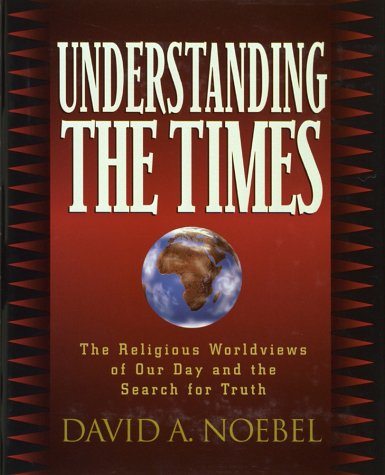
David Noebel is the author of "Understanding the Times," a book popular in evangelical and homeschool circles.
David Noebel is the author of “Understanding the Times,” a book popular in evangelical and homeschool circles.

I knew nothing about David Noebel.

I was not familiar with his much earlier work Communism, Hypnotism, and the Beatles, published in 1965–long before my birth–by Billy James Hargis’ Christian Crusade.

In one reviewer’s words: “Noebel is compelling because he’s intelligent, coherent, and well-researched, despite being absolutely paranoid and utterly mad. Aside from some inconsistent use of the Oxford Comma, he has a clear, if discursive thesis:

“Rock ‘n’ roll is turning kids into gay, Communist, miscegenators.”

Billy James Hargis was a right-wing evangelist and radio and television ranter long before Rush Limbaugh. He saw communist plots everywhere: in the NAACP and the civil rights movement, in the assassination of JFK, in water fluoridation. According to TIME magazine (Feb. 16, 1976), he founded American Christian College “to teach ‘antiCommunist patriotic Americanism'” from the city he called the “Fundamentalist Capital of the World”. From there, he promoted a hard line against drugs, homosexuality, sex education, abortion and the Beatles and toured with the college choir.

David Noebel was an aide to Hargis for twelve years, speaking around the country, founding The Summit in 1962 as a Christian Crusade program to combat anti-Christian teachings from secular universities (like the University of Tulsa) and contributing to Hargis’ television show where together they decried marijuana use and rock music. Later, Noebel became Vice President of Hargis’ new American Christian College in Tulsa.

In 1974, Noebel was staggered when students confided to him that Hargis, ardent promoter of traditional morality and father of four, had had sex with several of them.

Eventually four men and one woman exposed Hargis’ sexual abuse and manipulation over a period of years. TIME reported on the scandal in 1976, Hargis was forced to resign, and the school closed its doors the following year. Noebel went on to effectively “fold” Christian Crusade into Summit Ministries, building it into a successful international worldview training/brainwashing center targeting all ages, but teenagers in particular.

Noebel was an aide to Billy James Hargis, a right-wing evangelist and radio and television ranter who saw communist plots everywhere.

Postmodernism has replaced communism as the bane of our times. According to an article by Summit’s Steve Cornell,

“[The] pre-modern era was one in which religion was the source of truth and reality…. In a postmodern world, truth and reality are understood to be individually shaped by personal history, social class, gender, culture, and religion…. Postmoderns are suspicious of people who make universal truth claims…. Postmodern thinking is full of absurdities and inconsistencies.”

As a postmodern myself, I find it ironic that the decades have softened Noebel’s hardline position on Christian rock.

Apparently Mephistopheles has released it for other uses. Students at Summit’s youth conferences speak of the meaningful “corporate worship“, which now includes rock songs like “How Great Is Our God” by Chris Tomlin and “Jesus, Thank You” from Sovereign Grace Music.

The teens attending the worldview lectures today were not yet born when David Noebel penned Stratagem and would likely be surprised to learn that the religious anthems they find so powerful are actually “estranging them from traditional values”. According to the now retired, but still involved and revered, “Doc” Noebel, “although the lyrics might acknowledge the concept of true worship, the music itself expresses the unspoken desire to smash it to pieces.”

Summit’s John Stonestreet writes, “Truth does not yield to popular opinion. Unlike postmodernism, the biblical worldview can withstand all challenges and still speak to the dominant culture.” This belief is at the core of Summit’s “worldview” training.

And yet, Lowell’s line rings more true: time does make ancient “good” uncouth. Morality and truth are, in fact, shaped by history and culture.

As Summit’s stance on Christian rock illustrates so well.

Maybe, in another 30 years, Noebel’s successors will stop fighting same-sex marriage and even give up warning kids about “the gay agenda” as they “keep abreast of truth”? One can always hope…

Relationships, A Series: Part Five — To My Darling Clementine

Screen Shot 2013-07-29 at 9.52.55 AM

HA note: This series is reprinted with permission from Caleigh Royer’s blog, Profligate Truth. Part Five of this series was originally published on June 4, 2013.

*****

Also in this series: Part One: What Is Courtship? | Part Two: We Were Best Friends | Part Three: The Calm Before The Storm | Part Four: To Lose One’s Best Friend | Part Five: To My Darling Clementine | Part Six: The Storm Starts Brewing | Part Seven: The Five-Year Relationship Plan | Part Eight: The Means To An End | Part Nine: We Made It | Part Ten: I Am A Phoenix | Part Eleven: Conclusion, Don’t Brush Off the Next Generation

*****

Part Five — To My Darling Clementine

To be perfectly honest, this part of our story is a bit of a blur to me.

There were a few incidents that stood out to me during this time but I just remember an overall feeling of numbness, pain, and the feeling like my heart was constantly being gripped in an iron fist that was squeezing the life out of me. I hated it, I buried myself into my work, and found many nights filled with tears, nightmares, and wondering if this time was ever going to end.

*****

I wouldn’t have said that I loved this guy.

I don’t think I really could have picked a “feeling” of what love would have been for me.

I knew that I deeply missed Phil, my heart was still in many pieces, and I knew that I was waiting for him, and I knew that God had told me to keep an eye on him. After the parenting seminar, I went home and spent the next few weeks trying to survive. I remember pulling out old emails he had written to me and re-reading them. I remember crying as I read and wishing I could talk to him again. I remember wanting to pick up the phone and call him and hear his voice. I remember something happening that would make me smile and almost immediately feeling punched in the gut when I went to go tell Phil about it.

During the first two months of our separation I didn’t talk about not being able to talk with him. I think only one friend really knew how I was doing, and after the initial first few weeks, I stopped talking about Phil. My parents didn’t seem to care, or give any thought to us, and the friends who were all buzzed about the drama to begin with soon gave up and the story was no longer a new and exciting piece of drama in their dull lives. Only a small handful of people really stuck with me through the entire journey.

This story isn’t just about Phil and I, it is also a sad reminder of all of the friends we lost along the way.

I caught up with a good friend two months after losing Phil’s friendship and I broke down and told her everything. She was shocked, but at the same time some of her first words were “I knew it!” She told me that without knowing anything, she had played a bit of match-maker and had pair us together. (Several people told me the same thing when they found out later that Phil and I were together. They told me I was one of the only girls who was shorter than Phil and we perfectly rounded each other’s personalities out.) We would go on walks and she never seemed tired of hearing what had happened that week or where I was at.

Ironically she was the one who was with me for one of the most difficult situations I found myself in during that horrendous summer.

My best friend’s brother had a surprise birthday party at an ice cream place and I ended up getting invited. I had a feeling Phil would be there, and I was incredibly nervous. I knew he had recently bought himself a sweet car and knowing him, he would be there with it and would be showing it off in his own subtle way. My friend and I drove up to the ice cream place and managed to pull in right when Phil did. My heart stopped when I saw him break into an amazing smile and come charging towards us. He had these glasses on that looked like old fashioned scientist sunglasses. To be honest, I actually did come to like them a lot and they fit his quirky personality, but that’s not what happened this day.

The first words out of my mouth were the ones I wish I could rip back and burn. I told him I hated the glasses.

I told him I didn’t like them on him.  I don’t think I’ve ever seen a guy, or any person, deflate that quickly. His shoulders dropped and I almost started sobbing right then and there. My heart broke all over again and I couldn’t think of another thing to say. I just didn’t want to see him so defeated. And it was all my fault. I went for a walk with my friend after the birthday party and I spent the entire time  bouncing back and forth about whether or not I should call him and apologize. I had his number dialed twice and my finger on the send button. I found out later that he was so surprised to hear me say that I hated the glasses and he couldn’t help but see the pain in my eyes. He was more worried about me than hurt by what I said, even though he was hurt, and wouldn’t wear the glasses for quite some time after that.

Oh that is one day I wish I could relive and do it all over again!

Towards the end of the summer, around the end of July, I was in VA for a sewing workshop for some girls. I was teaching them all to make a proper corset and helping them all make their own patterns that would fit them the way the corsets were supposed to fit. I do miss this part of reenacting and I wish we were still in it, but too much went down and it no longer holds the attention for me that it used to. Anyway, at the end of the first day of the class, I found out that Phil was planning on naming his car. I wasn’t too surprised especially since his car was so unique. When I found out the proposed name, I had a very delayed flipping out reaction.

Being surrounded by girls who I was supposed to be a role model for, I didn’t feel like I could really react the way I felt I was reacting inside.

He wanted to name his car Clementine. And in that moment my world stood still; was he waiting for me? Is that why he wanted to chose a name that meant something special to both of us?

Let me explain about Clementine. This is a little known story about us and it is one of my favorites that I hold close to my heart.

About 3 months after I met Phil, he hit a really bad anxiety day and was pretty far down in the dumps. I had already dealt with one of those days before this and I kind of knew what to do to cheer him up but I was still trying to work around his no talking on the phone rule. It’s hard to cheer someone up when you can’t hear them or see them. This time happened the day before his brother got married. They weren’t all that close at that time, but I think that it was hitting him hard that things were changing drastically and he didn’t know how to deal with it.

The first time he hit the wall, I wrote this comical letter that really cheered him up. I wrote the letter as if he had written it to a crazy, wild girl named Clementine. I created this entire persona of a purple haired, red lipped, bubbly girl. So when he needed cheering up again the night before his brother’s wedding, I wrote the second letter to Darling Clementine and it worked exactly how I planned it to work. He told me the next day that he could barely keep from laughing out loud as he read it.

Honestly, those letters are rather strange to read now. They were hilarious back then, but they were a bad memory during that summer and a fond memory now that I can smile about.

When Phil decided to name his car Clementine, I was elated and crushed at the same time.

How dare he name a car something that was uniquely special to us? Does he like me still, is that why he wants to name his car that? And then the thoughts of what if he doesn’t like me anymore came pouring in. By the time I went to bed that night at the people’s house the class was at, I thought I was calm and could handle things. I had also let Phil know my mind and how I didn’t approve of the car name via some tricky commenting strategies on Facebook.

(Really, who am I kidding, I pulled the typical write a comment and then delete it prank. that was back when we got emails about comments left on our walls. so even if I had deleted the comments he still got an email about it.)

I didn’t have that hard of a time falling asleep. One of the girls at the sewing class was in a budding relationship herself, and I was getting the scoop on all of her exciting drama so Phil wasn’t completely at the forefront of my mind. I fell asleep feeling comfortable (which was very rare for me) and I fully expected to actually sleep that night.

I woke up around 3 am sobbing.

Bells were going on in my head as piece after piece of a puzzle I didn’t know I had been trying to solve was put together. I think up to this point I had been denying any other feeling other than that I was waiting for Phil and that was it. For most of the summer I shut down even more emotionally than ever before. When Phil had come into my life I had started very slowly breaking down the walls around my heart. But when he was ripped from me, those walls were reinforced and were even thicker. That’s why that early July morning I was struck breathless as emotions flooded my heart and left me sobbing.

I saw the world through opened eyes and I simply knew I couldn’t live without Phil.

I couldn’t go on living without him by my side.

I truly did love him. 

I needed him.

My heart settled into the greatest peace I had even known.

“I love Phil.”

With one phrase, my world was calm. The chaos was hushed, my sight was clear.

*****

To be continued.

How I Learned To Stop Being Afraid and Love Other Religions: Part Two, When Buddhism Saved My Life

mandala

HA note: The following is reprinted with permission from R.L. Stollar’s personal blog. It was originally published on July 30, 2013.

< Part One: If Satan Made Xanax, And Other Worldview Myths

*****

“It’s not difficult to see why Eastern religion is such an attractive form of salvation for a post-Christian culture. It assuages the ego by pronouncing the individual divine, and it gives a gratifying sense of ‘spirituality’ without making any demands in terms of doctrinal commitment or ethical living.”

~Chuck Colson, How Now Shall We Live?, 2004

*****

Part Two: When Buddhism Saved My Life

There were two particularly eye-opening moments I had during my 12 months studying Eastern Classics at St. John’s College, and both revolved around Buddhism.

The first was when my discussion group read a Buddhist text. Going into the discussion, I expected that there would be a lively debate. After all, my class consisted of people with diverse religious beliefs — atheists, Christians, Hindus, Buddhists, and more. I assumed that disagreement would be plentiful. What I did not expect, however, was that the lively debate occurred primarily between the Buddhist students.

It gave me flashbacks to highschool when Christian homeschool debaters spent hours arguing with each other over free will versus predestination. 

Oh… there is more than one type of Buddhist, I realized. Which was a simple reality. But it was a reality that Summit Ministries, for example, omitted when they taught me about Buddhism. And it is a reality that makes a really big difference.

The second moment was when I became friends with a Buddhist for the first time in my life. I’ll call him C. here. C. was my best guy friend during my time at St. John’s. He practiced Diamond Way Buddhism. And he was nothing like the Christian stereotypes I had heard about Buddhists. In fact, he was the most emotional male I had ever known — and I mean that in a thoroughly positive way. He embraced emotions. He taught me that not all Buddhists believe that “enlightenment” is reached by avoiding emotions. Some Buddhists believe that you need to face emotions head-on, acknowledge their existence, let them be what they are, feel them fully, and then let them pass. Learning to master one’s emotions, he said, wasn’t a matter of ignoring them.

You look your emotions in the eyes and say, “Oh. Hey. You exist. I am going to feel you. Maybe even for a long while. But then you will pass. Because you are not me.”

What C. taught me about emotions is one of the most important lessons I have ever learned in my life. Growing in the conservative Christian homeschool world, where first-time obedience and purity culture were rampant, I was taught to distance myself from my emotions, to be afraid of them:

Don’t be angry at adults. Anger is rebellion.

Don’t look at attractive women. You will lust.

Don’t be sad. You must set an example for others.

Buddhism made me realize that emotions are. They exist. This is just a fact of life. It is ok to feel them.

When I feel attraction towards a woman, that is ok. The woman is attractive, and therefore I experience attraction.

It is ok to feel attraction.

When someone does something that is mean or unfair, I experience hurt.

It is ok to feel hurt.

While this might seem like common sense, it wasn’t common to my experience growing up. And it made me realize that this stereotype I had of Buddhists — emotional asceticism — was actually more descriptive of Christianity than Buddhism — at least the Christianity I was raised in.

It was my American Christianity, not Buddhism, that needed to be told Jesus wept and that was ok.

I owe something else to Buddhism as well, something really big. I owe Buddhism my life. While I never converted to Buddhism, I did practice meditation for that year at St. John’s. To be honest, I pretty much hated the process. I do not like sitting cross-legged, and I do not like keeping my back straight and closing my eyes for an hour. But I did it just to say I tried. And in the years since then, when my depression flares up and my suicidal tendencies become overwhelming, I always find myself going back to my Buddhist meditations.

There is nothing religious about this fact. It is, for me, purely psychological. When all else fails, when my body is shaking and all I can think about is ending my life, it is the repetition of karmapa chenno and the visualizing of running mandala beads through my hands that can get my mind re-grounded. These things — though distant memories from almost a decade ago — are lifelines back to reality when my mental health distintegrates.

Buddhism, not my American Christianity, taught me how to mentally ground myself.

On more occasions than I’d like to admit, Buddhism has saved my life.

People who have difficulty with understanding how complex the human mind is, and how complex religions actually are, would find this a terrifying prospect. You can’t be a real Christian and at the same time appreciate Buddhism, the line might go. But I am not terrified by this idea. Because I do not see Buddhism, or Christianity, as set of propositions that are either true or false. I see them as so much more than that.

I see that I cannot step foot into a Christian church (and have not been able to for years) without experiencing a panic attack. And I know that this honestly has nothing to do with the truth-propositions of Christianity. It has to do with just about everything about Christianity other than the truth-propositions. In the same way, my positive experience of Buddhism — that it has saved my life — also has little to do with truth-propositions.

This is a key part of what I mean, then, when I said in Part One that, “Religion is a complex totality of human and other elements, only one element of which is the sort of truth-claim that one can package into propositions.”

This is also a key reason why I am not ashamed in any way to say that I love more than one religion.

*****

Part Three: I Celebrate My Childlike Wonder >

Relationships, A Series: Part Four — To Lose One’s Best Friends

Screen Shot 2013-07-29 at 9.52.55 AM

HA note: This series is reprinted with permission from Caleigh Royer’s blog, Profligate Truth. Part Four of this series was originally published on May 29, 2013.

*****

Also in this series: Part One: What Is Courtship? | Part Two: We Were Best Friends | Part Three: The Calm Before The Storm | Part Four: To Lose One’s Best Friend | Part Five: To My Darling Clementine | Part Six: The Storm Starts Brewing | Part Seven: The Five-Year Relationship Plan | Part Eight: The Means To An End | Part Nine: We Made It | Part Ten: I Am A Phoenix | Part Eleven: Conclusion, Don’t Brush Off the Next Generation

*****

Part Four — To Lose One’s Best Friend Is To Lose A Part Of Your Heart

Now we are getting to the part of our story that is going to get increasingly difficult to deal with. I know some people can look at what my husband and I went through as trivial and unremarkable, but for us, it was hell. It was frustrating.

It was enough to make us both lose faith in family. 

Phil still won’t talk about what happened, nor does he like being reminded of it.

Both of us were faced with relationship issues that we had to deal with alone and in some ways, it forced Phil to take on more responsibility than a “normal” situation would have required. It was good for us, as this part of our story burned away any of the fluff that might have been left from the first infatuation.

It brought forth the real hearts that somehow sustained us to the day we said “I do.”

Ah, this is hard to write. I have been putting this post off for over a week now, and now that I have the time to really focus and write, I am finding myself trying to find any distraction I can to keep from writing it. Please know that what I am about to write is four years old, and a lot of things have been dealt with but they still hurt us really deeply and are still painful to write. So please, be gentle with me, and my husband, as you read this.

*****

As soon as Phil had finished telling me what he had to say, he dashed out the door, tears streaming down his face. He took off running and was nowhere to be found for at least two hours. I have never been that close to fainting as I was in that moment. A life sucking darkness started blinding my eyes as dry sobs started rising from some part of my numb self.

I was numb; totally, perfectly numb.

I collapsed on grass outside the door and lay there in shock for ten minutes. Our mutual friend was with me for a little bit of the time just holding my hand but she soon left. I don’t remember how I got up or how I found my phone but I somehow managed to call my best friend back and in a broken voice told her what had happened. All she could say was “Oh Caleigh, I’m so sorry!” I told her that I was sure there was a plan and felt peace that I hadn’t lost him completely. I think I was on a pain high, I was very optimistic for about an hour and a half, and then I suddenly crashed very hard.

I got off the phone and cried, walked, sobbed, and just asked God why. I knew I had heard from him to keep an eye on this guy when I first met him, but I really didn’t understand why Phil was being ripped away from me now.

I found comfort in Romans 8:28 and trusted that God had a plan in all of this.

I called my mom to tell her what had happened. She seemed singularly unimpressed by my tears and almost didn’t want to come and get me. I asked her to tell my dad, and to this day, I have no idea why I thought that was a good idea or why he would respond. (To be clear, from this point on, my relationship, or lack thereof, with my dad completely deteriorated to even less than what it might have been had he responded differently.) She said he was out cutting the lawn but would tell him when he was done. I called her an hour later and begged her to come get me. I was falling apart and couldn’t allow the kids at rehearsal to see how much I was breaking.

I don’t know how else to explain just how intensely destroying that day was for me. I had met my heart’s companion and in the course of 5 minutes he had been ripped from me and I was left gasping with barely half a heart. The words I know barely seem adequate to describe the pain I felt that day and still feel a little piece of four years later. Mom came and got me and I could barely hold back the tears as we drove home. I remember dad being in the garage and I walked up to him maybe hoping somewhere in my heart that he would comfort me. He stuck his arm around my shoulders rather awkwardly and said that he was sorry.

Then he said, “If your heart hurts then you did something wrong.” 

I think my heart stopped for the second time that day. It was like a deep gong went off in my head; I knew instantly that I was not going to get any support whatsoever from this man who had his arm around my shoulders. I remember walking inside and not saying anything to my siblings but went straight to my bed, turned off the lights, shut the blinds, and curled up on top of the covers and sobbed. I don’t remember being able to eat dinner that night, and I quietly tried to tuck the mangled pieces of my heart somewhere no one would see them.

I did have one consolation. Our mutual friend had asked Phil if he would be willing to wait for me and she told me that his answer was a huge yes. I wrote a letter to him that day once I had some sense of my surroundings that evening. I told him in the letter that I promised to wait for him and that no matter what I was going to be here for him. I folded up the letter and placed it in an envelope that would sit until I felt it was time to give it to Phil.

I went to rehearsal the next day, and by this point the pain in my heart had turned into immense anger. I burned fiercely, and all I could think was I liked this guy, I needed his friendship, and they had dared to rip that from me. I wrote him a madly scrawled note asking if we could talk to our parents about setting up guidelines. I knew that Phil was hurting and his pain was just as deep as mine. He looked very sick that day when I saw him. There was no life in that face of his that had previously lit up the moment he would lay eyes on me.

The following weeks were dark, and I don’t remember much other than asking my mom over and over if all of the parents and us could meet and set up guidelines so we could talk. My dad, now that we couldn’t talk, seriously thought that there was nothing in between Phil and I and that there was no need for us to talk. He used to spew this crap at me about how it was wisdom that Phil and I not talk, without ever saying exactly why it was wisdom when I asked for an explanation.

My first gut reaction to my dad not being supportive was proven true over and over and over again during those first few weeks and it is still true four years later.

Our parents met once during those first three weeks, but their responses to that meeting were all different. Not one side of all four of their stories lined up. I found out later from Phil that his parents got a very different take on that meeting than my mom or my dad. The lack of communication was astounding and it has never ceased to frustrate me as I look back on that time.

Just over a month and a half after that horrid day, there was a parenting seminar at church. I went with my parents and we ran into Phil and his parents as soon as we got there. I was so uncomfortable, and wanted to find a dark corner to cry in as soon as I laid eyes on him. He tried to look happy but he looked just as miserable as I felt. (Those who remember this time and knew me closely then said that my eyes looked dead, I was barely functioning and I rarely talked. I was a ghost of who I had been) During this seminar we ended up sitting right in front of Phil and his parents. I just about ran out of there when I realized that they were sitting right behind us. All I could think of was how Phil could see the side of my face and I could see his reflection in the drum-kit up on stage.

I found out later from Phil that this seminar was a huge turning point for him.

It was during this seminar he realized that he loved me.

Not only did he truly whole-heartedly love me, he wanted to marry me and spend the rest of his life with me. He was more than 100% sure and he told his parents this on the way home, thoroughly shocking them.

He looked genuinely happy when he left after the seminar and I died a little bit more inside thinking that he was happy to be leave me.

If I had only known…

*****

To be continued.

Where Is Your Sense of Compassion, HSDLA?

Screen Shot 2013-07-31 at 2.48.45 PM

HA note: The following is reprinted with permission from Libby Anne’s blog Love Joy Feminism. It was originally published on Patheos on July 31, 2013.

*****

Josh Powell wanted to go to school so badly that he pleaded with local officials to let him enroll. He didn’t know exactly what students were learning at Buckingham County High School, in rural central Virginia, but he had the sense that he was missing something fundamental.

By the time he was 16, he had never written an essay. He didn’t know South Africa was a country. He couldn’t solve basic algebra problems.

So starts a recent Washington Post article about Virginia’s religious exemption.

Powell was taught at home, his parents using a religious exemption that allows families to entirely opt out of public education, a Virginia law that is unlike any other in the country. That means that not only are their children excused from attending school — as those educated under the state’s home-school statute are — but they also are exempt from all government oversight.

School officials don’t ever ask them for transcripts, test scores or proof of education of any kind: Parents have total control.

. . .

Josh Powell eventually found a way to get several years of remedial classes and other courses at a community college.

Now he’s studying at Georgetown University.

. . .

Josh Powell, now 21, wonders how much more he could have accomplished if he hadn’t spent so much time and effort catching up.

“I think people should definitely have the freedom to home-school as long as it’s being done well and observed,” he said. “I don’t see any reason for there not to be accountability.”

Most of all, he worries about his siblings: There are 11. One, old enough to be well into middle school, can’t read, Josh Powell said.

Now he’s trying to get his brothers and sisters into school, to ensure that they don’t have to work as hard as he did to catch up — or get left behind.

Go read the whole thing—the article is excellent. The long and short of it is that Josh’s parents used Virginia’s religious exemption clause to get out of any requirement to teach him anything, and then proceeded to give him what he knew was a substandard education, despite his desire to learn more than they were teaching him. In the end, Josh overcame all of that and managed to obtain remedial classes at a community college (without his parents’ help, I should add) and then gain admission to Georgetown. And now, he wants to see the law changed so that other children will not find themselves in his situation.

What I want to turn to now is HSLDA’s response. Before I do that, I should mention that the article includes a quote from Michael Farris. It’s not long:

The law is completely clear, said Michael Farris, chairman of the Home School Legal Defense Association, who has claimed the exemption for his family. It doesn’t make sense to have the public school system regulate home schools, he said, because he thinks home schools are far more successful.

As to whether there could be children getting an inadequate education, he said: “Well sure, it’s possible. But there are whole public school districts that are slipping through the cracks.”

Dear Mr. Farris: What you said is called “tu quoque.” It is a logical fallacy. You are a lawyer, you should know that.

Now with that out of the way, what I really want to look at is the official response HSLDA issued the day after the Washington Post article came out.

“Oh, my God, I have a chance to learn!” The Washington Post’s recent article about Virginia’s religious exemption statute includes this fascinating quote from Josh Powell, the young man who never attended public school because his parents obtained an exemption on religious grounds.

The article criticizes the law that allows the exemption and lobbies for its change. But let’s slow down and think this through.

How many public school teachers ever hear their students say, “Oh, my God, I have a chance to learn”? Very few. Because sadly, public schools crush many kids’ desire to ever learn again. And this has been documented.

The largest study comparing homeschool students to others (by Dr. Lawrence M. Rudner, University of Maryland) amazingly revealed that homeschool 8th grade students score the same as 12th grade public school students!

Why do homeschool students score an almost unbelievable four grade levels ahead of others by 8th grade? It’s very simple. It’s not that homeschool kids or their parents have higher IQs—I suspect they don’t. It’s simply that homeschools don’t crush a kid’s inborn desire to learn.

What is HSLDA’s evidence that public schools crush children’s “inborn desire to learn” while homeschooling doesn’t? The Rudner study.

Let’s review, shall we?

Somehow I feel like we’ve been over this before. (Also, if you haven’t, you should read this excellent article as well.) What did Rudner’s study say and how does he feel about the way HSLDA uses it?

Rudner’s study was funded and sponsored by the Home School Legal Defense Assocation.  It analyzed the test results of more than 20,000 home schooled students using the Iowa Test of Basic Skills, and it was interpreted by many to find that the average home schooled student outperformed his or her public school peer.  But Rudner’s study reaches no such conclusion, and Rudner himself issued multiple cautionary notes in the report, including the following: “Because this was not a controlled experiment, the study does not demonstrate that home schooling is superior to public or private schools and the results must be interpreted with caution.” Rudner used a select and unrepresentative sample, culling all of his participants from families who had purchased curricular and assessment materials from Bob Jones University.  Because Bob Jones University is an evangelical Christian university (a university which gained a national reputation in the 1980s for its policy of forbidding interracial dating), the sample of participating families in Rudner’s study is highly skewed toward Christian home schoolers.  Extrapolations from this data to the entire population of home schoolers are consequently highly unreliable.  Moreover, all the participants in Rudner’s study had volunteered their participation.  According to Rudner, more than 39,000 contracted to take the Iowa Basic Skills Test through Bob Jones, but only 20,760 agreed to participate in his study.  This further biases Rudner’s sample, for parents who doubt the capacity of their child to do well on the test are precisely the parents we might expect not to volunteer their participation.  A careful social scientific comparison of test score data would also try to take account of the problem that public school students take the Iowa Basic Skills Test in a controlled environment; many in Rudner’s study tested their own children.

Rudner himself has been frustrated by the misrepresentation of his work. In an interview with the Akron Beacon Journal, which published a pioneering week-long investigative series of articles on home schooling in 2004, Rudner claimed that his only conclusion was that if a home schooling parent “is willing to put the time and energy and effort into it – and you have to be a rare person who is willing to do this – then in all likelihood you’re going to have enormous success.”  Rudner also said, “I made the case in the paper that if you took the same kids and the same parents and put them in the public schools, these kids would probably do exceptionally well.”

In other words, the Rudner study doesn’t say what HSLDA says it says, and Rudner himself is frustrated about how HSLDA is misusing and misinterpreting his study. In other words, HSLDA’s supposed “proof” that public school stifles a child’s “inborn desire to learn” while homeschooling does not is proof of no such thing.

Back to HSLDA’s response to the Washington Post article:

When he hit community college, Josh attended remedial classes designed to serve public high school graduates, then zoomed ahead. Now he attends one of the nation’s top 25 universities, earning good grades while working part time and carrying a heavy academic load. Not too bad for a kid who thought he had a bad secondary education!

If Josh had attended public schools, he would have statistically had a 1-in-5 chance of growing into an illiterate adult. The National Assessment of Educational Progress revealed that 21.7% of adults in Josh’s native Buckingham County are illiterate. This is the wreckage of thousands of young people whose desire to learn has been crushed in the public schools.

I wonder if any of the other kids in Josh’s remedial classes went on to attend one of the nation’s top 25 universities. I doubt it.

Maybe Josh didn’t learn that South Africa was a country while he was being homeschooled. But he arrived at the gates of young adulthood with his inborn desire to learn fully intact, and that has served him very well indeed. The Virginia religious exemption statute deserves its place of respect.

The HSLDA response is, in essence, “your bad homeschool experience is nothing to complain about, because you could have a fate worse than receiving an incompetent homeschool education while begging to learn—you could go to public school!” Is HSLDA completely incapable of saying “we’re sorry your situation was so bad, we feel that it is a terrible thing for any child to slip through the cracks”? Are they incapable of hearing “that hurt me” and responding with “we’re sorry”?

All I have to say is this: Where is your sense of compassion, HSLDA?