To My Past — I Wouldn’t Be Who I Am Today Without You

Screen Shot 2013-08-13 at 4.10.13 PM

HA note: The following is reprinted with permission from Faith Beauchemin’s blog Roses and Revolutionaries. It was originally published on June 30, 2013.

I was raised in a home and a church with certain expectations.

Most of the people I grew up with have lived up to those expectations.  They’re all good Christians, remaining doctrinally pure and behaviorally righteous. Most of them are married and gearing up to raise the next generation of good Christians, in homes where the father is the leader and the mother is submissive.

My peers who have followed this path are the pride of their parents and the future of their church.

I have flouted all of these expectations. I quit attending fundamentalist churches years ago, and quit altogether around the time I graduated college.  Although my parents think it’s okay for a single woman to work, they also think a woman’s highest calling is wifehood and motherhood.  I’m nowhere near being a wife and I intend never to have children at all.  My politics are so far removed from those of my parents that we can barely discourse on the topic due to fundamentally different worldviews.  My behavior, as well, is far from the stringent moral standards held up by my former community, although somehow I think I’m still a pretty good person (mysteriously, drinking, going out to bars, and similar behaviors have not turned me into some kind of monster).

But it is clear to me that, however far removed I am from the outcome intended by the key players in my past (my parents and their church), my politics and anti-authoritarian worldview are a direct result of that past.

My parents made the mistake of teaching me to think for myself, to go against the mainstream, to be willing to believe what I know to be right.  They homeschooled me partially in order to keep me from conforming to ordinary culture.  Then they expected me to accept the exact same conclusions and ideas they themselves had accepted.

My church was, for a fundamentalist congregation, quite intellectual.  They taught us to look at textual and cultural context and to know (their version of) church history. They taught us to argue for our faith.  Then they expected that we would use each of these skills only to defend their particularly narrow viewpoint.   I attended a Christian college, where I took classes which taught me how to reason, how to gather evidence, how to think for myself and effectively communicate with others.

But that same Christian college naively assumed that its graduates would toe the party line. 

There were immense cultural pressures from my parents, their church, and my college to conform to a particular point of view, but all of them also gave me the tools to make my own way in the world, to reject conformity and with it the point of view they so desperately demanded I embrace.

At the same time as my parents, their church, and my college gave me the tools I needed to think for myself, they also taught me important lessons about fascism and forced conformity and loyalty to a particular ideology.  I saw and I experienced in my own life the terrible consequences of valuing ideology and power structures over people.

I learned that unquestioning acceptance of authority often leads to very negative outcomes. 

I learned that although those in authority demand implicit trust, I cannot implicitly trust them because they almost never truly have my best interests at heart.  As I have said before, fundamentalism is simply religious fascism.  It didn’t take long for my opposition to religious fascism to translate into the political arena as well.  Also, my past taught me the harm of a “we few vs. the rest of the world” mentality.  By its nature, conservative Christianity is elitist, claiming an inside track on knowledge and a superiority to unbelievers.

I am now utterly opposed to absolute power and I am wary of elitism in whatever form it takes.

So however critical I am of those in my past who attempted to control my life, I must also always be grateful to them. 

They gave me early experiences which formed my current worldview.  They gave me tools with which I was able to break out of the prisons they constructed around me and then build my own life, a life which looks nothing like they want it to but a life which I inhabit very happily.

Growing Kids the Abusive Way: Auriel’s Story, Part Two — Isolation and Ideology

Screen Shot 2013-08-12 at 3.13.05 PM

*****

Trigger warnings: references (sometimes graphic) to emotional, physical, religious, and sexual abuse.

*****

HA note: The author’s name has been changed to ensure anonymity. “Auriel” is a pseudonym. Auriel blogs at Drying My Wings.

*****

Also in this series: Part One: Growing Kids the Abusive Way | Part Two: Isolation and Ideology | Part Three: Mini-Parents | Part Four: The Sound of a Sewing Machine | Part Five: The Aftermath of Childhood Abuse

*****

Part 2: Isolation and Ideology

 At 16 years old, I was not allowed to cross our property line without another human being with me.

Like a caged dog, I paced back and forth, crying at the injustice of it all. The bonds that held me weren’t physical. I was chained by my sheltered life. The isolation came from homeschooling.

Until high school, I only had three close friends outside of my siblings, and I only saw them once a month. Although I was involved with many extra-curricular activities, I was not allowed to be friends with boys, non-homeschoolers, nor kids whose families my parents did not know.

So, no friends.

Pop and rock ave evil beats, movies with kissing or language — let alone violence — will make you copy them, gyms make you compare people’s bodies, TV shows are so sexualized they’re evil, iPods hurt your spiritual life, and so on. At least, that’s why I was not allowed. My siblings and I snuck around, listening to Christian music here, pop music there, watching TV when our parents were gone.

I’m still trying to get caught up on movies, pop culture, and music references.

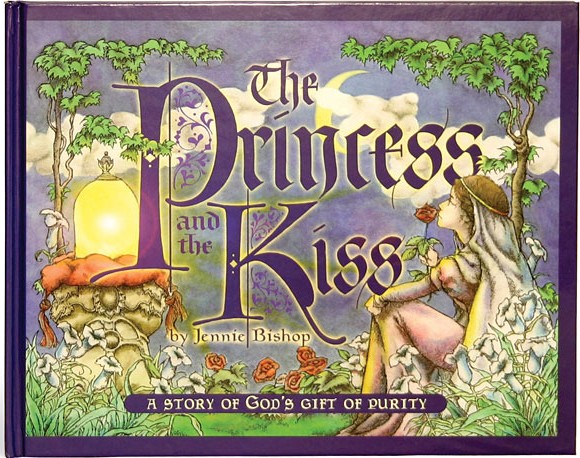
Courtship was introduced as the only method of finding a spouse. We read books like the Courtship of Sarah McLean, I Kissed Dating Goodbye, Boy Meets Girl, The Princess and the Kiss, and so many more. It was like my dad was supposed to own me, and any potential mate would have to ask for my father’s permission both to be near me and to eventually own me.

It’s so damaging to think of oneself as property.

Now, I want to date to find someone to marry, but my father does not own me. I do not need to be under his “vision” for my family. I have my own vision, which does not include abuse.

"Girls were to have babies, homeschool their kids, and be dominated by men."
“Girls were to have babies, homeschool their kids, and be dominated by men.”

Mom held a sexist view of girls: they should not work outside the home. Girls were to have babies, homeschool their kids, and be dominated by men. Many Vision Forum books cemented this view in her mind like So Much More, What’s a Girl to Do, the Beautiful Girlhood books, Mother, and Joyfully at Home. Mom taught me needlework like a good Victorian girl, but I hated these activities! Just because I’m a girl does not mean I have to knit and drink tea!

I’m a person! I’m not a gender stereotype.

I was taught to be afraid of gays, Islam, and black men. It’s tough to grow up in a homophobic, Islamophobic, racist, sexist environment and come out unscathed. While it’s a struggle, I have learned to love everyone as made in the image and likeness of God.

The modesty teachings were awful. Modesty was focused more on covering skin than on ensuring the dignity of each person. I learned to watch my back for guys who would lust after me.

I heard that what I wore made me a rape target.

At first, Mom dressed me in denim jumpers or Easter and Christmas dresses from the local stores. Eventually, she forced me to sew my own dresses and skirts. When I was 9 years old, she told me that having my hair down made me look like a “lady of the night.” Even though I was a shy, modest girl, Mom constantly told me that something I did or wore was sinful, displeasing to God, and might turn on my dad or my brothers.

I was so scared that I was going to lead my brothers or dad into sin for lusting after me.

If that’s not twisted thinking, I really don’t know what is. Bleh.

I cried so many tears over how ugly I thought my body was, thanks to the baggy clothes I wore. Looking back, I was a healthy weight and my body was great. But shirts had to have sleeves and couldn’t come below the collarbone. Pants were forbidden after age 6. Swimwear was culottes that puffed full of water. The lifeguards even chided me for not wearing appropriate swim attire. I wanted to scream, “It’s not me!” My skirts had to be several inches below the knee, or else I was “showing some leg,” and that would “give guys a little jolt.”

When I finally turned 18, I had to beg a friend to help me pick out my first real pair of pants since Kindergarten. Of course, Mom called me a “slut” and a “whore,” declaring she could see intimate parts through my pants that would have been impossible for her to see. It was just to shame me.

Oh boy, here comes the scary part.

Sex.

No one in my homeschooling community talked about sex. I got the talk at 12, earlier than any of my homeschooled friends. However, I only knew about one type of intercourse. I didn’t even know people did it lying down, lol. Because puberty, sex, and all related words were so hush hush, I stopped asking my mother questions.

The first time I heard another girl even mention her period, I was 16.

I stared at her in shock! “Did she just speak of her period?” I wondered. When I turned 18, I succumbed to searching dictionaries to learn the rest of the words and meanings.

I was also incredibly afraid of CPS. Through HSLDA and my parents, I learned that foster homes are terrible places that abuse children by burning their hands on stoves, and more. Well, it worked. I didn’t call hotlines, tell the speech moms who cared about me, or beg my few friends for help.

When CPS showed up at our doorstep, my siblings and I lied for fear of being separated from each other forever.

The community that attended our very conservative Catholic church supported the sheltered, so-modest-its-frumpy, sexist views of my parents. I even was bullied at church for failing to meet up to the standards of the kids my age. In the midst of all this, I got comments asking if I was part of a cult, Amish, or Mormon. It hurt deeply that people thought I was a freak. “IT’S NOT BY CHOICE!” I wanted to scream. But I couldn’t.

When people think you’re part of a cult, they tend to ignore you or avoid you.

The few people I told about the abuse after I escaped looked at me with shock and said, “I had no idea.” The isolation of homeschooling added with the isolation of a cultic appearance equals an ideal environment for abuse to continue.

*****

To be continued.

Growing Kids the Abusive Way: Auriel’s Story, Part One

Screen Shot 2013-08-12 at 3.13.05 PM

*****

Trigger warnings: references (sometimes graphic) to emotional, physical, religious, and sexual abuse.

*****

HA note: The author’s name has been changed to ensure anonymity. “Auriel” is a pseudonym. Auriel blogs at Drying My Wings.

*****

Also in this series: Part One: Growing Kids the Abusive Way | Part Two: Isolation and Ideology | Part Three: Mini-Parents | Part Four: The Sound of a Sewing Machine | Part Five: The Aftermath of Childhood Abuse

*****

Part One: Growing Kids the Abusive Way

“Turn around, put your hands on the bed.” You scream, “No mommy, please!” She’ll grab you by your arm, wrist, shoulder, lapel, jaw or hair, shake, twist, or drag you, scratch, pull, shove, slap or kick you if you don’t move your butt to her room. “You selfish, spoiled rotten brat! You’re just a little ingrate, you little jerk. Let’s have a spanking!” she yells. Escape is futile. 

“You’re abusing me! How could you be so cruel?” your mom asks in tears over her rage. You clench your fists and teeth at the injustice, but can do nothing. After all, you’re an “idiot” and a “stupid a-hole.”

She has told you that this hurts her more than it hurts you.

*****

My parents were abused as kids.

They perpetuated the cycle with us.

With their first child, my parents discovered Growing Kids God’s Way by the Ezzos. True to the teachings, my parents controlled our hearts with fear, and later taught Growing Kids classes to dozens of families over the years, and taught me the classes to use on my younger siblings. I grew up in a Catholic, upper middle class family, and was homeschooled K-12, starting out under an umbrella charter school, moving to become our own private homeschool when I entered high school.

As far as didactics go, I learned a great deal. While my friends used Mother of Divine Grace (MODG) or Seton, we used an eclectic mix of those and other curriculums like Abeka since the Catholic curriculums usually require an overload of coursework. My education was classical and informative until middle school when my chronically and mentally ill mom gave up on teaching us. From there, I had a tutor, online classes, or taught myself through my textbooks. Lucky for me, I had a passion for learning and was pretty studious. I ended up graduating early!

Unfortunately, the damage was done.

I was physically, sexually, emotionally, and spiritually abused and neglected as a child.

"With their first child, my parents discovered Growing Kids God’s Way by the Ezzos. True to the teachings, my parents controlled our hearts with fear."
“With their first child, my parents discovered Growing Kids God’s Way by the Ezzos. True to the teachings, my parents controlled our hearts with fear.”

From the time I was 6 months old, up until I was a teenager, my parents beat me with a leather strap. This was based on the Ezzo’s teaching of chastisement. My parents would force me to pull up my dress, and if I were especially stubborn, they’d have me pull down my panties. Just the humiliation was enough to fuel my ire. The pain only compounded the injury. Flinching, screaming, or crying meant longer beatings. So, you learn to shut up, have “first time obedience,” “right away all the way with a happy heart.” Don’t show even a flicker of anger, sadness, discontent, or any negative emotion. Those are signs of rebellion.

I often had scratches and bruises, in various stages of healing. They’d start out as the new red or white fingerprint marks or welts, moving to purplish blues, healing to ugly greens and sickly yellows.

Some days, the punishment was only receiving smacks from a wooden ruler, running scores of laps around the yard or being flicked in the face. Other times, punishment was no supper.

My stomach would suffer, painfully contorting, gnawing at the emptiness, and I would cry myself to sleep.

Sometimes we would only be fed plain oatmeal or bread and water for the week as punishment. My brothers were locked outside or forced to sleep naked on the cold floor as punishments. And it’s hard to imagine the amount of screaming we bore.

Back then, tears were weak. They could be used against you. I couldn’t let anyone see them, or they’d be powerful. I’d curl in a ball on the floor in a corner, and just sit, and rock, and cry, soothing myself in the dark. I reverted to thumb sucking when I was 8. Even today, I still rub my arm and hug myself to self-soothe.

I tried to protect my siblings by covering for them on chores and standing up to my parents for them. My littlest sibling even called me Mommy, and would call to me for help and protection. We’d take beatings for each other too. But if no one confessed to a failure on a chore (read: perfectly swept floor), everyone would suffer. If we brought a sibling into our mistakes, we would be held outside the room, while our parents reminded us that the screams of our siblings were our own fault. Overtime, you become jaded to pain. It no longer hurts you, and the screams of others become mundane and almost comical.

To be honest, I was so sheltered, I didn’t even know I was being beaten or abused. I thought this was legal spanking.

Nightly, we’d fall asleep to domestic violence, fights, slamming doors, broken glass. After a nice tuck in and a whispered, “Jesus loves you,” we’d hear Mom attacking Dad. She’d claw, scratch, knee, hit and punch him, pounding her fists into his chest and back, smacking him with objects.

A few snapshots of my home life:

  • Mom threatening Dad with a knife in our kitchen right in front of me
  • Dad leaving me in my Mom’s room to talk her out of suicide
  • Dad throwing my brother into a bedpost
  • Mom driving recklessly nearly driving into oncoming traffic or a telephone pole
  • Mom yelling at us and publically humiliating us in restaurants

In the end, I learned to lie to save my skin.

I learned to take my siblings away from domestic violence. I learned that violence was acceptable.

This is not to say that my parents didn’t love me.

I firmly believe they did, and see it in countless examples. They hugged me, cared for me, kissed away my childhood scrapes, bought me gifts just because, and told me that they loved me. Birthdays and holidays were special, and they taught me fervently, took me on outings, gave me my faith, drove me to events, encouraged me to learn musical instruments, play sports, and compete in speech and debate.

It’s not like they are monsters.

But they are hurt people who probably should never have had kids. The abusive techniques propagated by the Ezzos jived with my parents’ abusive upbringings. It was their normal, supported by “experts.”

I don’t hate my parents.

I don’t know how to hate human beings. All I feel for them is love, pity, and a need to be far away from them out of self-preservation.

*****

To be continued.

Crosspost: Sally’s First Kiss and The Princess and the Kiss

The-Princess-and-the-Kiss1-e1373847077493

HA note: The following is reprinted with permission from Libby Anne’s blog Love Joy Feminism. It was originally published on Patheos on July 24, 2013.

When I was a teen, I did a lot of babysitting for other homeschool families. One day I babysat two families worth of children while their moms went out for lunch—I think there were about ten kids total that I was watching. I was in the kitchen cleaning up from lunch and the kids were in the living room putting on a play wedding as kids sometimes do. The nine year old was presiding over the wedding of the two five year olds, a girl from the one family and a boy from the other.

All of a sudden I heard the older child say “now you’re supposed to kiss each other” and I freaked out and ran into the living room to break it up.

I wasn’t about to let those two five year olds kiss, thus forever depriving each of the chance to save that first kiss for the altar.

In the conservative Christian homeschooling community in which I grew up, a person’s first kiss was incredibly important. Even today, the products of this culture debate this question with great energy, arguing about whether forbidding the first kiss until the altar is a form of legalism or the preservation of a precious gift.

Now, I was taught that part of the reason that the first kiss should be saved for the alter was that it was a gateway into other things. First comes kissing, and then, who knows? Making out, humping, sex—once you open the door, it’s hard to close it. It would seem, then, that five year olds kissing at a play wedding wouldn’t fit this category, given that we’re not talking about a kiss that comes as a result of sexual tension and mutual attraction.

And yet.

The literature I read didn’t make a distinction between preschoolers kissing and teens kissing.

Instead, it simply talked about the importance of saving “your first kiss” for your wedding day. And of course, we were regaled with stories of virtuous couples who had done just that—didn’t we want to be like them? And then there is The Princess and the Kiss, a book marketed to children as young as four.

The book is about a king and queen who help their daughter save her most precious gift, her first kiss, for the prince she will marry. The princess’s first kiss lives in a glass orb, something like the rose in the Disney version of Beauty and the Beast (you can see it on the cover). This book has become very popular in Christian homeschooling circles and beyond, and there are hundreds of thousands in print. This is the sort of thing I was raised on (though this particular book wasn’t around when I was little, lots of kids are growing up on it now).

All of this came rushing back to mind recently when [my daughter] Sally kissed a little boy at her preschool—or, as I would have seen it in the past, when Sally “gave away her first kiss.”

We had gotten together with the family for a play date, and Sally and her little friend did the whole pretend wedding ceremony thing that little kids spontaneously do (I presided over a few in my day myself). At the end Sally grabbed the little boy and planted a kiss on his face. Surprised and bemused, I couldn’t help but recall my reaction to the pretend wedding staged by the five year olds I was babysitting so many years ago. This time, of course, my perception and reaction was different.

Sally didn’t lose anything when she kissed her little friend. Instead, she simply gained a common life experience—something she will look back at and laugh about when she’s grown.

It’s the people who impute a cute childish action with so much meaning who are creating the problem, not my preschooler.

A Week of Joy: Call for Contributions to HA’s Upcoming Positives Series

Screen Shot 2013-08-06 at 1.21.00 PM

By R.L. Stollar, HA Community Coordinator

*****

I have a very complicated relationship with homeschooling.

In many ways I have significant problems with the Christian homeschool movement; in many other ways, however, I appreciate my homeschool education. My education was lacking in some areas, particularly science, but it was also exceptionally above average in other areas, such as language arts and communication. I have suffered emotional and verbal abuse in homeschooling contexts. But this was at the hands of other homeschooling parents, not my own parents. My parents have been extraordinarily supportive of Homeschoolers Anonymous, for which I am deeply grateful. Also, while I experienced emotional and verbal abuse in homeschooling contexts, I have also experienced sexual abuse in a public school context.

I am under no delusion about the universality of abuse.

It is for these reasons that I do not primarily see my identity as a survivor of homeschooling. In many ways I am a survivor: I am a survivor of abuse, sometimes from abuse in homeschooling and sometimes not. But my experiences are too mixed to be able to fairly isolate only one community from which I am a survivor. I have instead channeled that complex pain into wanting to make the world a better place in whatever context I can. Since homeschooling was my life for so many years, I see myself as an advocate for other homeschoolers who have had far worse experiences than I have.

Honestly, most of my experiences growing up in SELAH and CHEA, my California homeschool groups, were positive. It was while traveling around the country with Communicators for Christ that my eyes were opened to all the different subcultures and ideologies that can create real and serious damage to children. Growing up, I only had an inkling about some of these phenomena. I did not begin to connect the dots until I came into contact with thousands of other homeschoolers and began observing patterns.

Much of my life has revolved around this sort of tension, or dialectic: there is so much good, and there is much bad; there is so much pain, and there is so much joy.

As we begin our next “week series,” I am hoping that as a community we can explore this sense of tension and the reality of dialectic in our experiences.

On July 15, we asked you as a community to pick the next topic you’d like to see us address as a community. We received votes via Facebook comments, private messages, emails, and Tweets. Honestly, there was a good number of votes for all four of the options: (1) Mental health, mental illness week, (2) Abusive relationships week, (3) Grandparent(s) appreciation week, and (4) Positives (what you liked about homeschooling) week.

No one topic won by a landslide.

So obviously we need to cover all of these at some point in the near future. Mental health came in second, with a lot of vocal support for it. So it seems that would be the most appropriate topic for the series after this next one.

For the immediate next series, the winning topic was positives.

While this topic was the winner, it also received a lot of pushback — which, frankly, I understand. If you have suffered neglect or abuse in homeschooling, you’ve probably spent the majority of your life wearing a “I love homeschooling and nothing is wrong with it” mask. This might be the first time in your entire life that you’ve felt the freedom to talk about the negatives. You might be thinking, “I don’t want to talk about positives. I’ve done nothing but talk about the positives since I was a kid.”

Honestly, I personally relate to that sentiment.

At the same time that every fiber of my being wants to finally talk about the negatives, there is a place for the positives in our community. Not everyone in our community has had a bad experience. Not every ally here has experienced our pain. But they are here, supporting us, and listening to us.

I want to give people with positive experiences a place to be heard, too.

Our allies’ positive experiences are fundamentally vital to making homeschooling better for future generations. Those of us with good stories are examples of how homeschooling can be done well.

For every story that says, “This was a problem,” the question is raised: “What is the solution?” Sharing positive experiences is crucial to teaching current and future homeschooling parents the difference between those environments that led to pain and those environments that led to joy.

We need to hear those.

So those of you in our community that have had positive experiences, this is your time to speak up.

And to those of you in our community that have had negative experiences, this is actually also your time.

A week of positives does not mean we are just talking about generally positive homeschooling experiences. Yes, it means that we are taking a week to celebrate the good things. But it also means we are dedicating time to celebrate those moments of joy that contrasted with those moments of pain. This is a week of joy for everyone: to share in others’ good experiences, and also to celebrate those people or those moments that gave us a hope to carry on, that gave us maybe a unique experience of unconditional love.

I have moments like that. I remember when a horde of parents surrounded me and yelled at me (no exaggeration), and one parent silently pulled me out of that crowd and went for a walk with me. That one parent in a very real sense rescued me. He told me that, regardless of what the other parents might say, I was valuable. I was a human being and I was to be unconditionally loved.

I learned that lesson from a conservative Christian homeschooling father. So I celebrate him.

I remember that moment because moments like that, though maybe few and far between, are some of my favorite memories to this day.

Our upcoming positives week is an official celebration

Of parents that succeeded in giving their kids a good education, of those adults or peers that showed you real compassion, love, or respect, of those moments that gave you hope and healing amidst not-so-positive experiences.

Let’s celebrate all of those things together.

*****

To contribute:

If you are interested in contributing, here are some ideas for what you could write about:

  1. Your personal story of a positive homeschool education
  2. Your personal story of positive aspects of your homeschool education
  3. An experience you had where another person in your homeschool life (one of your parents, another homeschooling parent, a friend, a tutor, etc.) showed you love or respect that maybe you had not experienced before
  4. An experience you had where another person in your homeschool life taught you something that gave you hope about the future, or maybe a personal struggle you had

You do not have to pick just one topic. You could combine several of these ideas, or bring your own ideas to the table, or — if you have a lot to say — contribute several pieces on a variety of these topics.

The deadline for submission is August 23, 2013.

As always, you can contribute anonymously or publicly.

If you interested in participating in this, please email us at homeschoolersanonymous@gmail.com.

David Noebel, Summit Ministries, and the Evil of Rock: Jeri Lofland’s Thoughts

Screen Shot 2013-08-02 at 12.26.23 PM
Summit Ministries’ Jeff Myers and David Noebel on James Dobson’s radio show.

Jeri’s post was originally published on her blog Heresy in the Heartland with the title “Time Makes Ancient Good Uncouth.” It is reprinted with her permission. Also by Jeri on HA: “Generational Observations”, “Of Isolation and Community”, and “His Quiver Full of Them.”

*****

New occasions teach new duties, time makes ancient good uncouth,
They must upward still and onward, who would keep abreast of truth.

~James Russell Lowell, 1845

I ordered David Noebel’s booklet “Christian Rock: A Stratagem of Mephistopheles” from Summit Ministries in Manitou Springs as a teenager sometime in the early ’90’s.

I needed to know that Gothard and my parents weren’t crazy, that other intelligent adults had reasonable arguments with which to oppose Christian rock.

From the back cover: “It is The Summit’s purpose to arm Christian young people with facts and information concerning God, home and country so they will be able to hold fast to the true and the good in building their lives for the future.” I wanted facts; I wanted information.

And it turned out that Noebel supported my parents’ position:

“The church is beset with a relentless beat which weighs on the nerves and pounds in the head. And the syncopation evokes a most basic sensuous response from the body, since it is purposely aimed at the physical and sensual.”

“Squeezing in a few ‘thank you, Jesus’ or ‘Hallelujah, it’s done’ in rock music does not cleanse rock of its evils. Indeed, the lyrics were not its main sin for some time. The beat of the music was its evil.

Noebel presented 30 reasons, plenty of Bible verses, a study involving houseplants, and claims about applied kinesiology by a John Diamond. He quoted Henry Morris (a civil engineer and ardent young-earth creationist also opposed to modern art) and had a lot to say about sex and Marxism. Additionally, he linked the rock beat to atheistic Soviet communism and objectionable art styles like cubism and surrealism.

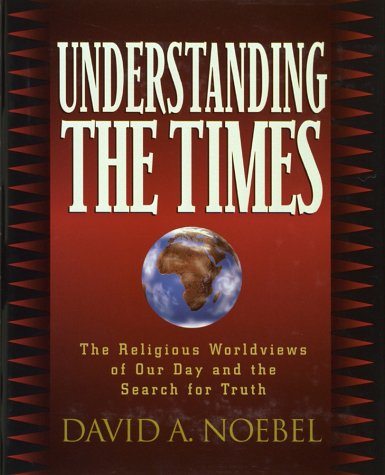
David Noebel is the author of "Understanding the Times," a book popular in evangelical and homeschool circles.
David Noebel is the author of “Understanding the Times,” a book popular in evangelical and homeschool circles.

I knew nothing about David Noebel.

I was not familiar with his much earlier work Communism, Hypnotism, and the Beatles, published in 1965–long before my birth–by Billy James Hargis’ Christian Crusade.

In one reviewer’s words: “Noebel is compelling because he’s intelligent, coherent, and well-researched, despite being absolutely paranoid and utterly mad. Aside from some inconsistent use of the Oxford Comma, he has a clear, if discursive thesis:

“Rock ‘n’ roll is turning kids into gay, Communist, miscegenators.”

Billy James Hargis was a right-wing evangelist and radio and television ranter long before Rush Limbaugh. He saw communist plots everywhere: in the NAACP and the civil rights movement, in the assassination of JFK, in water fluoridation. According to TIME magazine (Feb. 16, 1976), he founded American Christian College “to teach ‘antiCommunist patriotic Americanism'” from the city he called the “Fundamentalist Capital of the World”. From there, he promoted a hard line against drugs, homosexuality, sex education, abortion and the Beatles and toured with the college choir.

David Noebel was an aide to Hargis for twelve years, speaking around the country, founding The Summit in 1962 as a Christian Crusade program to combat anti-Christian teachings from secular universities (like the University of Tulsa) and contributing to Hargis’ television show where together they decried marijuana use and rock music. Later, Noebel became Vice President of Hargis’ new American Christian College in Tulsa.

In 1974, Noebel was staggered when students confided to him that Hargis, ardent promoter of traditional morality and father of four, had had sex with several of them.

Eventually four men and one woman exposed Hargis’ sexual abuse and manipulation over a period of years. TIME reported on the scandal in 1976, Hargis was forced to resign, and the school closed its doors the following year. Noebel went on to effectively “fold” Christian Crusade into Summit Ministries, building it into a successful international worldview training/brainwashing center targeting all ages, but teenagers in particular.

Noebel was an aide to Billy James Hargis, a right-wing evangelist and radio and television ranter who saw communist plots everywhere.

Postmodernism has replaced communism as the bane of our times. According to an article by Summit’s Steve Cornell,

“[The] pre-modern era was one in which religion was the source of truth and reality…. In a postmodern world, truth and reality are understood to be individually shaped by personal history, social class, gender, culture, and religion…. Postmoderns are suspicious of people who make universal truth claims…. Postmodern thinking is full of absurdities and inconsistencies.”

As a postmodern myself, I find it ironic that the decades have softened Noebel’s hardline position on Christian rock.

Apparently Mephistopheles has released it for other uses. Students at Summit’s youth conferences speak of the meaningful “corporate worship“, which now includes rock songs like “How Great Is Our God” by Chris Tomlin and “Jesus, Thank You” from Sovereign Grace Music.

The teens attending the worldview lectures today were not yet born when David Noebel penned Stratagem and would likely be surprised to learn that the religious anthems they find so powerful are actually “estranging them from traditional values”. According to the now retired, but still involved and revered, “Doc” Noebel, “although the lyrics might acknowledge the concept of true worship, the music itself expresses the unspoken desire to smash it to pieces.”

Summit’s John Stonestreet writes, “Truth does not yield to popular opinion. Unlike postmodernism, the biblical worldview can withstand all challenges and still speak to the dominant culture.” This belief is at the core of Summit’s “worldview” training.

And yet, Lowell’s line rings more true: time does make ancient “good” uncouth. Morality and truth are, in fact, shaped by history and culture.

As Summit’s stance on Christian rock illustrates so well.

Maybe, in another 30 years, Noebel’s successors will stop fighting same-sex marriage and even give up warning kids about “the gay agenda” as they “keep abreast of truth”? One can always hope…

How I Learned To Stop Being Afraid and Love Other Religions: Part Two, When Buddhism Saved My Life

mandala

HA note: The following is reprinted with permission from R.L. Stollar’s personal blog. It was originally published on July 30, 2013.

< Part One: If Satan Made Xanax, And Other Worldview Myths

*****

“It’s not difficult to see why Eastern religion is such an attractive form of salvation for a post-Christian culture. It assuages the ego by pronouncing the individual divine, and it gives a gratifying sense of ‘spirituality’ without making any demands in terms of doctrinal commitment or ethical living.”

~Chuck Colson, How Now Shall We Live?, 2004

*****

Part Two: When Buddhism Saved My Life

There were two particularly eye-opening moments I had during my 12 months studying Eastern Classics at St. John’s College, and both revolved around Buddhism.

The first was when my discussion group read a Buddhist text. Going into the discussion, I expected that there would be a lively debate. After all, my class consisted of people with diverse religious beliefs — atheists, Christians, Hindus, Buddhists, and more. I assumed that disagreement would be plentiful. What I did not expect, however, was that the lively debate occurred primarily between the Buddhist students.

It gave me flashbacks to highschool when Christian homeschool debaters spent hours arguing with each other over free will versus predestination. 

Oh… there is more than one type of Buddhist, I realized. Which was a simple reality. But it was a reality that Summit Ministries, for example, omitted when they taught me about Buddhism. And it is a reality that makes a really big difference.

The second moment was when I became friends with a Buddhist for the first time in my life. I’ll call him C. here. C. was my best guy friend during my time at St. John’s. He practiced Diamond Way Buddhism. And he was nothing like the Christian stereotypes I had heard about Buddhists. In fact, he was the most emotional male I had ever known — and I mean that in a thoroughly positive way. He embraced emotions. He taught me that not all Buddhists believe that “enlightenment” is reached by avoiding emotions. Some Buddhists believe that you need to face emotions head-on, acknowledge their existence, let them be what they are, feel them fully, and then let them pass. Learning to master one’s emotions, he said, wasn’t a matter of ignoring them.

You look your emotions in the eyes and say, “Oh. Hey. You exist. I am going to feel you. Maybe even for a long while. But then you will pass. Because you are not me.”

What C. taught me about emotions is one of the most important lessons I have ever learned in my life. Growing in the conservative Christian homeschool world, where first-time obedience and purity culture were rampant, I was taught to distance myself from my emotions, to be afraid of them:

Don’t be angry at adults. Anger is rebellion.

Don’t look at attractive women. You will lust.

Don’t be sad. You must set an example for others.

Buddhism made me realize that emotions are. They exist. This is just a fact of life. It is ok to feel them.

When I feel attraction towards a woman, that is ok. The woman is attractive, and therefore I experience attraction.

It is ok to feel attraction.

When someone does something that is mean or unfair, I experience hurt.

It is ok to feel hurt.

While this might seem like common sense, it wasn’t common to my experience growing up. And it made me realize that this stereotype I had of Buddhists — emotional asceticism — was actually more descriptive of Christianity than Buddhism — at least the Christianity I was raised in.

It was my American Christianity, not Buddhism, that needed to be told Jesus wept and that was ok.

I owe something else to Buddhism as well, something really big. I owe Buddhism my life. While I never converted to Buddhism, I did practice meditation for that year at St. John’s. To be honest, I pretty much hated the process. I do not like sitting cross-legged, and I do not like keeping my back straight and closing my eyes for an hour. But I did it just to say I tried. And in the years since then, when my depression flares up and my suicidal tendencies become overwhelming, I always find myself going back to my Buddhist meditations.

There is nothing religious about this fact. It is, for me, purely psychological. When all else fails, when my body is shaking and all I can think about is ending my life, it is the repetition of karmapa chenno and the visualizing of running mandala beads through my hands that can get my mind re-grounded. These things — though distant memories from almost a decade ago — are lifelines back to reality when my mental health distintegrates.

Buddhism, not my American Christianity, taught me how to mentally ground myself.

On more occasions than I’d like to admit, Buddhism has saved my life.

People who have difficulty with understanding how complex the human mind is, and how complex religions actually are, would find this a terrifying prospect. You can’t be a real Christian and at the same time appreciate Buddhism, the line might go. But I am not terrified by this idea. Because I do not see Buddhism, or Christianity, as set of propositions that are either true or false. I see them as so much more than that.

I see that I cannot step foot into a Christian church (and have not been able to for years) without experiencing a panic attack. And I know that this honestly has nothing to do with the truth-propositions of Christianity. It has to do with just about everything about Christianity other than the truth-propositions. In the same way, my positive experience of Buddhism — that it has saved my life — also has little to do with truth-propositions.

This is a key part of what I mean, then, when I said in Part One that, “Religion is a complex totality of human and other elements, only one element of which is the sort of truth-claim that one can package into propositions.”

This is also a key reason why I am not ashamed in any way to say that I love more than one religion.

*****

Part Three: I Celebrate My Childlike Wonder >

Where Is Your Sense of Compassion, HSDLA?

Screen Shot 2013-07-31 at 2.48.45 PM

HA note: The following is reprinted with permission from Libby Anne’s blog Love Joy Feminism. It was originally published on Patheos on July 31, 2013.

*****

Josh Powell wanted to go to school so badly that he pleaded with local officials to let him enroll. He didn’t know exactly what students were learning at Buckingham County High School, in rural central Virginia, but he had the sense that he was missing something fundamental.

By the time he was 16, he had never written an essay. He didn’t know South Africa was a country. He couldn’t solve basic algebra problems.

So starts a recent Washington Post article about Virginia’s religious exemption.

Powell was taught at home, his parents using a religious exemption that allows families to entirely opt out of public education, a Virginia law that is unlike any other in the country. That means that not only are their children excused from attending school — as those educated under the state’s home-school statute are — but they also are exempt from all government oversight.

School officials don’t ever ask them for transcripts, test scores or proof of education of any kind: Parents have total control.

. . .

Josh Powell eventually found a way to get several years of remedial classes and other courses at a community college.

Now he’s studying at Georgetown University.

. . .

Josh Powell, now 21, wonders how much more he could have accomplished if he hadn’t spent so much time and effort catching up.

“I think people should definitely have the freedom to home-school as long as it’s being done well and observed,” he said. “I don’t see any reason for there not to be accountability.”

Most of all, he worries about his siblings: There are 11. One, old enough to be well into middle school, can’t read, Josh Powell said.

Now he’s trying to get his brothers and sisters into school, to ensure that they don’t have to work as hard as he did to catch up — or get left behind.

Go read the whole thing—the article is excellent. The long and short of it is that Josh’s parents used Virginia’s religious exemption clause to get out of any requirement to teach him anything, and then proceeded to give him what he knew was a substandard education, despite his desire to learn more than they were teaching him. In the end, Josh overcame all of that and managed to obtain remedial classes at a community college (without his parents’ help, I should add) and then gain admission to Georgetown. And now, he wants to see the law changed so that other children will not find themselves in his situation.

What I want to turn to now is HSLDA’s response. Before I do that, I should mention that the article includes a quote from Michael Farris. It’s not long:

The law is completely clear, said Michael Farris, chairman of the Home School Legal Defense Association, who has claimed the exemption for his family. It doesn’t make sense to have the public school system regulate home schools, he said, because he thinks home schools are far more successful.

As to whether there could be children getting an inadequate education, he said: “Well sure, it’s possible. But there are whole public school districts that are slipping through the cracks.”

Dear Mr. Farris: What you said is called “tu quoque.” It is a logical fallacy. You are a lawyer, you should know that.

Now with that out of the way, what I really want to look at is the official response HSLDA issued the day after the Washington Post article came out.

“Oh, my God, I have a chance to learn!” The Washington Post’s recent article about Virginia’s religious exemption statute includes this fascinating quote from Josh Powell, the young man who never attended public school because his parents obtained an exemption on religious grounds.

The article criticizes the law that allows the exemption and lobbies for its change. But let’s slow down and think this through.

How many public school teachers ever hear their students say, “Oh, my God, I have a chance to learn”? Very few. Because sadly, public schools crush many kids’ desire to ever learn again. And this has been documented.

The largest study comparing homeschool students to others (by Dr. Lawrence M. Rudner, University of Maryland) amazingly revealed that homeschool 8th grade students score the same as 12th grade public school students!

Why do homeschool students score an almost unbelievable four grade levels ahead of others by 8th grade? It’s very simple. It’s not that homeschool kids or their parents have higher IQs—I suspect they don’t. It’s simply that homeschools don’t crush a kid’s inborn desire to learn.

What is HSLDA’s evidence that public schools crush children’s “inborn desire to learn” while homeschooling doesn’t? The Rudner study.

Let’s review, shall we?

Somehow I feel like we’ve been over this before. (Also, if you haven’t, you should read this excellent article as well.) What did Rudner’s study say and how does he feel about the way HSLDA uses it?

Rudner’s study was funded and sponsored by the Home School Legal Defense Assocation.  It analyzed the test results of more than 20,000 home schooled students using the Iowa Test of Basic Skills, and it was interpreted by many to find that the average home schooled student outperformed his or her public school peer.  But Rudner’s study reaches no such conclusion, and Rudner himself issued multiple cautionary notes in the report, including the following: “Because this was not a controlled experiment, the study does not demonstrate that home schooling is superior to public or private schools and the results must be interpreted with caution.” Rudner used a select and unrepresentative sample, culling all of his participants from families who had purchased curricular and assessment materials from Bob Jones University.  Because Bob Jones University is an evangelical Christian university (a university which gained a national reputation in the 1980s for its policy of forbidding interracial dating), the sample of participating families in Rudner’s study is highly skewed toward Christian home schoolers.  Extrapolations from this data to the entire population of home schoolers are consequently highly unreliable.  Moreover, all the participants in Rudner’s study had volunteered their participation.  According to Rudner, more than 39,000 contracted to take the Iowa Basic Skills Test through Bob Jones, but only 20,760 agreed to participate in his study.  This further biases Rudner’s sample, for parents who doubt the capacity of their child to do well on the test are precisely the parents we might expect not to volunteer their participation.  A careful social scientific comparison of test score data would also try to take account of the problem that public school students take the Iowa Basic Skills Test in a controlled environment; many in Rudner’s study tested their own children.

Rudner himself has been frustrated by the misrepresentation of his work. In an interview with the Akron Beacon Journal, which published a pioneering week-long investigative series of articles on home schooling in 2004, Rudner claimed that his only conclusion was that if a home schooling parent “is willing to put the time and energy and effort into it – and you have to be a rare person who is willing to do this – then in all likelihood you’re going to have enormous success.”  Rudner also said, “I made the case in the paper that if you took the same kids and the same parents and put them in the public schools, these kids would probably do exceptionally well.”

In other words, the Rudner study doesn’t say what HSLDA says it says, and Rudner himself is frustrated about how HSLDA is misusing and misinterpreting his study. In other words, HSLDA’s supposed “proof” that public school stifles a child’s “inborn desire to learn” while homeschooling does not is proof of no such thing.

Back to HSLDA’s response to the Washington Post article:

When he hit community college, Josh attended remedial classes designed to serve public high school graduates, then zoomed ahead. Now he attends one of the nation’s top 25 universities, earning good grades while working part time and carrying a heavy academic load. Not too bad for a kid who thought he had a bad secondary education!

If Josh had attended public schools, he would have statistically had a 1-in-5 chance of growing into an illiterate adult. The National Assessment of Educational Progress revealed that 21.7% of adults in Josh’s native Buckingham County are illiterate. This is the wreckage of thousands of young people whose desire to learn has been crushed in the public schools.

I wonder if any of the other kids in Josh’s remedial classes went on to attend one of the nation’s top 25 universities. I doubt it.

Maybe Josh didn’t learn that South Africa was a country while he was being homeschooled. But he arrived at the gates of young adulthood with his inborn desire to learn fully intact, and that has served him very well indeed. The Virginia religious exemption statute deserves its place of respect.

The HSLDA response is, in essence, “your bad homeschool experience is nothing to complain about, because you could have a fate worse than receiving an incompetent homeschool education while begging to learn—you could go to public school!” Is HSLDA completely incapable of saying “we’re sorry your situation was so bad, we feel that it is a terrible thing for any child to slip through the cracks”? Are they incapable of hearing “that hurt me” and responding with “we’re sorry”?

All I have to say is this: Where is your sense of compassion, HSLDA?

How I Learned To Stop Being Afraid and Love Other Religions, Part One: If Satan Made Xanax, And Other Worldview Myths

screen-shot-2013-07-29-at-7-46-16-pm

HA note: The following is reprinted with permission from R.L. Stollar’s personal blog. It was originally published on July 30, 2013.

*****

“Nothing short of a great Civil War of Values rages today throughout North America. Two sides with vastly differing and incompatible world-views are locked in a bitter conflict that permeates every level of society.”

~James Dobson and Gary Bauer, Children at Risk: The Battle for the Hearts and Minds of Our Kids, 1990

*****

Part One: If Satan Made Xanax, And Other Worldview Myths

When I enrolled in the Eastern Classics program at St. John’s College back in 2005, I encountered many and varied responses from fellow evangelical Christians. Some proved encouraging and others not so.

The most common response, though, was: “Are you a Buddhist?”

As the months passed and the time of graduation grew closer, the question changed, but only slightly:

“Have you become a Buddhist?”

At first the question provoked but a smile. As it grew more regular, however, and as I began to know more about Eastern philosophies and religions as well as what actually occurred in the minds of the questioners, it provoked a thought process. I realized that, to many Christians I knew, “Eastern” meant “Buddhist.” And “Buddhist” meant some tranquil species of rebellion against the American Jesus — like if Satan made Xanax for the mind. I vividly remember one individual who commented that, if I were to study Eastern religions, I better not become a Buddhist: Buddhists have no emotions whereas, you know, Jesus wept.

Such comments are likely the result of ignorance regarding world religions. A good number of the people who asked this question in 2005 did not shun inquiry. They merely lacked familiarity with Buddhism. They did not know (as I did not know prior to a year of study in the Eastern Classics) that Buddhism, like Christianity, has a dizzying number of denominations, each vying for doctrinal dominion. Consequently, when someone asks me now if I agree with Buddhism, I experience great difficulty answering the question: “Which denomination?” I have to ask. I have great fondness for the emotional freedom and experience-based practices of Diamond Way Buddhism, for example, whereas I dislike the asceticism of Theravada Buddhism. American Zen Buddhism is another story.

I have thus realized, after these conversations with friends and fellow students, that the American Christian mind (maybe even the American mind) has a paltry understanding of some of the longest-standing and deeply rooted ideas of the world. American evangelicals especially do not take time to appreciate, let alone understand, a good number of their strongest opponents in the sphere of religion. Those who have taken time (seemingly not much) only do so to construct flimsy card-houses with the purpose of a surprise attack.

You have groups like Summit Ministries and Worldview Weekend, training up the next generation with nothing more than an arsenal of generalizations, simplifications, and shameless reductionism.

No one seems interested in taking the ideas of other religions at face value and learning to see any sort of beauty or value in them.

To say that other religions can be beautiful or valuable is not an exercise in relativism. But granting this beauty or value will likely suffer the fate of being interpreted as such by many of today’s “worldview” champions. The old guard of American Christianity and Christian homeschooling — Dobson and Bauer, from this post’s opening quotation, and people like Summit’s David Noebel and John Stonestreet, or homeschooling’s Kevin Swanson and Ken Ham — is terrified of anything that sounds “postmodern.”

Postmodernism is like intellectual dub step to the old guard.

In today’s evangelical culture, a defense of religion as an aesthetic and social phenomenon seems indistinct from a defense of religious pluralism and intellectual apathy. But that’s because this culture is so afraid of “liberal” arts to the point that it cannot comprehend some basic philosophical and sociological concepts. The fact is, to understand religion as an aesthetic and social phenomenon grants humanity the freedom to explore a ground to aesthetics and society that condemns, rather than condones, an unwillingness to pursue truth.

But first: what does “religion” mean? And what would it mean, that one can perceive this noun’s content as “aesthetic” and “social”?

To the evangelical culture, religion is either Christian and thus true or pagan and thus untrue. This proves a stunted understanding, however, because religion is neither one nor many truth-claims which one can either affirm or reject. Religion is no doubt a phenomenon which entails truth-claims. But it also entails much more. Religion is a complex totality of human and other elements, only one element of which is the sort of truth-claim that one can package into propositions.

We need to start seeing religion — and any particular religion — not as a mass of disembodied doctrines but as what sociologist Peter Berger calls a “world conspiracy.” “World conspiracy,” in fact, seems the best definition for religion.

What does this mean?

In The Sacred Canopy, Berger explains that,

“The condition of the human organism in the world is…characterized by a built-in instability. Man does not have a given relationship to the world. He must ongoingly establish a relationship with it.”

The world abounds with the sort of innate precariousness that a Buddhist would term as impermanence — “All things pass,” sighs Kaoru, one of the main characters in Murasaki Shikibu’s Tale of Genji. This line is almost identical to Solomon’s sentiment in Ecclesiastes.

Human and other life forms, buildings and projects, ideas and romances—these all rise and fall, constantly, perpetually, each and every day. As a result of this precariousness, human beings go about selecting structures of meaning in which they can operate. Humans construct families, work places, technology, and institutions in which to control the elements of the world that bear chaos. Out of their constructions human beings hope for an order, a society. Peter Berger says,

“Society, as objective reality, provides a world for man to inhabit. This world encompasses the biography of the individual, which unfolds as a series of events within that world”

But humans need more than order: they need to feel meaningfulness within that order. They require that order to be “ordained” in some way. Thus,

“a meaningful order, or nomos, is imposed upon the discrete experiences and meanings of individuals.”

This nomos is religion:

“Religion is that human enterprise by which a sacred cosmos is established, wherein ‘cosmos’ implies not a galaxy but order.”

This final addition to the human world-building project grants the project and its everyday objects and endeavors a sense of purpose, an all-encompassing reason for pursuing the ends of the society. Berger terms this sense of purpose or reason a “sacred canopy” cast over world-building. It is a “world conspiracy” in the sense that humans work together to give their reality a meaning:

“Religion is the audacious attempt to conceive of the entire universe as being humanly significant”

What Berger as a sociologist calls a “world conspiracy,” or “sacred canopy,” a theologian like N.T. Wright might term “worldview.” (1) Jamake Highwater, a historian and philosopher of sexuality, preferred the term “mythology” in his 1991 book Myth and Sexuality:

“All human beliefs and activities spring from an underlying mythology—those metaphors, informing imageries, and paradigms which deeply influence every aspect of our lives and which determine our attitudes about reality—about the world and about ourselves: good and evil, normalcy and abnormalcy, fact and fiction, justice and injustice, beauty and ugliness, power and powerlessness.”

Whether one prefers world conspiracy, sacred canopy, worldview, or mythology as a descriptive, the common factor among the ideas is that human being itself contains within it a hope and passion for carving out a home in a hostile existence.

This hope and passion — and all its nuances, quirks, failures, and successes — is the stuff of religion.

*****

Part Two: When Buddhism Saved My Life >