Michael Farris’s Testimony Before the Senate on the UN Convention on the Rights of Persons with Disabilities, Part 2: By Rachel Lazerus

sources

HA note: The following is reprinted with permission from Libby Anne’s blog Love Joy Feminism. It was a guest post by Rachel Lazerus and was originally published on Patheos on November 12, 2013. Rachel Lazerus received her MPP from the Harris School of Public Policy at the University of Chicago in 2012. She is currently researching comparative methods of reporting homeschooling achievement.

Part One

In his opening argument against the UN Convention on the Rights of Persons with Disabilities, Farris asserted that the pro-treaty side was not doing its due diligence and had not thoroughly analyzed the full legal effect of the law. “We don’t hear citations to articles of the treaty,” he intoned. “We don’t hear consideration of the reports, the concluding observations, by the Committee on the Rights to Persons with Disability. We don’t hear the kind of legal analysis that would be appropriate for analyzing the legal impact of this treaty.” Consistent with this criticism, Farris cited two experts known to be sympathetic toward the treaty in order to support his legal analysis: Columbia University’s Louis Henkin, one of the most influential legal scholars in the realm of human rights and international law, and University of London’s Geraldine Van Bueren, a leading human rights expert.

If you read my previous post on Michael Farris’s testimony before the Senate Foreign Relations Committee—and you should—you will know that prominent homeschool advocate Michael Farris is arguably the holdup to the Senate signing the UN Convention on the Rights of Persons with Disabilities (CRPD). Last week he testified before the Senate Foreign Relations Committee, arguing that the Senate should not ratify the treaty because doing so would limit parents’ rights to make decisions for their children and ultimately have a negative effect on homeschooling—even though Farris is essentially the only one to interpret the treaty in this way. When the Senate signs a treaty, it often also has to pass new laws for implementation, which will put the treaty into effect. This is not the case with the CRPD, because the CRPD itself is based on the Americans with Disabilities Act, which is already a part of U.S. law.

Farris denies that this is the case: he believes that ratifying the CRPD will inexorably lead to changes in US law.

During his testimony, he cited references to Henkin and Van Bueren, whose arguments he claims the Senators have neither read nor even considered. But the problem here is not the Senate: it’s Farris.

Out of my desire to understand his reasoning, I looked up Farris’s citations and read them in their original context. What I found was stunning: the simple reality is that Farris took both Henkin’s and Van Bueren’s statements out of context and misapplied them to his own twisted legal theory. By citing each quote out of context, Farris was able to, as Senator Menendez said, take “a noncontroversial statement and twist it into something that’s rather sinister.”

The very basis of Farris’s protestations against the CRPD, then, is a lie.

The Henkin Citation

In his opening statement, Farris quoted this line by Louis Henkin:

[…] the United States apparently seeks to ensure that its adherence to convention will not change or require change in US laws, policies, or practices, even when they fall below international standards. […] Reservations designed to reject any obligation to rise above existing law and practice are of dubious propriety: if states generally entered such reservations, the convention would be futile. […] Even friends of the United States have objected to its reservations that are incompatible with that object and purpose and are therefore invalid. The United States, it is said, seeks to sit in judgment on others but will not submit its human rights behavior to international judgment. To many the attitude reflected in such reservations is offensive. The conventions are only for other states, not for the United States.

Louis Henkin.
Louis Henkin.

Note the bracketed ellipses.

For those readers unfamiliar with academic conventions, an ellipsis is used to indicate that text has been left out of a longer text. This is why a movie critic can write a review saying “this movie was no fun or good, you should stay home and spend the money for your family’s tickets on a new couch” and the movie producers can run an ad saying the critic said “fun…good…for your family”. Ellipses can disguise or hide what someone really said. Always take note when you see lots of ellipses.

Farris’s usage here was less egregious than the hypothetical movie producer’s ad, but did leave out important context. The full context of what Henkin said is found in an article he authored titled “U.S. Ratification of Human Rights Conventions: The Ghost of Senator Bricker,” published in The American Journal of International Law, Vol. 89, No. 2 (Apr., 1995), pp. 341-350. If you have access to JSTOR, you can read it here. The words Farris left out are in bold.

By its reservations, the United States apparently seeks to assure that its adherence to a convention will not change, or require change, in U.S. laws, policies or practices, even where they fall below international standards. For example, in ratifying the International Covenant on Civil and Political Rights, the United States refused to accept a provision prohibiting capital punishment for crimes committed by persons under eighteen years of age. In ratifying the Torture Convention, the United States, in effect, reserved the right to inflict inhuman or degrading treatment (when it is not punishment for crime), and criminal punishment when it is inhuman and degrading (but not “cruel and unusual”).

You can see why Henkin—again, a leading human rights lawyer—would be rather appalled at the US ducking such a provision, which is indeed contrary to the “object and purpose” of the treaty. (Indeed, the Supreme Court later prohibited capital punishment for persons under the age of eighteen in 2005’s Roper v. Simmons.)

Farris admitted that while the context was different, Henkin’s “principle was applicable” to the treaty at stake. This is denying a rather major contextual change. The main difference between Henkin’s argument in 1995 and Farris’s argument in 2013 is that when ratifying the International Covenant on Civil and Political Rights (ICCPR), the United States used a reservation in order to create a loophole, thus allowing the US to continue to execute juveniles under the age of 18 who were convicted of capital crimes. There is no such similar loophole being created by any proposed reservations to the Convention on the Rights of Persons with Disabilities (CRPD). Farris may genuinely believe that the reservations create such a loophole, but Farris also has a rather idiosyncratic view of both the phrase “the best interests of the child” and the purpose of the UN that is not reflected in mainstream thought and would not be supported by Henkin.

Furthermore, the issue remains: why cite Henkin? Henkin’s legal opinion is that the US should ratify treaties with fewer reservations in order to increase accountability to other UN member nations and that the US should enact legislation that would bring it to the same human rights standard as other foreign nations. Farris, who wishes to “enact an amendment to the Constitution so the demogogues [sic] in Washington DC can never again subject this nation to the duty to follow the law of the United Nations”, clearly does not wish to cede any type of sovereignty or oversight to the UN. He certainly would not want the US to follow the same kind of homeschooling laws currently practiced by Germany. It is very strange that Farris would be citing Henkin’s views on this one particular issue even as he admits that he disagrees with the substance of Henkin’s views, as well as with the conclusions that Henkin draws: Henkin thought that the US should stop using RUDs to duck responsibilities to foreign nations, while Farris would apparently prefer that the US stop signing treaties altogether.

(Perhaps Farris is regularly sloppy, or perhaps he’s just not very good with details, but it’s interesting to note that not only did Farris misspell Henkin’s name twice in his written brief, he also continually referred to Henkin in the present tense during his testimony. He did not seem to realize that Professor Henkin had passed away in October 2010. In contrast, Senator Menendez properly referred to Henkin using the past tense, and noted that not only would Henkin be in favor of the treaty, the human rights institutions that Henkin had founded and participated in also support ratification of the treaty.)

The Van Bueren Citation

Geraldine Van Bueren.

I earlier mentioned Farris’s idiosyncratic views on the phrase “the best interests of the child.” It’s certainly one he uses often; he referred to it six times during his testimony. In Farris’s view, this phrase is the smoking gun that reveals the perfidious nature of the UN treaty and its sinister aim to steal children from their parents’ authority and place them under the government’s control. His citation for this claim is always the same quote from Geraldine Van Bueren, which he cites as “Geraldine Van Bueren, International Rights of the Child, Section D University of London, 46 (2006).

Best interests provides decision and policy makers with the authority to substitute their own decisions for either the child’s or the parents’, providing it is based on considerations of the best interests of the child.

This is clearly a passage that has imprinted on Farris’s brain, as he cites this exact quote in eight different documents on ParentalRights.org (in addition to citing various other quotes from different sections of the same document of Van Bueren’s).

Like the previous quote from Henkin, it is incomplete and taken out of context.

I found a more complete version of Van Bueren’s quote in her 1995 work, “The International Law on the Rights of the Child,” on page 45—46, in a section called “The New Principles of Intervention.” The fuller context of the quote, which I located, makes it clear that Van Bueren is providing a historical overview of the way that the best interests standard has been applied, rather than stating the definitive legal view of the position.

Although the best interest of the child is common in domestic legislation it is not expressedly incorporated into many major human rights instruments. So, for example, neither the European Convention on Human Rights nor the International Covenant on Civil and Political Rights includes any such reference. This is partly because the rights approach of human rights treaties is at odds with the traditional welfare approach of best interests which undermines the child’s autonomy. Therefore, the inclusion of best interests of the child in a rights treaty, the Convention on the Rights of the Child, suggests that this traditional concept has been remoulded. In its broadest application the principle is articulated in article 3(1) of the Convention, which provides that, “In all actions concerning children whether undertaken by public or private social welfare institutions, courts of law, administrative authorities or legislative bodies the best interests of the child shall be a primary consideration.” [ . . . ]

As has been frequently observed, although the question is viewed from the child’s best interests, the answer is frequently given from an adult perspective. Best interests provides decision and policy makers with the authority to substitute their own decisions’ for either the child’s or the parents’, providing it is based on considerations of the best interests of the child, Thus the Convention challenges the concept that family life is always in the best interests of children and that parents are always capable of deciding what is in the best interests of children.

Farris may not agree with this expanded version any more than he agrees with the limited quote he has been using, but by placing Van Bueren’s quote in context, it’s clear that she is discussing the way that one specific convention—the UN Convention on the Rights of the Child (CRC)—uses the phrase “the best interests of the child”. And in fact, an unbiased look at the full context of Van Bueren’s work would show that, far from Farris’s view of a static and nefarious concept, Van Bueren argues that the phrase “best interests of the child” is not a “legal term of art” but rather an evolving legal concept that has been interpreted differently over time by various conventions on human and child rights.

(Since Farris also opposes the ratification of the CRC, it is worth including a short parenthetical on that treaty. Contrary to Farris’s assertions on the subject, the CRC actually supports the child’s right to be raised by his or her parents and includes numerous other provisions on the importance of parental involvement and decision-making in children’s upbringing. Yes, the CRC challenges the idea that parents always know what is best for their children—and the existence of abusive and neglectful parents suggests that this idea very much needs to be challenged—but it does not in fact make children wards of the state as Farris would have his followers think. For more, see this fact sheet published by UNICEF.)

The attentive reader will wonder why I am using a different text than Farris did for this quote.

The answer is quite simple: the book that Farris cites does not exist.

Van Bueren has never published a book called “International Rights of the Child”, nor does she list any books published during the year 2006. Searching for the same citation that Farris used in his written testimony only turns up documents on his website ParentalRights.org, or articles referring positively to Farris and his views. Indeed, I may be the first person ever to check Farris’s citation for accuracy.

I suspect, though I cannot outright prove, that instead of citing Van Bueren’s work directly, Farris is citing a study guide from a class he took for his distance-learning LLM.

The circumstantial evidence for this conclusion is very great. The program that Michael Farris has likely enrolled in can be found here, and it advertises as a selling point that the programs “have been developed by academics within Queen Mary and UCL Law departments.” Van Bueren is a professor at Queen Mary College at the University of London, and a course called “International Rights of the Child” is listed in the course catalogue for the distance-learning LLM (page 40). The required text for the class is a book written by Van Bueren. The class is broken down into four sections labeled A, B, C, and D, which matches the citations Farris uses throughout ParentalRights.org. While I was not able to locate the study guide for Section D, I did find a study guide for Section C, which seems to be a summary of Van Bueren’s earlier work. It appears that Van Bueren took part in preparing or at least approved the adaptation of her previous work into modules for the course offered by the University of London, which would explain why an identical sentence shows up in two works dated 11 years apart.

I have reached out to Michael Farris on his Facebook page and asked if he could clarify his sourcing for the Van Bueren quote. He has not yet responded to me, though he has posted several links since I asked. I would welcome any clarifications he can provide, and I’m sure Libby Anne would give him space to reply to this and the other questions I’ve raised.

It is not clear to me that Farris is deliberately twisting the context of Van Bueren’s quote, at least not in the same way that he knowingly used Henkin’s quote to apply to a different situation than the one Henkin intended. It is entirely possible that Michael Farris, while doing the required coursework for his online LLM degree from the University of London, stumbled upon the truncated quote he cites so regularly in his articles. If the quote appeared on its own when placed in the study guide, he may not have realized the greater context of the quote, and thus may have interpreted it as a prescriptive guide for using the phrase “best interests of the child”, and not as a descriptive definition given at one point in time, by one particular convention on children’s rights. If this is so, then Farris, like many graduate students before and after him, simply skipped doing the further required reading. In this scenario, he is guilty of doing only the bare minimum reading in order to graduate, rather than being guilty of the odiousness of deliberately and repeatedly twisting the context of the quote in order to further his own agenda.

Or, as he did to Henkin, he understood the context of Van Bueren’s quote, but deliberately took her words out of their original context in order to mislead others.

In both cases, he has committed the very great sin of improperly citing an unpublished study guide or course module as though it were a published book, incidentally making it very difficult for anyone to find the original citation. It’s almost like Farris felt he had something to hide.

And while it is a great rhetorical device to cite the direct and unvarnished words of your opponent—the observant reader will note my fondness for the tactic—it works best when you understand your opponents’ arguments. Farris does not understand Van Bueren’s text, and is willfully misapplying Henkin’s argument. His appeals to authority and expertise are thus invalid.

Conclusion

Now let’s return to Farris’s testimony last week.

Farris said on his facebook page afterwards that giving his testimony to the Senate “wasn’t really any fun.” I must admit, tearing apart Michael Farris’s flimsy excuses for a legal argument has been great fun for me, though I do worry it is unsporting to be fighting a battle of wits with someone who shows every indication of having arrived unarmed.

Here’s the real problem, though. For all my snark here? Farris has won. And he is continuing to win.

Farris may have made himself look like a fool in front of the Senate, but he has shifted the Overton Window of homeschooling policy.

We are unable to talk about ratifying a treaty on the disabled—a treaty which we are already following all of the requirements of—without multiple reassurances that homeschooling will remain unrestricted. These are completely unrelated topics and they should never have been conflated in the first place. The only reason we are talking about them together now is because of the twisted and outright false legal reasoning of a man who cannot string a sentence together about why homeschooling and disability are being discussed together without resorting to fallacies, and a man who hours afterwards is already trumpeting how persecuted he was. He cannot tell the truth about an event, even when the Senate session is broadcast exposing him for what he is.

On his Facebook page, Farris posted the following:

The shots were cheap and it wasn’t really any fun.

But here is the point. When the left stoops to these kinds of tactics, it is a sign of two things:

1. They have no effective answers to the substance of my arguments.

2. I am having an impact.

I hope that these blog posts have demonstrated to you that there are indeed very effective arguments for Farris’s arguments, and that Senators Boxer, Durbin, and Menendez used them well during the committee hearing. But I cannot deny the truth of Farris’s second assertion. He is having an impact. He has an agenda. And he has been using the members of HSLDA to implement that agenda.

It is long past time to take control away from the abuser.

In the same Facebook post I cited above, Farris claimed that “the left” is targeting certain Republican senators who have previously voted against the treaty and ask them to change their vote. It’s now long past time for the left—and the center, and the right—to do just that. On PBS’s Newshour, Senator Menendez said that he counts 61 votes affirmed for the treaty, including Democrats, Republican, and Independents. For the Senate to pass the treaty, he needs 67. You can—and should—get involved. It’s as simple as picking up your cell phone.

To quote Farris himself in a fashion he may agree with, “If we let [Farris] get away with these tactics—our movement, indeed our country is doomed.” Truer words.

Michael Farris’s Testimony Before the Senate on the UN Convention on the Rights of Persons with Disabilities, Part 1: By Rachel Lazerus

HA note: The following is reprinted with permission from Libby Anne’s blog Love Joy Feminism. It was a guest post by Rachel Lazerus and was originally published on Patheos on November 11, 2013. Rachel Lazerus received her MPP from the Harris School of Public Policy at the University of Chicago in 2012. She is currently researching comparative methods of reporting homeschooling achievement.

Last year, Michael Farris, homeschool advocate and founder of the powerful Home School Legal Defense Association, was instrumental in blocking the ratification of the UN Convention on the Rights of Persons with Disabilities (CRPD), despite its complete irrelevancy to homeschooling issues. Senator Robert Menendez (D-NJ) is now bringing the treaty back to the Senate, hoping to ratify it in this current session. Last week, Michael Farris was a witness for the Senate Foreign Relations Committee, testifying on why he thinks this treaty would be bad for the U.S.

farris

You probably didn’t watch Farris’s testimony last week, and his followers probably didn’t either. In fact, Michael Farris is banking on them not having seen it. You see, Michael Farris hopes they will accept his description of the hearing, of how mean and unbalanced it was, and how vicious the “Democrat” senators are. Farris hopes his followers will call their senators and demand that they vote no on the treaty. And of course, Farris hopes his followers will donate money to HSLDA in their outrage!

The problem is that Michael Farris’s description does not match up with reality.

While Farris told his followers that the Democratic senators sought to “vilify and destroy” him, in actual fact they treated his arguments against the treaty with the respect they deserved. Many of Farris’s legal analyses were countered by the other witnesses and the Senators. His demeanor throughout the hearing was aggressive and at some points incredibly rude and disrespectful to sitting Senators. And the “petty, silly, and personal attack” that Farris decries was, in fact, a response to Farris’s appeal to his own authority, one which he has used both here and previously to brush off criticism of his legal analysis.

In this post I will examine Farris’s description of the hearing, what actually happened, and some of the issues involved. I will look at Farris’s exchanges with Senators Boxer, Durbin, and Menendez, and contrast what actually took place with how Farris portrayed what took place in a fundraising letter he sent out to HSLDA members later that day. In my next post I will delve more into the legal issues at hand. I believe that this is an issue you should care deeply about, because the political power that Farris has is predicated on his position as leader of HSLDA, and his rejection of the UN Convention on the Rights of Persons with Disabilities (CRPD) is entirely consistent with the philosophies he’s built his political base around—and also because there are compelling reasons the U.S. for the U.S. to sign the CRPD.

Of course, you don’t have to take my word for any of this. You can watch and read Farris’s testimony for yourself and judge whether or not my description is accurate. First, you can watch the Senate hearing here (or here). Second, you can read my own transcription, which I made while watching it, my curiosity piqued by Sarah Jones’ description (my transcription is not perfect and may have some flaws or typos). I was not able to transcribe the entire two-and-a-half hours of the panel, and therefore I have not included all of the arguments or debate on the CRPD, but I was able to cover all of Farris’s testimony, as well as his back-and-forth conversations with Senators Corker, Boxer, Durbin, Johnson, Menendez, and Coons.

Background

Before I dissect Farris’s arguments and his back and forth with the various senators, I want to lay out some basic, noncontroversial, unchallenged facts about the Convention on the Rights of Persons with Disabilities (CRPD):

  1. The CRPD has already been ratified by over 130 countries around the world.
  2. The US has signed but not ratified the CRPD.
  3. Until the US ratifies the CRPD, no US representatives are able to take part in the Committee on the Rights of Persons with Disabilities, which monitors implementation. This limits US involvement in implementation of disability laws in other countries — of concern to US citizens traveling abroad — and in the interpretation of the treaty by the UN.
  4. Michael Farris is the most prominent voice opposing the ratification of the CRPD. Farris’s argument is that because there is no explicit mention of parents’ right to determine their children’s education, ratifying the treaty could potentially affect homeschooling. This is not in line with legal precedent of how the courts determine the US’s obligations under treaties such as these.
  5. Under debate currently in the Senate are a number of RUDs—reservations, understandings, and declarations—that the US may attach to its ratification of the treaty. While these are a common practice by the US and other countries, Farris is arguing that the only type of reservation he would accept is one invalidating the treaty.
  6. According to his opening testimony, Farris agrees with the emotional and political arguments in favor of ratification, but he believes that despite every assurance he has received to the contrary, ratifying the CRPD will change US law.
  7. If Farris had not decided to protest the CRPD, it is very likely it would have been ratified last December.

While Farris has characterized the pro-treaty side as being “Democrat” and “left”, this is not actually the case.

The CRPD has bipartisan support in the Senate, with Democrats, Republicans, and Independents all being in favor of the treaty. While Farris noted that two of the witnesses were “sitting senators”, he neglected to note that both Mark Kirk (IL) and Kelly Ayotte (NH) are sitting Republican senators, or that the other pro-treaty witnesses included Tom Ridge, a Republican who served as Secretary of Homeland Security under President George W. Bush, and Richard Thornburgh, a Republican who served as Attorney General under President George H.W. Bush. The Americans with Disabilities Act, on which the CRPD is based, was signed in 1990 by President Bush and passed the House by a vote of 377 to 28 and the Senate with a vote of 91 to 6. Several of the at the committee hearing made note of the remarkably bipartisan nature of this bill, and made it clear that supporting the rights of the disabled and of veterans is neither a Democratic nor a Republican issue, but a human rights issue.

Farris’s characterization of the treaty as a plot by “the left” is thus both fundamentally dishonest and a cheap ploy to get donations from people who dislike the “Democrat” party.

Barbara Boxer’s “Attack”

boxer

With this background, we now turn to the substance of Farris’s characterization of his interactions with three Senate Democratic committee members. Farris described his back-and-forth by Senator Boxer this way:

After we gave our introductory remarks, the personal attacks began. Senator Barbara Boxer (CA), the second most senior Democrat senator on the committee, asked me if HSLDA or ParentalRights.org has ever raised money during our battle against UN control over children and families with disabilities. Instead of asking her if she had ever raised money during her campaigns for U.S. Senate, or whether any of the pro-UNCRPD organizations raise money for their fight, I explained that HSLDA is funded by you, our members. ParentalRights.org is funded solely by donations.

Senator Boxer’s attack, however, was not really against me or HSLDA. It was against you, and every other homeschool family who has ever supported HSLDA because you believe in our mission to defend the God-given right of parents, not faceless bureaucrats, to care for and educate our children. Senator Boxer thinks that your membership in HSLDA and your support of our critical work to defend homeschooling, support widows and single parents through the Home School Foundation, and the work of ParentalRights.org to pass a constitutional amendment makes you an evil special interest that must be vilified and defeated.

Contrast this description with what was actually said during the two minutes that Senator Boxer spent addressing Farris. You can view the relevant video here or read the transcript as follows:

Boxer: “Now, Dr. Farris, you say that you’re speaking for the disabled, but your statements are directly contradicted by organizations that work every day, 24/7, to protect disabled kids, like the United States International Council on Disabilities who states, quote, ‘this treaty protects parental rights and highlights the important role of parents in raising children with disabilities.’ Unquote. And TASH, you know that organization, says quote, ‘nothing included in this treaty prevents parents from homeschooling. This treaty embraces the spirit of the Individuals with Disability Education Act, the Americans with Disabilities Act, and all disability non-discrimination legislation.’ But you, Dr. Farris, argue the opposite. You once even said, and I quote,‘the definition of disability is not defined in the treaty and so my kids – my kid wears glasses, now they’re disabled. Now the UN can get control of them.’ Well, I have to say in my opinion, that is nonsense that if a child wears glasses [Boxer touches her own glasses], then the child is considered disabled. So I wonder what is behind your fight. And I just ask this question for the record. Have you ever tried to raise funds by telling parents this treaty will limit their ability to decide what is best for their children?”

Farris: “Senator, our organization is funded by membership dues, not by contributions.”

Boxer: “So you’ve never sent out an e-mail asking for funds to fight—”

Farris: “No, the Homeschooling Legal Defense Association, um, is associated also with a group called ParentalRights.org. Parentalrights.org has indeed sent out fundraising emails—”

Boxer: “Thank you very much.”

Farris: (overlapping) “But, Senator, the substantive answer is, the treaty doesn’t ban homeschooling. What the treaty does is shift the decision-making power from the parent to the government. That is what the meaning of the best interests standard is.”

Boxer: “Well, that is not something that I agree with, nor do any of the organizations.

Farris: (overlapping) “Well—”

Boxer: “Thank you very much.”

Farris lied when he categorized Boxer’s questioning as an attack on HSLDA families. Boxer was not attacking, or even coming close to attacking, any HSLDA family. She simply asked Farris a question—whether he was using his opposition to the CRPD as a fund-raising cash cow—that he was embarrassed to answer. She never used the words “evil special interest”—an interesting choice of words by Farris, given that he has done more than anyone else to turn homeschooling families into a special interest group. Perhaps Farris, flushed in his residual embarrassment after his performance, accidentally admitted his private categorization of HSLDA families.

What Senator Boxer was actually getting at was Farris’s practice of issuing bald-faced lies about the implications of the CRPD in order frighten homeschooling parents so as to raise money for his organizations.

And the fact that Farris turned around and sent this letter out—including a P.S. asking for money (“Finally, even though Senator Boxer doesn’t want you supporting the battle against the UNCRPD and for U.S. sovereignty, you can donate if you wish”)—is an example of his inability to understand either what Senator Boxer was getting at or that what he is doing is fearmongering and wrong.

For the record, this very e-mail reveals that Farris is officially sending fundraising e-mails from HSLDA.org in order to fund “the battle against the UNCRPD and for U.S. sovereignty”—the exact thing he denied doing just hours earlier in front of the Senate Foreign Relations Committee, when he claimed that he only sent out such emails from ParentalRights.org. Senator Boxer was onto something. Farris is indeed making inflammatory and incorrect assertions about what happened in order to raise money. Ironically, his attack on Senator Boxer justifies her line of questioning.

Senator Durbin’s “Misunderstanding”

durbin

Next came Farris’s mischaracterization of Senator Durbin, the Democratic senator from Illinois. Here is Farris’s description of their interaction:

Next, Senator Dick Durbin (IL), another senior Democrat on the committee, falsely argued that HSLDA’s position is that the Americans with Disabilities Act (ADA) is the threat to homeschool freedom. The fact is that HSLDA strongly supports the ADA and other laws advancing the freedom and dignity of persons with disabilities which our democratically elected representatives have passed. What’s more, the UNCRPD would actually threaten parental rights which are enshrined in the IDEA [the Individuals with Disabilities Education Act]. I explained to him that it was the UNCRPD, not the ADA, which was the threat. He ignored me and persisted in stating that HSLDA believes the ADA was the threat. Logic teachers call this a straw man argument, which is used by people who do not wish to debate the merits of an issue.

Again, Farris’s recollection is simply incorrect. You can view the relevant video here, or read the transcript as follows:

Durbin: “I am just stopped cold with this argument by Mr. Farris that the Americans with Disabilities Act is going to put an end to homeschooling in America. Is that your position?”

Farris: “That’s not my position. My position is that the treaty changes the, the legal requirements in this country that it’s just not correct to say that there is no duty to change American law in accordance with the treaty. So, since I believe there will be required to be, uh, an implementation act that complies with the requirements of the treaty I think that at that point in time that’s when the problems will arise.

Durbin: “Mr. Farris—”

Farris: (overlapping) “Not under the ADA itself.”

Durbin: “Mr. Farris, the fact that the administration is not asking for an implementation act and made it clear that it’s not seeking it because the Americans with Disability Act already is controlling, and has been extensively litigated, sets disability standards in our country higher than any in the world, you don’t find that convincing.”

Farris: “That’s the same administration that’s prosecuting the homeschooling family to try to expel them from the United States who came here—”

Durbin: “Under the ADA? Under the Americans with Disabilities Act?”

Farris: “No, they came here under our law of asylum. But the question of the case is—that case is also pending before the Supreme Court, and the question is—”

Durbin: “Well, Let me just say Mr. Farris—”

Farris: “I guess you don’t want me to answer the question.” *flounces back in his seat*

Durbin: “I don’t think you can answer because you want to talk about something other than the American Disability Act or the convention on disabilities, and that’s what we’re here to discuss.”

Farris: “The convention with disabilities has a different legal standard than the ADA.”

Durbin: “I can tell you—”

Farris: (overlapping) “There are numerous disability organizations that say so. I include their citations in my written testimony. I’m not the only one that says that. The CRPD committee agrees with me.”

Durbin: “And I would just say to you, Mr. Farris, that if we’re going to have a battle of the organizations supporting or not supporting this, I think we’re going to prevail. Because we have the mainstream disability organizations across America who are supporting the adoption of this convention on disabilities. And I—I just, I struggle with this notion that we are somehow going to stop this effort, this effort to extend the rights to the disabled around the world for fear of something which you can’t even clearly articulate when it comes to homeschooling. […] This is not going to affect homeschooling, it’s very clear that it will not. And the Americans with Disabilities Act for twenty years has not affected homeschooling. I yield back my time.”

Far from “stating that HSLDA believes the ADA was the threat”, Durbin is very clear: because the US is already bound by the ADA, which holds the US to a higher standard than the CRPD would hold the US, there will be no changes required in US law should the US ratify the CRPD. As Farris originally got involved with this treaty obstensibly in order to prevent changes in homeschooling law, this is not an irrelevant point that Durbin is making.

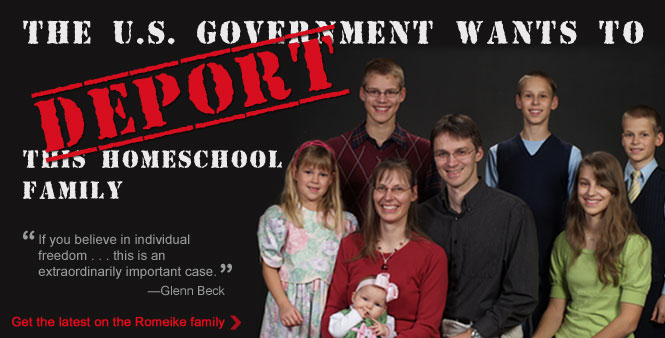
(Farris actually talks quite a bit about the Romeikes, a German family that is trying to get asylum in the U.S. on the basis of Germany’s essential ban on homeschooling. I personally don’t see the relevance of the Romeike family to the CRPD, and connecting the two seems to fall under the slippery slope fallacy. You can read more about the Romeike family hereherehere, and here.)

It is also clear from the video and transcript that Farris is not exactly acting with the proper decorum due to a sitting US senator or expected in a senate hearing. He is rude, interrupts the senators multiple times, and, when frustrated, resorts to mouthing off. Once I got over my initial shock, I found myself full of questions. Personally, I was not homeschooled, nor have I ever participated in any type of moot court. Is this kind of display in this sort of formal setting considered acceptable for homeschooled students? For participants in moot court? Wouldn’t judges dock points for display of temper? Surely Farris knows that when giving testimony as an expert witness, it is advisable not to behave like a lawyer on “The Good Wife”?

But let us not let our shock at Farris’s visible display of disrespect distract us from Farris’s legal disrespect of Durbin’s very sound arguments.

Durbin, a former trial lawyer, makes numerous strong legal points that poke holes in Farris’s flimsy argument. For example, a large part of Farris’s argument relies on the assumption that US law will need to change in order to accommodate the new treaty. As the treaty is non-self-executing, this would have to be accomplished with an Implementation Act passed by both Houses of Congress and signed by the President. However, as Durbin pointed out, this is not necessary in the case of the CRPD. This is corroborated by the UN website on the Treaty on Disabilities:

Except in the rare case that the laws in a country already conform fully to the requirements of the Convention, a State party will normally have to amend existing laws or introduce new laws in order to put the Convention into practice.

As Durbin states, the US is exactly that “rare case” that the laws already conform to the requirements of the Convention—because the Convention was based on our current disabilities law! Perhaps Farris should consider this an example of American exceptionalism in action?

It is also incredibly ironic that Farris describes Durbin as using a logical fallacy (“straw man argument”) when in fact a large part of part of Farris’s own argument against ratifying the CRPD relies on a logical fallacy–the slippery slope fallacy. See for example what Farris said in response to a question by Senator Menendez about whether or not Farris views this treaty as a “wedge issue” (you can also view the video here):

“I believe that, uh, this treaty would be the first in a—in a line of human rights treaties that would be coming before this treat—before this committee. The committee—the convention on the rights of the child—Senator McCain misspoke, I’m sure, earlier—we have not ratified that treaty. And so, I think that would be coming next. The convention on the elimination of all forms of discrimination against women, that would be coming after that. I think that, that this treaty is the first of many treaties that would be in this, in this range, that is what is intended by that comment.”

As Farris should be well aware, a slippery slope fallacy is often “used by people who do not wish to debate the merits of an issue.” Perhaps he would agree that it is used only by those who lack the ability to make more substantive arguments.

Senator Menendez’s “Dismissal” 

Menendez

This leads us to discuss Senator Menendez’ questions. Although Menendez’s questioning of Farris lasted over eight minutes (you can view the full video here), Farris seems to have only remembered a brief snippet of the exchange (which you can watch here). In Farris’s own words:

And finally, near the end of the hearing, Senate Foreign Relations Committee Chairman Bob Menendez (NJ) said, by way of dismissing HSLDA’s legal arguments about how the UNCRPD is binding under international law, “I appreciate that you have an LLM from London which is as I understand from a distance learning course….” The room packed with supporters of the treaty burst out in rude and loud laughter, forcing Chairman Menendez to gavel the room to order.

Again, while this was a personal attack aimed at me intended to sideline my arguments, Chairman Menendez was admitting that he had no response to HSLDA’s arguments about the dangers of the UNCRPD and international law. He showed that he will resort to petty, silly, and personal attacks rather than substance.

Let me first say that I find it repugnant for anyone, regardless of where they obtained their education, to dismiss anyone else solely on the basis of their education.

It is a sad truth that access to education is not equally distributed across the world, and very often access is limited to people who are already relatively privileged in money, time, and social status. Distance learning courses and degrees can be used to change this: in fact, it is very likely that due to Article 24 of the CRPD, on educational rights of persons with disabilities, would lead to the increasing availability of distance-learning courses and degrees such that “persons with disabilities are not excluded from the general education system on the basis of disability.”

However, I do not believe that this was an attempt by Senator Menendez to attack Farris in order to distract from “substance.” Rather, I believe that Senator Menendez’s comment about Farris’s degree is justified by Farris’s earlier attempt at credentialism and, in yet another logical fallacy, an appeal from authority.

In his opening statement, Farris said to the committee (view the video here):

Turning to the issue of homeschooling, uh, I’ve been criticized by many in the press for, uh, fearmongering on this topic. But I have never seen anyone write a legal analysis. It’s just simply conclusions, just assertions that I have incorrectly analyzed the lawness. I have an LLM in International Law from the University of London, I have coached six—excuse me, seven—national championship moot court teams that debate constitutional law, I have written the legal analysis and I dare anyone to read my legal analysis and answer it with legal analysis, not conjecture and raw assertion.

Farris is the one who introduced his credentials—the only person testifying to do so, and in my opinion a rather gauche move—as his authority for making this legal argument.

Farris, while mentioning that he did receive his LLM from the University of London, notably did not include the fact that it was from the distance-learning program, leading the casual viewer to believe that Farris attended the University of London in-person, rather than through the distance-learning program.

In fact, this is something of a pattern for Farris. His bios on both HSLDA.org and ParentalRights.org mention the LLM from the University of London but do not indicate that it was a distance learning program. He also represented himself this way to a reporter from the Boston Globe:

Farris, meanwhile, stood by his assertion that he understood the treaty better than Republican supporters such as Thornburgh. Farris, a graduate of Gonzaga University School of Law, said he has better legal training when it comes to treaties.

“I have an LLM in international law from the University of London,” Farris said, referring to a postgraduate degree that is similar to a master’s program. Asked for details, Farris said he didn’t go to London for the degree; it came in a “distance learning” course and culminated in a proctored exam at a local community college.

“He is just flat wrong,” Farris said of Thornburgh’s sworn testimony that the treaty won’t change US law. “If he wrote that on an international law exam, at any law school, he would fail.”

Farris is misrepresenting himself and his law degree in public all the time, and yet he uses this misrepresented law degree as the authority backing his legal opinions. Does Farris believe that there is a distinction between “University of London” and “University of London, distance learning program”? If not, why does he continually forget to mention the type of program he went through?

In short, I believe that contrary to Farris’s account, Menendez was not making fun of Farris’s degree at all. He was instead making fun of Farris’s appeal to authority. If Farris was honest about the provenance of his degree, if he did not so frequently use it as a justification for his legal theory, then Farris would not be able to be so easily and frequently embarrassed by anyone pointing out the actual program he attended. And if Farris’s legal arguments were stronger, he would not need to resort to the fallacies of credentialism and appeals from authority at all—which is, by the way, yet another fallacy.

(As a side note, Farris complained on his Facebook account after the hearing that “they attacked me personally for ‘fear-mongering,’ misrepresentation, fund-raising, political motives, and having earned an LLM through distance learning.” As I listened to the video of the entire conference, I kept count: the only reference to ‘fearmongering’ made during this Senate hearing was the above reference made by Farris himself. That said, I myself prefer to interpret this as Farris accusing himself of fearmongering.)

Perhaps it’s because he was so embarrassed with the jibe about his degree, but Farris does not seem to have understood any of Menendez’s actual legal points, some of which will be discussed in my next post. As a matter of fact, Menendez actually states Farris’s position more clearly than Farris is able to articulate it: “you argue that the treaty creates obligations others do not see, and then you suggest that the United States must follow your interpretation as in terms of ratifying the treaty.”

In short, Menendez does engage with Farris’ legal arguments and legal reasoning.

Menendez goes on to say:

“I think that where we have a fundamental disagreement here, is that under the Constitution, the President and the Senate determine our obligations under international treaties and therefore the reservations, understandings, and declarations are the resolution and consent—are what are binding.”

Farris is welcome to all the opinions he likes—that’s his Constitutional right as an American. But his opinion of legal theory is not considered binding. The Senate determines the boundaries of the reservations attached to the treaty—this is its Constitutional duty under Article II, Section 2. In Farris’s attempt to protect the United States from encroachments on its sovereignty by the UN, he seems to be ignoring the parts of the Constitution which guarantee the American people freedom from him.

Conclusion

But don’t just let Senators Boxer, Durbin, and Menendez convince you that Farris’s arguments are ridiculous. I may not have a law degree, but I do know how to read and I’m willing to do a little bit of legwork when it comes to research. Farris claims again and again that his opponents have attacked his motives or his degrees rather than attacking his actual evidence—a claim that is false, as we have seen. Farris also continually pads his arguments with citations from other legal scholars, using these experts as a buoy to support his claim that his interpretation of the CRPD is the correct one. In my next post, I will do what Farris urges—but what I don’t think he actually expects anyone to do. I will read the experts he cites to back up his interpretation—and I will do so in their original context.

And when I do so, I think I can prove to you that he never expected anyone to do this, or else he wouldn’t have left himself so very open to being exposed as such a fraud.

Part Two >

How Doug Phillips Wreaked Havoc on My Family

visionforum

HA note: The following is reprinted with permission from Libby Anne’s blog Love Joy Feminism. It was originally published on Patheos on November 5, 2013.

My parents homeschooled me K-12, and during those years they fell under the influence of several Christian leaders who spread toxic dogma and find their following within the Christian homeschool movement. My parents never followed Gothard, but they did follow both Michael Pearl and Doug Phillips. I’ve talked a lot about how their devotion to Michael Pearl taught them to think that if they raised me “right” they could ensure that I stayed on the straight and narrow, copying my parents in my beliefs and in my lifestyle. But I think it’s worth fleshing out what my parents adherence to Vision Forum did to my life, because, well, let me put it this way:

Without Doug Phillips, I would have been spared an incredible amount of pain, grief, and yes, broken family relationships.

One of the signature teachings of Doug Phillips and Vision Forum is the idea that unmarried adult daughters are bound by God to obey their fathers. Yes, obey. I need to be extremely clear here: My parents did not believe this before they came under the influence of Doug Phillips. While Phillips is not the only person teaching this, he is, completely and totally, where my parents got this belief. I actually do not think my parents would have latched onto this idea had Doug Phillips never mounted a pulpit. One reason for this is that Michael Pearl himself has spoken out in recent years against the patriarchal ideas put out by Vision Forum. Had my parents not already bought the Vision Forum line regarding adult daughters, they certainly wouldn’t have gotten those ideas from the Pearls.

I considered not going to college. Oh, I came from an upper middle class home, college was always the expectation, and I’ve written before about why my parents did not follow Doug Phillips’ argument that parents should not send their daughters away to college. But I personally very strongly considered these arguments against college. I was enthralled by Vision Forum, which seemed to offer everything I’d been taught to want all tied up in a neat little package. I spoke with some friends, including some who tried to talk me out of going to college and did not go themselves based on very similar ideas. If things had been slightly different, Doug Phillips’ rise to prominence would have robbed me of a college education. And you know what?

There are women for whom this is exactly what happened.

I remember the first time I disagreed with my father on a theological point. I was an adult and was attending college away from home, but my parents still held me to be under my father’s authority—as had I. I also remember when my father ordered me to break off my relationship with Sean and cease any and all contact with him. Again, I was an adult at the time and was attending college away from home, but my parents still held me to be under my father’s authority—and here I bucked. I refused to place my mind and my heart in my father’s hands, for safekeeping until he would hand them over to a man of his choosing.

Do you know what happened? A tidal wave of Vision Forum materials entered our home.

Oh yes, we’d already had plenty, but more began arriving day by day. I have a very distinct memory of running errands with my mom while she played a CD informing me that as an unmarried daughter, I was commanded by God to obey my father whether I understood, agreed, or wanted to. Tears were streaming down my mother’s cheeks as we drove from store to store running errands, and at each store she would order me to stay in the car and keep listening. She had a captive audience and she knew it. I have a very distinct memory of my mother, tears running down her cheeks once again, ordering me to take any theological question to my father, and to accept and believe what he told me.

This period of my life was the most painful I have ever experienced, and you know what? The most toxic of the beliefs driving this excruciatingly painful period of my life came into our home and into our family by way of Doug Phillips.

If my parents had accepted that I was an adult and that while they might not like my beliefs or choices, I was no longer duty bound to obey them, this period would have been much smoother. Yes, it would have still been tough. They had expected to produce a clone of their beliefs and lifestyle and that didn’t work out. But they wouldn’t have thought they had the right to try to make me obey my father. They wouldn’t have interpreted my actions as those of a willful daughter rebelling against her father’s rightful and god-given authority over her. My father wouldn’t have felt the need to formally put me “out from under his authority” for disobedience to his commands and my mother wouldn’t have spent the next six months convincing him that he had no biblical mandate for doing that.

My family was utterly rent to shreds during that period, and all because I deigned to think that I, as an adult, ought to be able to make up my own mind and make my own choices. I know he is not to blame for all of it, but I lay much of what happened during that time at the feet of Doug Phillips. That man and his ministry have caused me and my family an incredible amount of pain, and you know what? It wasn’t just us. Doug Phillips and the organizations he founded have wreaked this same havoc over family after family after family.

The rot that emanates from this man and his teachings goes deep in the Christian homeschool movement.

And that is why I care.

It turns out that even as Doug Phillips was preaching a doctrine of male authority over women in general and adult daughters more particular, he was out there making a lie of his entire premise. Because see, this entire thing is based on the idea that women are the weaker vessel, vulnerable and in need of godly male protection. But if Doug Phillips, Godly Male Protector Extraordinaire, can’t even remain faithful to the wife he is supposed to be protecting and shepherding, what does that say? And do you know what pictures are disappearing off of the Vision Forum sites? Those of the young adult daughters of Phillips’ colleagues and friends. If it turns out that Phillips conducted his affair with one of those young woman, what does that say of the reliability of the system he spent his life building, the system he convinced so many Christian homeschooling parents was the godly solution to a dangerous world?

Let me finish by quoting Lana of Wide Open Ground:

It’s not the affair that irks me. Whatever there. We all get messy. It’s that he said I couldn’t be trusted to go to college. And he said I couldn’t be trusted to be pure before marriage if went on dates or to college or whatever. . . .

This is what Mr. Philips needs to do.

He needs say look folks, I get it now. I’m messed up human like the rest of us, men aren’t better than women, and assuredly men in Christian leadership aren’t better than a lay woman. In fact, most of you are probably doing better than me.

And then he needs to get out of his daughters’ way.

Yeah, that right there. He needs to say it.

The Problem with Virgin to Vixen: A Personal Story

cherry stem

HA note: The following is reprinted with permission from Lana Hobbs’ blog Lana Hobbs the Brave. It was originally published on October 28, 2013.

(If anyone around here is uncomfortable reading about sex, drop out now!)

In “Pulling the Victoria’s Secret Dance”, Libby Anne tackles the conservative Christian culture’s strange demands on women, that they go from being perfectly virginal, pure, and innocent to becoming their husband’s personal porn stars after saying “I do”.

I imbibed enough of Debi Pearl and other Christian writers (not to mention my mother’s advice to ‘not say no too often’) to get this idea in my head that while I could enjoy sex, it was for me primarily about performing for my husband — in part to make him happy, and in part so he would never cheat.

And boy did I perform.

And I think I did a pretty decent job for someone who had never seen so much as a sex scene in a movie — since my husband hadn’t seen anything like that either, he didn’t know any better. ;)

And I enjoyed performing. Mostly. I would sometimes get flashbacks during sex of being touched by other people, but i would push past that — I would disassociate. My mind felt like it was leaving my body and it felt odd but i didn’t stop because I believed that to stop was basically to invite my husband to leave me.

And when I say performing, I mean it. I was acting. When i didn’t feel sexually attractive, I was pretending I was.

It was all an act.

That only gets you so far. It can be fun, acting, but doing it every time is draining and regularly having sex while disassociating left me feeling a little sad and confused.

I finally realized this year that I was performing — like I was taught — instead of really being there myself.

I’ve started saying ‘no’ when I start to disassociate. I’ve started being a little less sexy, and a little more myself. I’ve started learning about what I want.

I’m relaxing more and forcing it less.

This is the part where i would love to say that everything is better than ever now. Well, that isn’t quite so. It was easier when I was acting. I knew exactly what to do and my feelings didn’t matter. I could even manufacture a version of the feelings if necessary — growing up where your ‘attitude’ and emotions are under constant scrutiny makes you good at that.

So it isn’t all a bed of roses now. We have a lot of rebuilding to do, trying to get rid of my emotional baggage and start over from a new, healthier perspective in which sex comes out of love and desire instead of duty and insecurity.

But we’re working together, connecting instead of acting, and I think it will end up being a beautiful thing.

Pulling the Victoria’s Secret Dance

HA note: The following is reprinted with permission from Libby Anne’s blog Love Joy Feminism. It was originally published on Patheos on October 27, 2013.

Fundamentalist and conservative evangelical Christianity is weird.

Women are taught to dress modestly in public, to stay away from pornography or premarital sex, etc. Prostitutes and strippers are derided, along with everyone who dresses “like a whore” (i.e. less modestly than they’re supposed to). But in private, within marriage? Women are expected to perform.

They have to somehow go from reserved modesty to being, well, a man’s personal supermodel.

Take this blog comment, for instance:

I understand that the woman who are not in favor of woman as homemakers mainly had a history of sexual abuse or neglect or have a lack of suffering and salvation with Christ of some sort. This is a fallen world and even if [a] woman is married to a man who is fallen . . . we woman [sic] may have to pull the Victora’s [sic] Secret dance for our husband to keep him in line.

I’m not even sure how a woman who has remained abstinent and has shunned any hint of or look at immorality is supposed to know how to “pull the Victoria’s Secret dance” for her potentially cheating husband.

There’s an enormous amount of pressure on a wife to perform sexually.

Many fundamentalist and conservative evangelicals would place at least some blame on a woman if her husband cheats. Was she putting out? Had she let herself go? Was she giving him the fulfilling sex life he needed as a man? Sure, they would say the fault ultimately lays with the husband, but they would also scrutinize whether his wife was doing her proper job keeping him fulfilled.

In fundamentalist and conservative evangelical circles, a woman is to keep her husband sexually satisfied. It’s part of her job description as wife. In fact, not a few leaders would go so far as to tell women that one way to cure a cheating husband is to put out more, and better, to become a porn star in the bedroom so that their husbands are no longer tempted to cheat.

Except, it doesn’t work like that, and the pressure—and guilt—created is enormous.

Now I do want to be fair. An increasing number of evangelical leaders do place an emphasis on female sexual pleasure, and some have been doing so for decades. However, there is still generally this idea that sex is more necessary for men, and less necessary for women. Because “Women spell romance R-E-L-A-T-I-O-N-S-H-I-P. Men spell romance S-E-X.” Amirite? This shouldn’t be surprising, as this idea is also widespread in culture at large, but the increased emphasis on female sexual pleasure in evangelical circles does occur within this context.

My second concern has to do with the amount of baggage surrounding sex that so many young women who grew up in fundamentalist or conservative evangelical homes find themselves with. Switching from zero to one hundred overnight can be a problem for many of these women. Without any experience or knowledge, they’re expected to become a man’s personal Victoria’s Secret model and perform well in bed.

Of course, to be fair, it’s generally accepted that there will be a learning curve. Still, going from seeing sexual urges as sinful to seeing them as good, and then going beyond that to sexually perform in an effort to keep a husband uninterested in other women, all without outside experience even knowledge or information? Ugh.

In the last decades many fundamentalists and conservative evangelicals have been doing more to preach the goodness of marital sex, and in some cases are writing guides.

I still can’t help but feel like at least some of these read like “how to perform for your husband” manuals, rather than “how to have mutually-fulling sex with another individual” manuals (to be clear, I haven’t read them all, and will check back with you on some of this if at some point I do).

I guess I can’t get over the feeling that many fundamentalists and evangelicals don’t see a woman performing sexually for a man as in and of itself bad. It’s only bad if that man is a paying client rather than a husband you’re trying to keep from cheating.

Kevin Swanson Has Stumbled Upon a Very Real Truth

Screen Shot 2013-10-20 at 7.32.42 PM

HA note: The following is reprinted with permission from Libby Anne’s blog Love Joy Feminism. It was originally published on Patheos on October 17, 2013 with the title, “Kevin Swanson on ‘Apostate Homeschoolers.'”

It seems Homeschoolers Anonymous has made an increasingly large splash in the homeschooling world.

Prominent Christian homeschool leader Kevin Swanson himself felt the need to address the group in a recent broadcast on his Generations with Vision radio show. He gave it the title “Apostate Homeschoolers.” If you click the link to listen, the section on Homeschoolers Anonymous starts at 5:00 and goes until 10:40, when Swanson moves on to the Boy Scouts.

What does Swanson blame for the growth of the “homeschool apostates” and their increased networking and online activism? NCFCA homeschool speech and debate. Oh yes. NCFCA was started by Christian homeschool leaders to equip a generation of homeschooled children to be culture warriors, fighting against the godless secularists and working to establish a Christian America. But apparently, according to Swanson, it’s gone awry, and too many of its homeschool participants have left God’s Truth for the faulty world of man’s intellect and reason.

In other words, Swanson has stumbled upon the very real truth that indoctrination fails when you teach children how to think instead of what to think.

But if ensuring that your young people retain your beliefs requires teaching them what to think without ever teaching them how to think, the problem is with your beliefs, not with the fact that certain of your young people figure out how to think and then walk away. That this is the response of the Christian homeschooling world—that perhaps teaching kids how to think was a bad idea—then what they have to offer is very sad indeed.

And just so we’re clear, this is what Kevin Swanson is now apparently afraid of:

debate1

debate2

debate3

Look how scary we are, with all of our researching and talking and thinking and socializing!

Crosspost: Dear Sister, On Your Thirteenth Birthday

Screen Shot 2013-10-03 at 6.08.50 PM

HA note: The following is reprinted with permission from Libby Anne’s blog Love Joy Feminism. It was originally published on Patheos on October 1, 2013.

I can’t believe you are almost thirteen. 

I remember holding you in my arms when you were a baby. I remember rocking you, smiling at you, cooing to you. I remember your tiny fingers and your dark, soft hair. I remember dressing you, bathing you, cuddling you close. I was always the first to jump up and volunteer to get you up when that sweet plaintive wail came from your cradle.

Thirteen. Wow. You’ve grown so big, so tall and clever. I know what thirteen means. Dad will take you out to dinner and give you a ring. You will put it on your finger and promise him that you will not have sex until the day you marry. I know you will because I did too. And when you say it, you will mean it. I know that. So did I.

But I want you to know something, my sweet little sister. You are worth so much more. Your worth is not defined by what has or has not been in your vagina. Yes I know, hearing that word spoken so openly embarrasses you. I remember. But what I’m saying is important. You have so much to offer the world. You are smart. You have interests. You have talents. Those things matter. In fact, those things matter a whole lot more than the state of your vagina. Yes I know, awkward. But it’s true, and I want you to remember that. You matter.

There’s more, too. It is wrong, what they are telling you. Should you choose not to have sex until your wedding day, your virginity is not the most precious gift you will ever give your husband. In fact, depending on whether or not your husband will come from the same religious and cultural background as you, he may not even see your virginity as a gift at all. And if he doesn’t, don’t hold that against him, okay? The idea that virginity is something of value is “culturally constructed.”

That’s just a fancy way of saying “made up.”

There’s something else I want to tell you as well. You probably think that I didn’t have sex until my wedding night. Well, that’s not true. We almost waited until the wedding, but not quite. Yes I know, telling you that is awkward.

But I want you to know that they are wrong when they saying that having sex before you get married will damage your relationship.

It hasn’t.

I don’t regret doing it, and I don’t think it messed up anything at all. In fact, I wish I hadn’t waited as long as I did. I tell you this not to tell you which way of doing things is right and which way is wrong, because that is up to you and is yours to decide, but simply to give you another perspective.

But the most important thing I want you to know, little sister, is that your body is yours

You get to choose what you want to do with it. You will have people telling you what you can and can’t do with your body, when, and how much, and how far. But you don’t have to listen to them. Your body is yours, and don’t let anyone make you forget that. What you do with it is up to you.  It’s your choice. Own that, and don’t let anyone else make your choices for you.

I’m not going to send this letter to you, little sister, because mom and dad wouldn’t like it. Putting it here is the best I can do. Perhaps someday you will find it, and read it, and then you will know how frequently you are on my mind.

I love you, little sister.

Libby

Why HSLDA is Wrong about Romeike v. Holder

Screen Shot 2013-09-17 at 1.49.33 PM

Why HSLDA is Wrong about Romeike v. Holder, By Nikki

HA note: The following is reprinted with permission from Libby Anne’s blog Love Joy Feminism. It was a guest post by Nikki and originally published on Patheos on April 18, 2013.

*****

Note from Libby Anne: If you follow the conservative media or have conservative facebook friends, you may know that there is a large brouhaha going on at the moment over the threatened deportation of a German homeschooling family that was originally granted asylum in the United States in 2010. Curious about the facts of the case, which conservatives are using as evidence of the evils of the Obama administration, the persecution of homeschoolers, and the fragility of American religious freedom, I asked a law student friend to explain the case for me—and for my readers. This information is critical for anyone interested in the Romeike case.

*****

Romeike_March18_2013

A Guest Post by Nikki

Before I get into the Romeike case, let me start with a quick legal outline. Under current U.S. law, “persons who have been persecuted or fear they will be persecuted on account of race, religion, nationality, and/or membership in a particular social group or political opinion” are eligible for asylum in the U.S. Upon arriving in the U.S., asylum-seekers file a petition for asylum. The petition is first seen in the Immigration Court, where an immigration judge rules upon it. Then, either the petitioner or the government may appeal the decision made by the immigration judge to the Board of Immigration Appeals. After the Board of Immigration Appeals issues its decision, a few specific types of cases, asylum among them, may be appealed to the federal circuit overseeing the jurisdiction where the petitioner lives (in the Romeike case, it’s the 6th circuit).

Now on to the Romeike case. German parents Uwe and Hannelore Romeike decided to homeschool their children because of concerns that the German public school system taught bad values and approved of witchcraft. Faced with fines, imprisonment, and the loss of custody of their children in the only European country where homeschooling is banned outright, the family fled to the United States in 2008. On January 26, 2010, an immigration judge granted the Romeikes asylum. The immigration judge held that the Romeike’s were “members of a particular social group” and concluded that they would face persecution for their religious beliefs should they be returned to Germany.

On May 4, 2012, the Board of Immigration Appeals overruled the immigration judge and denied the Romeikes asylum. The Board of Immigration Appeals needed to answer these questions: (1) Have the Romeikes suffered persecution? (2) If they did suffer persecution, was it because of their religion? (3) Alternatively, if they did suffer persecution, was it because of their membership in a particular social group? The Board of Immigration Appeals answered no to all these questions. First, it wasn’t persecution because the anti-homeschooling law was one of general application (not meant to target a specific group, but rather something that applied evenly across the board). Next, because there were secular reasons for the compulsory attendance law, even if it had been deemed persecution it wouldn’t have been persecution suffered because of their religion. Finally, the Board of Immigration Appeals found that German homeschoolers are not a particular social group within the meaning of the act. To be a social group, there must be “social visibility” and “particularity.”

Homeschoolers are simply too “amorphous” to constitute a social group eligible for protection under the asylum law.

The Board of Immigration Appeals decision has now been appealed to the 6th Circuit. At issue again will be whether the Romeikes are being persecuted due to their religious belief or if they are being persecuted because they are a member of a particular social group.

The Religious Freedom Argument:

Note that asylum law does not depend on American constitutional rights.

Just because you have a right under the American constitution, that does not mean you will receive asylum because your home country does not recognize that right.

A prime example is the right to free speech. European countries tend to have a much narrower range of protections for speech, strongly limiting hate speech. Germany, for instance, forbids anyone from advocating for the Nazi party. Such a law would not survive a constitutional challenge in the United States. However, you cannot receive asylum in the United States if you are a Nazi sympathizer in Germany. This is because such a law would not be seen as “persecution” within the meaning of the asylum statute. Just as the Board of Immigration Appeals found that the Romeikes were not being persecuted because the compulsory attendance law was a law of general applicability to all Germans, no matter their religion or political beliefs, even so a generic “no hate speech” law under which pro-Nazi advocacy was banned would similarly not provide grounds for asylum.

How do you determine whether a government’s actions constitute persecution? You (gasp!) look at international law. For all the time and energy it spends lambasting international bodies and rights treaties, it is surprising that HSLDA is relying on international law for its arguments.

When HSLDA goes bonkers over the Department of Justice’s assertion that homeschooling is not a fundamental human right, they are really complaining that the Department of Justice doesn’t think homeschooling is protected by international law. The Department of Justice’s assertion has nothing whatsoever to do with an analysis of rights protected under American law.

But really, HSLDA and their followers have no one to blame but themselves for the supposed lack of development in international law—they have been fighting any American involvement in the development of international law for decades.

HSLDA contends that Germany’s compulsory attendance law is per se a religious liberty violation because its goal is the integration of minorities and avoidance of parallel societies. HSLDA is famously involved in all kinds of hyper-conservative political activities, and it’s amusing that the same populace known for their xenophobia and dislike of multiculturalism should now be upset with Germany for trying to encourage homogeneity within the populace. Germany’s policy is also little different than what occurred in the United States during the late 19th century, when public education was seen as a means to “Americanize” the millions of children immigrating every year.

Be that as it may, the 6th Circuit should not see the compulsory attendance law as an attack on religious liberty. Germany is not out to smother any particular religious group or even all religious groups—its goal is a shared experience. In light of the problems Germany has had with the large number of Turkish immigrants not assimilating, it’s not difficult to see that the Romeike’s have just found themselves at odds with a law of general application. After all, under our own 1st amendment jurisprudence, laws of general applicability are not seen as violations of religious liberty.

Note also the kind of precedent HSLDA’s argument would set. If homeschooling were sufficient to grant you asylum in the U.S., what other laws of general applicability in other countries could get you asylum here? Remember my Nazi advocacy example? That would be the tip of the iceberg. What about countries where private tun ownership is barred? or countries where wearing the burka in public is banned? This would mean a complete transformation in the way the Department of Justice handles asylum cases.

The Social Group Argument:

HSLDA also argues, alternatively, that German homeschoolers are a particular social group and that hence the Romeikes are being persecuted because of their inclusion in that group. This also seems to be a losing argument, because social groups must share “immutable characteristics.” “Immutable characteristics” is a term typically found in Equal Protection law and commonly refers to things like race or gender. HSLDA and its ilk has fought against expanding Equal Protection to include other characteristics such as sexual orientation, but now—since it suits them—they would like this phrase to be broadened to include “homeschooling,” because homeschooling is “fundamental to [asylum-seekers’] individual identities or consciences.”

The Department of Justice rightly contends that homeschooling is not an immutable characteristic because you can simply stop homeschooling.

HSLDA has responded in its brief that courts have never required people to simply stop being religious. Well . . . yes, but HSLDA is combining two separate grounds for asylum. You can be granted asylum because you were persecuted due to your religious beliefs OR you can be granted asylum because you were persecuted due to your membership in a particular social group, i.e. because of your immutable characteristics. Obviously, “particular social group” was meant to capture things like tribal affiliation, not actions like homeschooling. Once again, what HSLDA wants is a transformation of Department of Justice procedures regarding asylum cases.

Concluding Thoughts:

Finally, a word about the meme going around (perpetuated by HSLDA), asking why Obama wants to give 11 million undocumented immigrants “amnesty” while seeking to deport the Romeike family.

Obama-Asylum

First, Obama himself is not the one making any decisions about the Romeike family. (And remember that the family was first granted asylum when Obama was in office, not Bush.) That is an agency decision made by people who are career attorneys within Department of Justice. Administrations come and go, but these career attorneys stay. Second, under the existing law, the Romeikes should be deported.

The administration is simply enforcing the law as to the Romeikes based on what the law currently says, just as the administration has done with the record number of immigrants it has deported over the past several years, not creating new laws or changing existing ones.

HSLDA would whine and complain if Obama used his prosecutorial discretion to not enforce the law against the illegal immigrants currently being deported. But now, for the Romeikes, HSLDA is asking for an exception to the rules. Why? Because HSLDA likes these illegal immigrants. You will not see HSLDA and its hyper-conservative supporters wanting the Obama administration to show this kind of compassion to the millions of individuals who came to the United States due to the poverty and violence in their home countries. Let those people find a life somewhere else, the fundamentalists working at HSLDA would say.

Well, the Romeikes can find a life somewhere else too—almost anywhere else in Europe but Germany.

*****

Concluding thoughts from Libby Anne:

Now that you’ve read Nikki’s coverage of the legal aspects of the Romeike case, how the case fits into asylum and immigration law, and why the case has been decided against the Romeikes at the present, I want to finish with a few closing thoughts.

First, if we could fix the immigration system so that the Romeikes could simply and easily move to the U.S. legally without having to apply for asylum, this problem would go away. And which side is generally against immigration reform?

Second, because of the ease with which people can move from one country to another within the European Union, the Romeikes could have simply moved to France or Switzerland or Austria, where homeschooling is legal. Instead, HSLDA attorney Mike Donnelly encouraged the Romeikes to move to the U.S. and apply for asylum, possibly with the intent of starting a court battle and having homeschooling declared a human right. in other wise, the Romeikes are being used as a political playing piece by HSLDA, the homeschool lobby, and conservative political hacks.

petition

Third, the Romeikes are not at risk of being put on a plane to Germany and arrested on arrival. Their children are not in danger of being taken from them. The image above is deliberately communicating a falsehood. If their request for asylum is rejected, the Romeikes can go to any country which will accept them as immigrants—or any country in the EU—and will be given a time period in which to make these arrangements

Fourth, it is my position that whether or not homeschooling should be legal in Germany ought to be up to Germany. If the German people want to make homeschooling legal, great! But if they want to mandate that children must attend a formal school (public or private), I don’t have a problem with that. It’s their country, their constitution, their laws.

Fifth, I remember HSLDA talking about threats to German homeschoolers way back when I was a little girl, and I am firmly convinced that HSLDA is using the Romeike case, as it has used German cases before, to keep U.S. homeschoolers in a state of fear and keep them coming back to HSLDA to buy their legal insurance. Whether or not homeschooling is legal in Germany has absolutely no effect on whether it is legal in the U.S.

Sixth and finally, see this interesting fact checking article for more information for refuting bad arguments and information out there about the Romeike case, and also take a look at “Why German Homeschoolers Get Asylum and Torture Survivors Don’t.

Sibling v. Sibling — Giving the Child the Rod: Libby Anne’s Story

Screen Shot 2013-09-10 at 7.44.43 PM

HA note: The following is reprinted with permission from Libby Anne’s blog Love Joy Feminism. It was originally published on Patheos on March 8, 2012.

*****

Trigger warning for To Break Down a Child series: posts in this series may include detailed descriptions of corporal punishment and physical abuse and violence towards children.

*****

I don’t know exactly when it happened, but at some point early on my mom handed me the rod. She told me I was to spank my younger siblings if they misbehaved or broke any rules and she was not in the room. The rule was that I could spank any sibling at least five years younger than me. This meant that at ten I could spank my five-year-old sibling, and all those younger than him.

This breaks my heart because now, years and years later, my younger siblings tell me they saw me as a bully, that they resented me, that I “lorded it over them.”

I may have been all that, and I definitely was far from perfect. Perhaps having this sort of power over them brought out the worst in me. But I was ten, twelve, or fourteen, and at the core I did what I did because my parents handed me the rod and told me to do so.

As to why my parents did this, the answer is not that difficult. With so very many children, my parents could not watch and discipline each of us individually. So they did what all Quiverfull/Christian Patriarchy parents do: they outsourced.

They outsourced their discipline method to me, and that method was the Pearls.

I was told that loving parents – or, er, siblings – discipline their children, and that the only way to make a child into a happy, healthy adult is to spank him. I was taught that children must have their wills broken and must be forced to submit. I did not generally spank my siblings out of malice (though I’ll admit to my shame that I sometimes did). I spanked them because I had been told to and did not know any better. I did not realize that as I spanked I was building a wall of resentment between me and my younger siblings.

I wish for all the world that I had been allowed to be a normal sister to my younger siblings. Instead I was put up as a second mother, an authority figure, a clone of my parents and their methods. I spent an enormous amount of time watching my younger siblings, both when my mother was in the house but occupied elsewhere and when my parents were away. I was expected to act as parent, not as sister, to my siblings.

*****

Sixteen-month-old Faith reaches for a glass bowl on the coffee table.

Faith, no, don’t touch that.

Faith touches the glass bowl. *pop* I slap her hand. She looks startled.

I said no.

Faith reaches for the glass bowl again. *pop*

No.

Her little hand reaches out once again, her lower lip trembling. *pop*

No.

Faith whimpers and looks like she’s going to cry, and I sigh. I gather her in my arms.

Faith, it’s okay, but I said no, and that means no.

She looks up at the glass bowl with pain and confusion in her face.

*****

This scene repeated over and over and over again.

I learned to never give in to a child’s crying, and that even a baby could rebel. I learned to house proof the baby rather than baby proofing the house. As for slightly older kids, I frequently spanked four, five, or six-year-old siblings for “disobedience” or “insolence.” Obedience was expected to be immediate, completely, and without complaint. Even talking back was to be punished, often with spanking.

*****

Judah, I told you to take this trash bag out.

I don’t want to!

I don’t care. You have to take it out or get a spank and take it out.

But I did it last time!

Alright, that’s it, you’re getting a spanking.

*****

Why was I made to be an authority figure to my siblings instead of a sister?

My heart breaks because I inflicted pain on them. It hurts worse that I never questioned these things, never asked why, never said no. But what did I, at ten, twelve, or fourteen, know? What did I understand? I had never seen anything different from what my parents taught and modeled at home. My parents handed me the rod and told me to spank. And I regret it with all my heart. And now, all I can say is I am so so sorry.

I am today working on repairing my relationships with my siblings, relationships I unwittingly and unintentionally sabotaged all those years ago.

As for the future, I will never, ever put my children in this kind of situation.

The Twelve Tribes, Child Abuse, and Michael Farris

The village of Klosterzimmern near Deiningen, Germany is home to the "Zwoelf Staemme" (or, "Twelve Tribes").
The village of Klosterzimmern near Deiningen, Germany is home to the “Zwoelf Staemme” (or, “Twelve Tribes”).

HA note: The following is reprinted with permission from Libby Anne’s blog Love Joy Feminism. It was originally published on Patheos on September 11, 2013.

Last week, German authorities removed 40 children from the Twelve Tribes sect.

Police raided a Christian sect in southern Germany, taking 40 children into foster care on suspicion they were physically abused and seizing sticks allegedly used to hit them, authorities said Friday.

Members of the so-called “Twelve Tribes” sect acknowledged that they believe in spanking their children, but denied wrongdoing.

The Twelve Tribes sect, founded in Tennessee in the 1970s, boasts 2,000 to 3,000 members and has faced child abuse complaints and the removal of their children in the past. In Germany, they have run up against both the country’s ban on spanking and its ban on homeschooling. Last year, the Twelve Tribes community there, which resides in its own compound separated from the surrounding community, founded its own private school to get around the ban on homeschooling; within the last couple of weeks, that school was shut down when it was found that it did not employ the required certified teachers. Accusations of abuse cropped up at the same time, and last week Germany authorities removed the children.

Several days ago Jörg Großelümern, who runs Netzwerk Bildungsfreiheit (Education Freedom Network) in Germany and is listed on HSLDA’s Germany page as one of two contacts for German homeschoolers, posted a link to the story on Michael Farris’s facebook wall along with some explanatory text. Michael Farris responded (for those who don’t know, Farris is the founder of the Home School Legal Defense Association—HSLDA—and is probably the most prominent spokesperson for homeschooling in the United States). You can see the exchange as follows:

germany1

Later that day, one of Farris’s followers posted another link, voicing her dismay, and Farris again responded. You can see the exchange below:

germany2

Today, the full extent of the charges against the Twelve Tribes group have come to light. And guess what? They have it all on film. [Trigger warning for abuse.]

The little blonde-haired boy is about four years old. He simpers as a middle aged woman drags him downstairs into a dimly-lit cellar and orders the child to bend over and touch the stone floor with his hands. Another little boy watches as the woman pulls down the first boy’s pants and then draws out a willow cane.

“Say you are tired!” commands the woman in an emotionless voice. The swoosh of the willow cane is audible as it strikes the screaming child’s bottom three times. The little boy refuses to say he is tired so he is hit again and again – a total of ten times – until, in floods of tears, he finally says “I am tired.”

Within the space of a few hours, six adults are filmed in the cellar and in an underground school central heating room beating six children with a total of 83 strokes of the cane. The graphic and disturbing scenes were shown on Germany’s RTL television channel last night.

They were filmed by Wolfram Kuhnigk, an RTL journalist equipped with hidden video cameras and microphones, who infiltrated a 100-strong religious community run by the fundamentalist “Twelve Tribes” sect in Bavaria earlier this year. Kuhnigk claimed to be a lost soul to gain entry. “Seeing this systematic beatings made me want to weep, it made me think of my own two children,” he said. He collected 50 beating scenes on camera.

Samantha, a fellow homeschool graduate, posted the link to the article detailing the filmed abuse to Farris’s facebook wall, and again he replied. Here is the exchange:

germany3

Farris should have waited for the facts before speaking—and he really needs to find more reliable sources.

To be honest, one of my biggest concerns about Farris is that he seems to always give the parents the benefit of the doubt and to assume that abuse allegations are false (invented by vengeful authorities with corrupt motives, of course). Assuming that parents are innocent before even looking at the evidence means that abused children go unnoticed and ignored. (Not coincidentally, speaking before having the facts is how HSLDA attorney Scott Sommerville ended up calling child abuser Michael Gravelle a hero. Oops.)

The default should not be to assume that the parents are innocent and the charges drummed up by vengeful authorities and lying children. The default position should be to take immediate steps to protect the children and then remain cautious and wait for the facts to come in. Somehow I don’t find it surprising that Farris places the interests of the moment above its children.