Series disclaimer: HA’s “Let’s Talk About Sex (Ed)” series contains frank, honest, and uncensored conversations about sexuality and sex education. It is intended for mature audiences.
As I reflect on my experience with sex education, there are probably 5 or 6 stories I could write, but they don’t all fit together into one narrative. I learned about sex in little bits and pieces, and got strange mixed messages that never taught me about consent or the possibility of pleasure. I knew some things I shouldn’t have, but didn’t connect them to sex, and other things I should have known I didn’t know, and found out too late. But that isn’t my story today.
Today I am going to tell you about how I decided to teach myself about sex.
When I was about 9 or 10, my mom told me the basics of how babies were made. In retrospect it was very basic. I remember laughing nervously afterwards and saying “Is that all? You did that four times?” Since we were immersed in purity culture, sex was not discussed in a positive light in our home. The topic was generally avoided or discussed as something dirty, so I didn’t get any more information other than “avoid sex,” “stay pure,” and “dress modestly to help keep boys from having lust problems.”
The older I became the more I was expected to keep myself away from any discernible discussion about or perception of sexuality. However, since I did not understand what sexuality was, it became difficult for me. I knew the basics, but what was I supposed to do about all of it? My family kept me away from boys, covered me in modest clothing, and allowed me only “appropriate” books and videos. None of my friends seemed to know any more than I did, and in the homeschool world it would have been taboo to ask them anyway. When, at 17 years old, I realized that, in order to go on a certain trip, it would be best if I bought tampons, my mother could not explain to me how they worked, nor could my friends. I had to read the package instructions in detail and figure it out.
I was shocked to find out exactly what was going on. The vagina was a totally separate thing?!
Things changed when I went to college. Even though I was at a very conservative school, where young women were expected to be good Christian virgins, I was a real standout. It was obvious I had no clue what was going on with the opposite sex. I could talk to men just fine as long as the topic was neutral, and once I got to a store and bought normal clothes I looked pretty good, but if someone asked me out… well, that is where things went downhill. My suitemates, who were a pretty naïve bunch in their own right, had to quickly school me in the ways of the world, and in the process had to chase off a few creepy seniors whom I thought were just being “friendly.” The general impression was that I was completely clueless, and here I was, in a college environment, with men actually noticing me. I had only a faint idea what men wanted to do.
My project became taking charge of my own sexuality.
I didn’t really know what that supposed sexuality was, but after a couple of years of confusion, I needed to do something different. I made an appointment on my own for the gynecologist, went by myself, and she even told me I didn’t have to have an exam for another year. She explained a lot. I got birth control just for the heck of it. I started nursing school, and decided to read the part of my books on women’s health ahead of time, because I was tired of not knowing about the health of my reproductive system.
This is when my life started changing fast.
All the things I had been taught started falling away, because I was in school with real people. I was in nursing school now, not at a Christian school, either, and people didn’t fit into tidy little boxes. My closest friend in nursing school was gay, and I didn’t spend any time thinking about the things my homeschool group taught me about that. The one fundamentalist woman in nursing school was deceitful and mean, and she claimed to be having sex with the guy in our class who claimed to be supporting himself by dating several wealthy women. He claimed to be having sex with the fundamentalist also, but said he didn’t charge her; he just did it because he liked to make her lose her religion. The guy in our class who was openly Christian was scornful of the “professional boyfriend” and tried to witness to my friend who was gay. I found myself looking at the class as people who could either be defined by the ways they had sex or by their other attributes as well.
I decided that I saw so much more to my classmates than just their sexual identities.
I cared about them as people. I still didn’t understand sex personally, but I was getting the picture from my textbooks, from hearing my classmates’ conversations, and from lectures. It was a big deal, but it wasn’t the only deal.
As the years went on, I wish I could say that I figured things out in a healthy progression and met someone who was understanding and allowed me to experience sex in a positive way. I cannot. That is a different story.
What I can say is that now I know a lot about sex. I ended up working at a series of jobs in which I learned a lot about sex, and eventually took extra training for a job in public health in which I talked about sex quite a lot. At this point in my life I’ve also had plenty of sex, some bad, and a lot of it very good. More information would not have hurt me. I’m certain that it would have helped me very much. Even with everything I’ve read, even with everything I’ve heard, no one told me what certain words meant, what consent was, how to negotiate a situation in which two people might have different sexual expectations, what things could happen besides “baby-making” sex.
I figured it out, but I really, really wish I had figured it out earlier.
I thought about writing a more strictly informative post, but for many reasons I was unable to at this time. If anyone who has been raised in homeschool purity culture has any serious questions about sex, I would be happy to help point you in the right direction.
Note from Faith: I originally wrote this article and posted it on my old blog in November 2012. I’d been meaning to revamp it for Roses & Revolutionaries, but was finally catalyzed to do so when I found that Katelyn Beaty at The Atlantic linked to my original post in the article “Toward a New Understanding of Modesty.” This is the updated version of my original blogpost.
*****
Sometimes it can be hard for men to understand why women are so upset about rape.
What’s the big deal? Rape’s not that much of a thing, right? Mostly it’s just cues being misread or hysterical prudes who just need some dick or unsatisfied women after a night of bad sex crying “rape” because they didn’t like the guy, right? And if even one person suggests rape shouldn’t happen, or that rape had happened to them, or that someone shouldn’t tell rape jokes, or so forth, they should get raped to teach them a lesson, right?
And this is what is known as “rape culture,” defined by Wikipedia as:
Some men are very upset by the claim that rape culture exists. But I promise you it does. I know it does every time I can’t walk alone at night. I know it every time I’m walking to my car at night with my key stuck between my fingers in case I need an impromptu weapon. I know it when every rape survivor has to answer a litany of questions about where she was, who she was with, whether she was drinking, what she was wearing. I know it every time a guy thinks “no” means “just convince me a little more,” which is disturbingly often. I know it every time I hear of another leader (religious, political, atheist) who faces rape allegations being unquestioningly supported by his fans, followers, fellow leaders, and mentors.
The idea, in our society, is that if you’re a woman, your body exists to be exploited by men. The burden is on me to defend myself, not on men to be respectful of my privacy, my bodily autonomy, my right to say no, my right to live a life free of sexual violence and my right to present myself however I choose without being judged, shamed, or taken advantage of for it.
Christian purity culture is in many ways a reaction against sexual permissiveness masquerading as a reaction against sexual predation.
This shirt counts as modest by most evangelical standards – note the formlessness and high neckline.
The levels of sexual predation within the church give the lie to that claim. A special niche of purity culture is deeply concerned with modesty. The idea is, a really self-respecting woman will dress herself in such a way that her body will not be the focus at all. Sermons, conferences, books, even T-shirts all advocate this notion that modesty is a prime component of sexual purity and therefore (paradoxically) desirability (to the proper sort of Christian gentleman of course). There are endless debates on what constitutes modesty. The general consensus is, however, a woman’s clothing must not be too revealing of either flesh or figure (too scanty or too tight). Quibbling about inches and guidelines takes up an amazing amount of time and energy amongst modesty advocates, but the idea is the same: Good girls are modest.
And modesty is for everyone’s protection. Men are less tempted sexually when the women around them cover up. Modest women are less likely to be taken advantage of, whether just by ogling on the street, by men pressuring them to have sex, or by rape (so goes the story, anyway). Do you feel a little judged, a little meddled with, when a stranger tells you how to dress? Don’t. They really have your best interests at heart. They want you to “respect yourself” by doing your best to control other people’s reaction to your body. And they can’t be held responsible for what happens when you don’t dress modestly enough.
You should see some of the correspondence already.
Here’s the first ugly truth: as soon as a woman falls outside the standards of what is perceived as modest, those advocating modesty culture immediately join rape culture.
They shrug and say, “Whatever happens is on her. She’s asking for it.” They’re not actually concerned about all women, only women who are willing to conform to their standards of modesty. It gets worse: When a woman is a victim of sexual violence, it matters much less to “modesty culture” than to current American “rape culture” how she dresses or acts – “modesty culture” will assume much more quicklythat it is somehow her fault, probably because their standards for how “good girls” dress and behave are so much higher.
Second, both “cultures” have a very problematic stance on men; it’s not as bad as their view of women but it’s another of the shocking similarities between the two.
Why does “modesty culture” try to get all women to cover up? Because men, according to “modesty culture,” cannot help themselves. Since actually sincere Christians want their men to be sexually pure as well as their women (or at least they say they do, but of course the onus for keeping men pure is put on the women), all temptation must be removed. For even seeing a flash of skin he ought not to have seen will make a man think all sorts of lusty and rape-y thoughts.
That’s the gist of it – I’ve read modesty books that go into great detail on how men’s chemistry works, essentially saying that if he catches just a glimpse of a woman’s body he will be sexually turned on in an instant and after that he is incapable of controlling his mental/physical reaction. (and it is only a woman’s body that will create this reaction…modesty culture is heteronormative to the point of denying that real homosexual attraction even exists). So both rape culture and modesty culture envision men as drooling hound dogs with everlasting erections. (As a side note, modesty culture is also made up of people who think men ought to be the ones running the world, and that the male gender holds all spiritual authority. No wonder women should stay in the kitchen, we can’t have the lords of creation suddenly turned into slavering animals while they’re trying to do important political and religious leadership type things.)
But how can a “culture” that ostensibly seeks to protect women from sexual exploitation be fundamentally the same in assumptions as a “culture” that accepts sexual exploitation and violence as the norm? It’s simple —
Fundamentally, they are both based on the exact same principle: Objectification.
Just showing off a sand castle…and more skin than any modesty advocate would ever condone.
Here’s how it works. Imagine that I am on a beach on a very hot day, wearing a bikini. I look at some cool algae that’s washed up on the beach and I say to the two men standing next to me, “I didn’t know algae could be purple, I wonder what causes that?” Man number one is “rape culture man” and man number two is “modesty culture man.” Neither man really registers a word I’ve said. “Rape culture man” reaches for his camera (there’s a lot of people on the beach so he’s not actually going to rape me, just take a picture to post online later; he’d also totally love it if I were to lose my top whilst swimming in the ocean). “Modesty culture man” panics, looks around and while averting his eyes grabs a nearby towel and hands it to me, saying, “Cover up!” Neither man has reacted at all to the thought I had just expressed, to the fact that I, as a human being, was trying to interact with them, as human beings. They didn’t even see another human being, they just saw body parts. Rape culture man wanted to take sexual ownership of those body parts, while modesty culture man wanted me to hide those body parts from his view so that he wasn’t tempted to take sexual ownership of them. But despite the different end result, their initial reaction was the same.
Whether the obsession is with seeing & exploiting a woman’s body or with the danger of being tempted by accidentally seeing it, it’s just two sides of the same coin. I become an object. I am considered not as me, not as a person with thoughts and feelings and ideas and a back-story, but as a simple trigger for lust.
Whether you are hoping to see a little cleavage or desperately avoiding the possibility of seeing a little cleavage, you’re still just focused on my cleavage, and you’re probably not hearing a word I’m saying.
I am still just an object, reduced to a body part, and by focusing so much on your own lust (feeding it or starving it), you’re reducing yourself to a body part too.
Though they’re based on the same view of humanity (men as lustful, women as objects), rape culture is still the worse of the two. But I dislike both. Objectification is just not okay and it’s happened for far too long. When will we see all people as people instead of just extras in the movie of our own personal life?
For the record, I’m just a little annoyed when it comes to me personally being objectified. Mostly, I’m like, whatever. How you react to me is your choice and it’s not my fault you’re making a dumb choice. (Not including sexual violence here; that’s completely different) But that doesn’t mean I don’t want to change cultural attitudes.
I’d love to see a world where victim blaming does not happen, where a woman is interacted with as a fellow human being no matter what she’s wearing, where no one assumes that anyone is “asking for” sexual violence.
I’d love to live in a world where assumptions about your ethics aren’t made based on your clothing choices or your personality. But I’m not going to let categories of “good girl” or “bad girl” change the way I act. I am not going to treat myself as an object; I am not going to listen to people’s judgments of me; my body is a part of all that makes up “me” and I’m not going to let any obsession with it take over my entire life.
And I’m also going to arm myself, because I do not yet live in a world where any woman can consider herself completely safe.
These are but a number of phrases used on HSLDA’s Facebook page in reference to Teresa Scanlan, a former homeschooler attending Patrick Henry College. These are not phrases used by HSLDA; in fact, HSLDA has championed Teresa as a homeschool success story. But these phrases are also not coming from anti-homeschoolers or liberal secularists.
They are coming from fans (or at least previous fans) of HSLDA.
Yesterday, HSLDA shared about Teresa’s life and homeschooling experience in light of her being crowned Miss America in 2011. It was obviously about marketing to some extent — “the secret behind the crown was homeschooling!,” HSLDA says. But it also was about celebrating a young woman with passion and drive.
But things got ugly.
Some of HSLDA’s fans were livid. In fact, if you were looking for evidence that the modesty and purity culture that exists within Christian homeschooling can lead to some truly dehumanizing and dangerous thoughts, look no further than what unfolded.
The comments that some people are leaving on HSLDA’s post about Teresa are frankly alarming. They are misogynistic and dripping with body-shaming. They even are scarily reminiscent of rape culture — that women are responsible for men’s lust and are “asking for it.”
Seriously.
There is direct, no-holds-barred slut-shaming going on right on HSLDA’s Facebook page.
Check it out:
Yes, you read that right. Someone is pulling their support from HSLDA because of HSLDA’s link — which was merely a link to their original radio series about Teresa. Because old men and young men might “fix their eyes” upon Teresa dressed in a rather conservative red dress (you can’t even see her shoulders!).
Now you might wonder: how is that picture immodest? Well, it isn’t. But fear not. People encouraged other people to google her in a bikini. (Does that sound a bit hypocritical? Because it is hypocritical, and also slightly creepy.)
Not everyone on HSLDA’s page, however, was attacking Teresa. Some people tried to defend her – and then got promptly slut-shamed, too.
Yes, if you participate in a pageant, you have caused men to commit adultery and you will be “held accountable of Judgement Day.”
The comments continue:
Another defender, who is attacked:
By the way, Teresa is a Christian.
Not just “a” Christian, but a conservative Christian. In fact, she points out in her radio interview with HSLDA that many of the young women that participate in pageants are actually conservative Christians:
Actually, the majority of contestants, believe it or not, are Christian conservatives, I found, in the competition. And then the judges, in my interview, they have my resume in front of them, and they saw a lot of church activities and things on there, so during my interviews, several of them actually asked me questions about my faith.
But that does not stop people from judging her relationship with God:
Also:
It really is a train wreck. They call her a “homeschool dropout,” and attack her for wanting a career:
They compare her to a “rat turd”:
They do not hesitate to link to her Facebook profile (which, as we all know, will probably lead to further online bullying, harassment, and slut-shaming):
This is not to even mention the likely hypocrisy and double standard of some people in the homeschooling community when they only think of modesty and purity in terms of women. What about men?
Were all these people up in arms when Tim Tebow went shirtless for magazines?
Or were they parading Tebow around as a homeschool superhero? Kathryn brilliantly pointed out (not on HSLDA’s page) this double standard about equally harmless actions:
Credit must be given to those people who are defending Teresa on HSLDA’s page. This goes to show that not all homeschoolers — in fact, not all Christian homeschoolers — believe in the toxic ideas behind modesty and purity culture ideology.
I commend those people for standing up against those ideas and the people that would use those ideas to shame a young woman.
We need to push back like this. We need more homeschoolers to speak up against these ideas (and not just against the modesty and purity culture ideas). Teresa’s own experience has demonstrated that this shaming is (very sadly) nothing new to her:
When I first won, I thought, of course, that I would get criticism from the public in general about being a Christian, but it was kind of surprising to me that probably the most criticism I received was actually from conservative Christians that competing in the competition like Miss America did not line up with their morals and values.
No one deserves to be abused and harassed in this manner, regardless of their way of dress, their gender, their political or religious beliefs, or anything else. In fact, I commend HSLDA for being willing to champion a conservative Christian woman who is — through her actions — bravely overturning some of the deeply held assumptions in some conservative Christian circles. She is celebrating her beauty and her body, she is going to college, and she has high career aspirations — in fact, as HSLDA mentions in their bio of her, “her highest career goals are to run for president in 2028 or to be nominated to the Supreme Court.”
She also hopes to educate people about eating disorders.
She has expressed a desire to “educate children and adults alike as to the signs and risks of eating disorders, as well as how and where to get help for themselves or a loved one.”
HA note: This series is reprinted with permission from Heather Doney’s guest series on her blog, Becoming Worldly. Part One was originally published with the title “Quiverfull Sorority of Survivors (QFSOS) & Voices of ‘Sister-Moms'” on June 24, 2013. This is a slightly modified version of the original post. If you have a Quiverfull “sister-Mom” story you would like to share, email Heather at becomingworldly (at) gmail (dot) com.
I hosted a guest blog series about the experiences of “sister-Moms” in Quiverfull families.
This was actually the first time I’ve had people do guest posts on Becoming Worldly. I was excited about it — and really couldn’t think of a better topic to start with!
Before beginning with the first guest post, an account by a young woman who’s going by “DoaHF,” I figured a brief intro about the kinds of issues young women and girls who were raised in these sorts of environments often face would be appropriate. This intro is a generalization. But based on my experiences, research, reading blogs, and conversations with many other Quiverfull/Christian patriarchy daughters, the following troubling patterns and issues for girls emerge:
Being a “parental child” and having an adult level of responsibility within the home starting at a young age.
Inappropriate and enmeshed relationships with parents, particularly fathers, encouraged by daughter-to-father purity pledges, purity balls, and purity rings and teachings saying that daughters are under their father’s “spiritual covering,” much like a junior wife of sorts, until (and if) they receive permission to marry through a parent-guided or arranged process.
Lack of age-appropriate financial, social, emotional, physical, or educational independence during formative years (and often into adulthood).
Social isolation and indoctrination as part of a controlled, restricted, and separatist “us v. the ungodly world” perspective.
In May I briefly spoke out about my personal experiences as part of a BBC World Radio Heart & Soul documentary on the Quiverfull movement. The “A Womb Is A Weapon” radio piece is half an hour long, with some adorable British accents and one distinctive New Zealand one. I speak starting at minute 11, and Nancy Campbell totally sounds like a racist Disney villain. Yep…not even kidding!
Within this sort of isolated, dogmatic, and restricted environment where the parents are consumed by what they see as duty to “the Father,” the eldest daughters of Quiverfull families are enlisted as junior mothers to their own siblings. While Quiverfull proponents such as Nancy Campbell often talk about how helpful this system is to mothers of large families and focus on how much these daughters are learning about childcare, the drawbacks of the lifestyle to the daughters doing this constant care are numerous. They are only recently coming to light because, as these daughters ourselves, we speaking are out about them.
That is the focus of this “Voices of Sister-Moms” guest post series.
Note: The rest of these issues apply to daughters of Christian patriarchy as well as Quiverfull daughters. While many in Christian patriarchy families did not have to care for numerous siblings, most still had the rest of the accompanying teachings, rules, and expectations.
The “Dad in charge of everything, particularly guarding his daughter from the interest of young men” is a standard thing in Christian patriarchy (with a watered-down and often more symbolic version of this occurring in mainstream society). But it can become much more extreme when a daughter is homeschooled. Then she literally can be hidden away from all outside men and boys, encouraged to look to Daddy as the manliest of manly examples in her life, and I don’t think I have to get into how very wrong this can sometimes go.
Daughters who do eventually disobey or disagree with their fathers (often by choosing higher education without approval or planning to marry someone he disapproves of) describe a subsequent shunning that takes place by dear old Dad as being “like a bad breakup.”
This, folks, can be referred to by the icky name for what it actually is — emotional incest.
Some young women report not being allowed to work outside the home in their teens and early 20′s, others report being able to do so under heavy monitoring and sometimes then only at certain types of workplaces seen as appropriately “feminine” or gender-segregated enough, and others report being able to only work in or start home-based businesses or do tutoring and childcare. Some report engaging in long hours of unpaid labor for family businesses, others being forced to turn over their earnings to their parents, and others having what they are allowed to spend their savings on tightly controlled by their parents.
Either way, becoming physically and financially independent is often not allowed.
A number of Quiverfull/Christian patriarchy daughters say that they were not permitted to get their diploma, a GED, or their drivers license. Some even did not have social security numbers issued to them due to being the product of an unreported home birth. Their parents chose to use withholding these things as a way to control them. Some have even said that they were told it would be their future husband’s choice as to whether they eventually got these things, or were simply told that they would not need them for a life of housewifery and motherhood.
For many, a college education is intentionally set out of reach, whether being described as an unbecoming or immoral goal for daughters.
The young woman is repeatedly told she is not intelligent enough or doesn’t have the right aptitudes to obtain higher education. Or her parents might refuse to sign FAFSA paperwork enabling her to be eligible for student financial aid.
Many girls report only being able to socialize with siblings or the daughters of likeminded families, and then only under supervision, steeped in a strong “informant culture” inculcated into the children that generally curtails secret-telling. In addition to often being kept away from peers, most girls report being encouraged or required to wear “modest” dresses that are several sizes too big or more appropriate for someone several years younger or a great deal older, having their Internet and phone conversations closely monitored, and having friendships with boys disallowed or ended for superficial reasons.
Another thing often mentioned by young women who grew up in Quiverfull and Christian patriarchy homes is that very coercive and often both emotionally and physically abusive “discipline methods” were regularly used on them to keep them toeing the parental line. “Spankings” that consist of multiple hard hits with a belt, a piece of plumbing line, or a wooden stick or utensil (sometimes occurring well into their teenage years), “taking of privileges” that may include meals or basic necessities, and being put “on restriction” by being given punishing chores and/or temporarily shunned and shamed by the family for any form of questioning or disobeying.
Often there are threats of having even minimal contact with the outside world removed and replaced with punishments if a girl gives so much as a hint of showing disagreement or displeasure towards her parents, which is referred to as “having a bad attitude.”
As such, smiling and “being joyful” are often the only moods permitted for young women like us and the struggles with depression, guilt, self-harm, and self-esteem that might be expected in such an emotionally repressive environment occur with regularity. In addition, and this is often reported to be one of the most painful of the control techniques, young women raised in Quiverfull/Christian patriarchy families often are told that they are risking their very souls, God’s wrath, and the entrance of demonic and satanic forces into their lives if they do not “honor their mother and father” by cheerfully complying with every parental request. Some parents will also tell their children that the bible permits and may even require rebellious offspring to be put to death.
For most young women who do choose to leave (or are forced to leave) the Quiverfull/Christian patriarchy way of life, the outside world can be quite overwhelming and scary in many ways and the transition difficult on many levels. Some initially find shelter in marriage and family, others though university attendance, others through paid employment, and still others through the help of extended family and friends.
A few even manage to find their way to places like Meadowhaven for cult deprogramming.
As we come of age and grow in our understanding of what happened to us and gather to tell our stories, there is a sense of comfort, healing, and solidarity in finally being able to compare and share our experiences, to know that we are not broken, we did not “imagine things,” and we are not alone. Together we can face the truth and recognize (if not come to an in-depth understanding of something seemingly so unfathomable) that the indoctrination that took place in our formative years was indeed done by the same people who brought us into this world and our parents were likely indoctrinated themselves.
While growing up in this lifestyle may seem pretty extreme or foreign to someone looking at it from the outside (or even to someone like me who grew up in it but didn’t really see it through this sort of framework until many years later) there is something important to keep in mind. First, it was normal for us because it was what we knew. Also, although it certainly can bring hardship and pain — after all we never asked or chose to be raised in such an environment — there are many strong, smart, dedicated, and likable young women who have escaped it and “pass for normal” in our society today.
I have so much respect for many of the ones I’ve had the honor of meeting and getting to know and look forward to being introduced to more.
When you choose to move on despite the fear, the hardships, the shouted threats by “leaders” and patriarchs, even while knowing you may face a loss of connection with your own family, you do it because something inside you says you have to be free to live, not because you want to leave your loved ones behind. Despite the unnecessary hardships that many of us have had to overcome (and are still overcoming), today we know that we have both the right and the ability to let ourselves out of the cage that this harsh and harmful lifestyle is.
As more of us come of age, more will continue to do so.
We hope to make it easier for them.
The Quiverfull/Christian patriarchy movement is still young. It’s mostly the “big sisters” who are speaking out right now.
But as time goes on our little sisters will likely join us.
So while these sorts of formative experiences do leave scars, today those of us who are out can choose what directions we would like our lives to go. We can take back these stolen parts of our lives. And as we let others know what happened and how we felt about it, we can find assurance in the knowledge that we are discovering and shedding light on a dark side of human nature. We are also highlighting the resilience of the human spirit and the power of community.
We might have each felt hopelessly alone and silenced while we went through this stuff before, as children, teens, and young women. But we are not alone today.
We now have the words and confidence to share what happened to us, what is still happening to others, and the confidence to ask you to understand and help us do something about it.
At 16 years old, I was not allowed to cross our property line without another human being with me.
Like a caged dog, I paced back and forth, crying at the injustice of it all. The bonds that held me weren’t physical. I was chained by my sheltered life. The isolation came from homeschooling.
Until high school, I only had three close friends outside of my siblings, and I only saw them once a month. Although I was involved with many extra-curricular activities, I was not allowed to be friends with boys, non-homeschoolers, nor kids whose families my parents did not know.
So, no friends.
Pop and rock ave evil beats, movies with kissing or language — let alone violence — will make you copy them, gyms make you compare people’s bodies, TV shows are so sexualized they’re evil, iPods hurt your spiritual life, and so on. At least, that’s why I was not allowed. My siblings and I snuck around, listening to Christian music here, pop music there, watching TV when our parents were gone.
I’m still trying to get caught up on movies, pop culture, and music references.
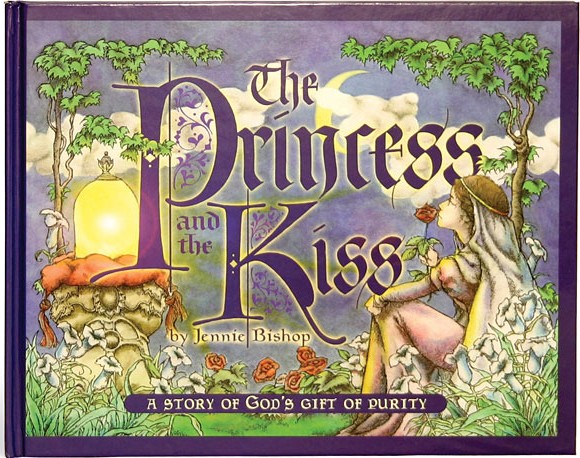
Courtship was introduced as the only method of finding a spouse. We read books like the Courtship of Sarah McLean, I Kissed Dating Goodbye, Boy Meets Girl, The Princess and the Kiss, and so many more. It was like my dad was supposed to own me, and any potential mate would have to ask for my father’s permission both to be near me and to eventually own me.
It’s so damaging to think of oneself as property.
Now, I want to date to find someone to marry, but my father does not own me. I do not need to be under his “vision” for my family. I have my own vision, which does not include abuse.
“Girls were to have babies, homeschool their kids, and be dominated by men.”
Mom held a sexist view of girls: they should not work outside the home. Girls were to have babies, homeschool their kids, and be dominated by men. Many Vision Forum books cemented this view in her mind like So Much More, What’s a Girl to Do, the Beautiful Girlhood books, Mother, and Joyfully at Home. Mom taught me needlework like a good Victorian girl, but I hated these activities! Just because I’m a girl does not mean I have to knit and drink tea!
I’m a person! I’m not a gender stereotype.
I was taught to be afraid of gays, Islam, and black men. It’s tough to grow up in a homophobic, Islamophobic, racist, sexist environment and come out unscathed. While it’s a struggle, I have learned to love everyone as made in the image and likeness of God.
The modesty teachings were awful. Modesty was focused more on covering skin than on ensuring the dignity of each person. I learned to watch my back for guys who would lust after me.
I heard that what I wore made me a rape target.
At first, Mom dressed me in denim jumpers or Easter and Christmas dresses from the local stores. Eventually, she forced me to sew my own dresses and skirts. When I was 9 years old, she told me that having my hair down made me look like a “lady of the night.” Even though I was a shy, modest girl, Mom constantly told me that something I did or wore was sinful, displeasing to God, and might turn on my dad or my brothers.
I was so scared that I was going to lead my brothers or dad into sin for lusting after me.
If that’s not twisted thinking, I really don’t know what is. Bleh.
I cried so many tears over how ugly I thought my body was, thanks to the baggy clothes I wore. Looking back, I was a healthy weight and my body was great. But shirts had to have sleeves and couldn’t come below the collarbone. Pants were forbidden after age 6. Swimwear was culottes that puffed full of water. The lifeguards even chided me for not wearing appropriate swim attire. I wanted to scream, “It’s not me!” My skirts had to be several inches below the knee, or else I was “showing some leg,” and that would “give guys a little jolt.”
When I finally turned 18, I had to beg a friend to help me pick out my first real pair of pants since Kindergarten. Of course, Mom called me a “slut” and a “whore,” declaring she could see intimate parts through my pants that would have been impossible for her to see. It was just to shame me.
Oh boy, here comes the scary part.
Sex.
No one in my homeschooling community talked about sex. I got the talk at 12, earlier than any of my homeschooled friends. However, I only knew about one type of intercourse. I didn’t even know people did it lying down, lol. Because puberty, sex, and all related words were so hush hush, I stopped asking my mother questions.
The first time I heard another girl even mention her period, I was 16.
I stared at her in shock! “Did she just speak of her period?” I wondered. When I turned 18, I succumbed to searching dictionaries to learn the rest of the words and meanings.
I was also incredibly afraid of CPS. Through HSLDA and my parents, I learned that foster homes are terrible places that abuse children by burning their hands on stoves, and more. Well, it worked. I didn’t call hotlines, tell the speech moms who cared about me, or beg my few friends for help.
When CPS showed up at our doorstep, my siblings and I lied for fear of being separated from each other forever.
The community that attended our very conservative Catholic church supported the sheltered, so-modest-its-frumpy, sexist views of my parents. I even was bullied at church for failing to meet up to the standards of the kids my age. In the midst of all this, I got comments asking if I was part of a cult, Amish, or Mormon. It hurt deeply that people thought I was a freak. “IT’S NOT BY CHOICE!” I wanted to scream. But I couldn’t.
When people think you’re part of a cult, they tend to ignore you or avoid you.
The few people I told about the abuse after I escaped looked at me with shock and said, “I had no idea.” The isolation of homeschooling added with the isolation of a cultic appearance equals an ideal environment for abuse to continue.
Note from R.L. Stollar, HA Community Coordinator: The following post does not mention “homeschooling” in any way. It is more about the Christian culture in which many of our homeschooling experiences occurred. But since many of our particular homeschooling experiences occurred within this culture, this post is very relevant. After reading Kathryn’s thoughts, I, too, tried to remember when any of the modesty or purity teachings I received about relationships — in both my church and homeschooling environments — included any discussion about consent. Like Kathryn, I was at a loss. In retrospect, I find this omission rather disturbing.
A friend made a comment on one of my Facebook posts today that got me thinking.
The comment was about how a lot of people in the Church don’t have any kind of sexual ethic, just a bunch rules that they follow. I think that’s a good description of how it is that people buy into slippery slope arguments—the old, “if we allow people to gay marry, then what’s to stop them from toaster marrying?” logic.
If you’ve got a sexual ethic based on consent, then the answer is obvious: because toasters are incapable of consent.
If you are just operating by rules, then it makes sense that you’d think that if one of your rules gets tossed then what’s to stop all your rules from going out the window.
The comment on my Facebook post made me realize that in all of the years of growing up in the Church, of getting lectures about abstinence in Sunday school and youth group and True Love Waits, I cannot remember a single mention of consent. I remember Dawson McAllister coming to town to a True Love Waits event and telling us that anal sex was still sex and not a way to remain a virgin (which is not a bad piece of information, incidentally, though really rather stupid if the only reason you’re telling them is to make sure they remain more than just technical virgins), but for all of the talk about what you couldn’t do, the only talk about saying “no” was about not sinning.
I’ve racked my brain trying to remember even a single time that I’ve ever heard consent mentioned in a church-related setting growing up and I can’t remember a single one.
By not teaching about consent, you produce girls who don’t know that they can refuse consent for any other reason than “it’s a sin,” and you produce boys who have never been taught that no means no. That’s a recipe for disaster. Is conservative abstinence education turning boys into accidental rapists and girls into easy victims because neither one has been educated about consent being an inviolable element in a sexual encounter?
I put this question out there on Facebook and Twitter and I’ll ask it here as well. For those of you who grew up in the church and were lectured about abstinence in youth group/Sunday school/True Love Waits/etc.:
Do any of you remember being taught about consent?
HA note: The following is reprinted with permission from Libby Anne’s blog Love Joy Feminism. It was originally published on Patheos on July 24, 2013.
When I was a teen, I did a lot of babysitting for other homeschool families. One day I babysat two families worth of children while their moms went out for lunch—I think there were about ten kids total that I was watching. I was in the kitchen cleaning up from lunch and the kids were in the living room putting on a play wedding as kids sometimes do. The nine year old was presiding over the wedding of the two five year olds, a girl from the one family and a boy from the other.
All of a sudden I heard the older child say “now you’re supposed to kiss each other” and I freaked out and ran into the living room to break it up.
I wasn’t about to let those two five year olds kiss, thus forever depriving each of the chance to save that first kiss for the altar.
Now, I was taught that part of the reason that the first kiss should be saved for the alter was that it was a gateway into other things. First comes kissing, and then, who knows? Making out, humping, sex—once you open the door, it’s hard to close it. It would seem, then, that five year olds kissing at a play wedding wouldn’t fit this category, given that we’re not talking about a kiss that comes as a result of sexual tension and mutual attraction.
And yet.
The literature I read didn’t make a distinction between preschoolers kissing and teens kissing.
Instead, it simply talked about the importance of saving “your first kiss” for your wedding day. And of course, we were regaled with stories of virtuous couples who had done just that—didn’t we want to be like them? And then there is The Princess and the Kiss,a book marketed to children as young as four.
The book is about a king and queen who help their daughter save her most precious gift, her first kiss, for the prince she will marry. The princess’s first kiss lives in a glass orb, something like the rose in the Disney version of Beauty and the Beast (you can see it on the cover). This book has become very popular in Christian homeschooling circles and beyond, and there are hundreds of thousands in print. This is the sort of thing I was raised on (though this particular book wasn’t around when I was little, lots of kids are growing up on it now).
All of this came rushing back to mind recently when [my daughter] Sally kissed a little boy at her preschool—or, as I would have seen it in the past, when Sally “gave away her first kiss.”
We had gotten together with the family for a play date, and Sally and her little friend did the whole pretend wedding ceremony thing that little kids spontaneously do (I presided over a few in my day myself). At the end Sally grabbed the little boy and planted a kiss on his face. Surprised and bemused, I couldn’t help but recall my reaction to the pretend wedding staged by the five year olds I was babysitting so many years ago. This time, of course, my perception and reaction was different.
Sally didn’t lose anything when she kissed her little friend. Instead, she simply gained a common life experience—something she will look back at and laugh about when she’s grown.
It’s the people who impute a cute childish action with so much meaning who are creating the problem, not my preschooler.
HA note: The following post was originally published by the author on February 8, 2013. It is reprinted with her permission.
About the author: Emily Maynard is an outgoing introvert from Portland, Oregon. She likes Twitter, vegetables, fashion, Harry Potter, mentoring college students, and new information on anything. Emily is passionate about questioning, exploring, and growing alongside great friends. Her work has been featured on Prodigal Magazine, A Deeper Story, and Crosswalk, and she enjoys speaking to diverse audiences. She is not the Emily Maynard from The Bachelorette. Follow Emily at EmilyIsSpeakingUp.com.
*****
Last week I had three precious girls in my home.
They lounged on my couch and chairs, eating snacks and drinking warm cider, talking about their days at school and work and home.
And then we started talking about modesty rules and sexuality and shame. They asked if they could come to my house and talk about those things. I said yes. They showed up.
We told our stories.
And every single one of us, in our own ways, had negatively experienced our bodies, relationships, and sexuality. We all had painful experiences because of the ideas well-intended parents or or pastors or youth leaders taught us. We are all broken because of the subtle, harmful ways we learned to relate to God, ourselves, and others. We all grew up in fairly normal American Evangelical churches, with good families, at average Christian summer camps.
We are all struggling against shame. We are all seeking healing.
There was a lot of talk about The Modesty Rules on the internet recently. And then The Purity Rules. And I love all of it, this opening up and fighting shame and telling stories. But this isn’t something that happens on the internet, in comment sections that we forget in a few days.
These harmful ideas are hurting real people. Real women. Sitting on my real couch. Unraveling real lives.
This isn’t a problem just found in “legalism” or particularly heavy-handed churches. It’s not an “out there” or “just find another church” situation. This is everywhere. Based on the way it’s defended and excused by “church leaders,” it appears to be a central tenant of our faith culture.
And I can’t change that. I can’t control anyone. I’m not in charge.
So go ahead.
You can keep trying enforce The Modesty Rules or The Purity Rules. You can continue the body shaming for girls and giving us impossible standards and responsibilities. You can talk about how lust is only a problem for boys and shame every bit of sexual attraction they naturally experience. You can talk about “godly” living in a way that destroys the Image of God in real humans. You can leave out people who experience gender or sexual attraction in a way that doesn’t exactly line up with yours. You can refuse to see a correlation between your shaming ideas and so many of your children leaving the church. You can accuse me of not following scripture or of overreacting or being bitter. You can keep saying that bodies are a temptation, like alcohol. You can keep shouting that there isn’t a problem, with your hands covering your ears.
I can’t stop you.
But I will listen to your sons and daughters.
I will open up my home and my couch and my fridge and and my email inbox and my story to them.
I will try to make a safe space in my life for their voices.
I will protect their individual, precious stories because they are precious individuals.
I will let my heart hurt with theirs. I will celebrate redemption with them.
I will commit to listening, to the best of my ability, not because I can save anyone, but because I want to lean in and watch Jesus save us all.
I will be a safe person for your children hurt by your church, by your rules, by your shame. I will watch them learn to sing of grace and freedom in their own way. I will promote communities that allow healing to be messy. I will announce that we are not alone and that Hope has come. I will watch for sacred births in dirty straw and signs in the heavens.
I will see the imago dei in each of your children.
I will keep speaking up against The Modesty Rules and sexism and silencing and shame. I will keep speaking up for listening and letting the love of God overwhelm us and asking questions and taking healthy responsibility for our actions and walking out healing.
Marla was a member of the 2008 CFC touring team with the Institute for Cultural Communicators.
“I wanted to be the best intern I could be, because when Mrs. Moon said that Christians need to be good communicators, I believed her.”
My teammates and I were about to go onstage and deliver our introductions. We had two main types of memorized introductions for each other: short and long. Our long ones were set in stone, but the short ones changed. Sometimes we said our city and state, sometimes just city, sometimes first and last name, sometimes just first. Without fail, there were always a couple of us who did it one way, and a few who did it another. I wasn’t quite sure the right way to do it, so before we went on I raised my hand and said, “Since this is something we tend to get confused on, I just wanted to double check exactly what we’re supposed to say.” Next thing I knew Mrs. Moon was towering over me, harshly lecturing me about how I was the cause of all of my team’s problems, I’d destroyed all of the hard work they’d done, etc… I could feel my stomach drop, my spine went cold, and my eyes started burning with months of suppressed tears. This time, though, I wasn’t going to cry because I felt guilty or worthless, this time I was mad. As Mrs. Moon gradually ran out of ammunition it was the first time I think I saw clearly that she was actually… wrong… and when she asked me to explain myself the only thing I could choke out was an angry “What did I do wrong, I said ‘we,’ didn’t I?”
You see, on tour we weren’t allowed to say you or I. If you missed a class you were supposed to teach, we missed the class. If you did something particularly well, we all got the recognition. This was supposed to be team building, frankly it was confusing. But, let me back track, because this particular incident occurred in the last week in a half of a nationwide conference tour, and it had taken me several years to get there…
*****
Telling people about my Institute for Cultural Communicators Experience (ICC) is something that I have a lot of practice doing. I was a member of the 2008 ICC touring team, and prior to that I had spent several years working my way through the alumni program, and serving in every possible student leadership role that they offered. I was completely supportive of ICC’s mission, the Moon family, and the organization’s structure and leadership. I fiercely defended ICC and the Moons against anyone who criticized them, and my mother and I supported them to our best ability, by organizing the facility and managing the advertising for their annual conference in Colorado. I firmly believe that without my mother’s efforts there wouldn’t have been an annual Colorado conference, nor would it have been as well attended as it was (my mother frequently paid student’s tuition out of her own pocket, calling it “scholarships” because she believed so strongly in Teresa Moon’s work).
There were few things I wanted more in high school than to be an intern, and I used this goal as my motivation to create the best possible resume I could to serve as student instructor. I volunteered hundreds of hours, won a national debate championship (so that I would have more credibility as a teacher), and started my own debate club so that I could practice teaching. I wanted to be the best intern I could be, because when Mrs. Moon said that Christians need to be good communicators, I believed her. To Mrs. Moon being a good communicator also meant being authentic and transparent, without hypocrisy. So, when Mrs. Moon banned me from spending any substantial time around my boyfriend who was also involved with her organization (even though both sets of parents were aware of and consenting to the relationship), I tried to obey as best as I could. When she told me that I needed longer skirts, I had my mom take my hems down. When she told me that in order to be modest I couldn’t gain weight as an intern, I obsessed over only eating salad. When she told me I was prideful, I spent countless hours self-destructing by contemplating my worthlessness.
I used to think that any negative feelings I had about my ICC experience were my own fault, for my bad, prideful attitude, and for not being mature enough to understand that what went on was for the greater good of ICC. Now, as a 22 year old, not a 17 year old, I’m ready to talk about the negative experience I had as an ICC intern. Having now worked in government and with other non-profit organizations, all with powerful missions, I’ve learned that a good mission doesn’t mean you can treat people however you want. Having now had a string of kind, gracious, consistent bosses, I can also say that people with large amounts of authority and stress are capable of controlling their emotions towards their employees and treating all employees fairly. The treatment I received as an “employee” for Mrs. Moon was not normal or acceptable. If you have been involved with ICC, and you were treated wonderfully, good for you. That doesn’t negate poor treatment that I received. If you are an ardent supporter of ICC, like I once was, being a true supporter doesn’t mean that criticism isn’t allowed, and that anyone complains has turned into a rebellious or ungodly person.
When I speak of the leadership problems I encountered, mainly from Teresa Moon, the best way that I can summarize them is a lack of consistency. Students who participated in ICC were held to an array of different standards, and it was hard to tell what standard you were being held to, or what it meant to be held to a particular standard. Some of my fellow interns could get away with almost anything, and some of us were constant scapegoats. It was nearly impossible to navigate what could be done, when, and by whom. I could go on writing in generalities about inconsistent treatment, however, there are few things that I find more frustrating than people who criticize, but can’t provide a single example to support their complaints.
Fortunately, my memory of my ICC experience is still quite vivid, so let me summarize what bad leadership looks like with a few examples:
Putting individuals on the team who had severe mental and emotional health problems, with no safety net or plan to give them the treatment that they needed to thrive: One of my fellow teammates, Krysi, wrote about her experience as an intern. You can read her story here, where she discusses a string of mental and emotional struggles she had experience prior or tour, which came to a head in the middle of her time as an intern. While I believe that Krysi should not be blamed for what happened, I have a question to ask of Mrs. Moon: who in there right mind puts young people with documented instances of depression, suicide attempts, and eating disorders in a high pressure environment with no access to therapists, no understanding of their medication, and no training in how to deal with and monitor destructive behaviors? Mrs. Moon knew many of the struggles Krysi was facing, and never thought to prepare a safety net. Instead, she put a vulnerable girl in a high pressure environment, and when Krysi began to struggle, she initially rushed to provide support and promised to help Krysi. However, she was not capable of providing the support she promised, and ended up letting down a girl who had been let down too many times before. You don’t promise to take care of someone, and then decide, with 2 weeks of a tour left, that all of the months of promises you made were just too much work after all. If someone was in too fragile and precarious a state to intern, and you weren’t prepared to help them, they shouldn’t have interned. If you thought that they could intern, you should have come prepared, and not quit at the last moment.
Jeopardizing team cohesion by giving interns secret assignments and unclear authority: I’m a natural workaholic, so on tour whenever I finished an assignment, I would go to Mrs. Moon and ask if there was anything else that I could do to help. She gradually increased my responsibilities on tour, without telling my teammates what was going on. She would give me secret jobs, such as corresponding with a Christian camp, Doe River Gorge, where we were going to be doing a brief in-service training. I was instructed not to tell anyone, as I gathered information and made a conference plan. Two days before the conference, Mrs. Moon’s son, Wendell, who was acting as tour manager told me to begin a staff meeting by telling my teammates about our conference at the camp. I began telling them what Wendell had instructed, when Mrs. Moon walked into the room and gave me her iciest glare. She pulled me into her office and harshly lectured me about how I was acting inappropriately and my pride was becoming a huge issue. I tried to explain that I hadn’t meant to act improperly, I was just following Wendell’s instructions. She ignored me, and Wendell refused to back my story up. Variations on this happened too frequently to count, and caused me to constantly be under an undue amount of stress.
Disrespecting labor laws, disregarding health: Before I interned I assisted at various conferences where my job was basically to act as a janitor and kitchen assistant. It was normal at these events to stay up until 1:00 and then get back up at 6:30. A person can keep such a schedule for a week or two, though it is not pleasant. The straining schedule I experienced as an assistant to ICC staff became almost unbearable when I served as a touring intern. I was frequently up until 2:00 or 3:00 in the morning, finishing extra assignments that Mrs. Moon gave me, then back up at 6:30-6:45 to do full hair and makeup for the conference. I would teach classes almost all day long, with little to no break, and any break I did have was spent working on another list of assignments. Once the conference ended it was seemingly endless meetings and more work. In addition to this, since there were no real provisions to assist my struggling teammates, such as Krysi, I began trying to serve as a monitor, making sure that she was eating, that she wasn’t hurting herself. When we shared a room I would wake up multiple times throughout the night to make sure she was alright. When adults don’t take care of kids, kids have to take care of each other, even if they don’t have the emotional stamina or knowledge to fill the role. By the end of tour I was consumed with work and with trying to help Krysi, in addition, I was part of an inner circle that was informed of all that had happened in her family, and sworn to secrecy. Keeping that secret from my teammates and parents, was completely draining. By the end of tour I was physically and emotionally spent. When I got home I was constantly sick, and began having digestive problems, and minor panic attacks that lasted for months. When I had to leave home to go back and complete the last conference, called Masters (A two week long end of tour convention occurs after a month long break for the interns), I struggled with uncontrollable vomiting and what felt like fever sweats. I was terrified of getting on the plane to go back to the Moons home, of seeing my teammates, of having to teach again… I could barely keep food down the entire Masters conference, and all I wanted to do was leave. I can’t help but think that some of this was due to being completely and totally over worked. The schedule I kept, and the responsibility placed on me were too much for my age. I know that homeschooled kids are supposed to be more mature, but there are limits, and I don’t think ICC respects them.
Tying physical looks to appropriate conduct… but, only for the girls: I’ll never forget the girls only meeting that Mrs. Moon called together a month into tour. She gave us her most winning smile, and explained that some of us had put on some weight, and if we wanted our clothing to be appropriately modest, then weight gain was just not something that could happen. We were encouraged to keep each other accountable about our weight, either by telling our fellow teammates that they were looking heavier, so that they would be more cautious, or if they were too far gone, we were supposed to tell them to wear spanx. Mrs. Moon meant it, too, if she saw any bulge, any panty lines, she would take action. One of my teammates had gained a slight amount of weight (she was still incredibly tiny) that caused a very minor panty line to be visible in her evening gown. Mrs. Moon pulled her to the side when she stepped backstage in the middle of a performance, and made her take off her underwear. In addition to humiliating events like that, Mrs. Moon’s talk caused a general panic amongst many of the girls, which shouldn’t be a big surprise since Teresa gave this talk to a group of girls, knowing full well that at least 3 of them had struggled with eating disorders and body dysmorphia. Tying weight gain to modesty and morality only made many of these girl’s weight struggles worse.
Putting children in emotionally damaging situations: The Moons decided that my team had unity problems, and that any and all difficulties we faced were because we had not bonded enough. In retrospect, I think claiming that every thing that goes wrong is a result of a poor team dynamic, may just be an easy excuse to avoid having to examine leadership. However, the worst part of this judgment on my team was that Wendell, Mrs. Moon’s eldest son decided that he was going to institute some team building exercises. I don’t know where he came up with them, but the one I remember best was called the “hot seat.” Each of us had to sit in a chair in front of everyone, and each teammate took a turn telling the person in the chair a Criticism, a Confession, or a Compliment. Neither Wendell nor Mrs. Moon seemed to have anticipated that what they were really doing was giving interns a chance to be flat out mean to one another. I remember sitting in the chair while teammate after teammate described my personality and character in broad, crushing, negative terms. I was trying so hard not to cry, because I knew that the terrible things they were saying must be true, and that I needed to be mature about it, but another part of me was screaming that this wasn’t how people should treat each other. A few of my teammates were genuinely kind in their remarks, but it’s a lot easier to remember the negatives. After the Moons watched interns tear each other down, there was no rebuilding, no demands for apologies, no assistance in sorting out how to treat people who had basically just said that they hated you. After the hot seat activity I withdrew from my teammates for the rest of tour, finding any excuse I could to be alone. I figured this was what was best for the team, since I was so terrible to be around, and so deeply hated. Now, I know this isn’t true, but the fact that I was made to feel that way under the leadership of the Moons is not right.
Valuing anything to save face, rather than caring about other’s well being: This was perhaps the thing that was most difficult for me to deal with as an intern. Appearance really was treated as everything, which meant a lot of lying and a lot of coverups. However, there were some things too big to gloss over, like Krysi disappearing from tour, and then not showing up to the Masters conference, while all of her family did. Mrs. Moon was visibly stressed about how to explain Krysi’s absence at Masters, when right before the conference she got the perfect explanation. Krysi was hospitalized for viral meningitis. When we found out about it I overheard Mrs. Moon audibly sigh with relief, and turn to whoever was near her and say something along the lines of “thank God.” Wendell led a little prayer for Krysi at the conference and talked about how much they wished she could have come. I was so angry when I sat there watching him put on his most concerned face for the audience. Krysi wasn’t there because she had been kicked off, Krysi had been kicked off because she had been set up to fail, and her being in the hospital was not “convenient” it was frightening and sad. Appearances don’t matter more than people, and putting on public displays of concern as a cover for bad leadership is not authentic communication.
*****
My last real interaction with ICC was June of 2009, when Mrs. Moon asked me to run a Flood the Five conference (a shortened version of the normal conference structure) in Colorado Springs. Both of my parents had undergone surgery that summer, so in addition to a full time job, I was also taking care of the house, and tending to their post-surgery needs. Despite how busy I was, I managed to create an entire conference plan, writing brand new classes and planning activities for the two day event. I showed up with barely a greeting from Teresa, and found out that I had basically no one to assist me, and that I would be teaching every class on my own. I stayed up until 3:00 in the morning preparing for the first day, and got up at 6:30 to arrive on time. I taught the entire day, and when I finally returned back to the place I was staying Teresa asked me to come and have a chat with her. She asked me what my tour experience was like, and I tried to explain to her how hard it had been to believe so firmly in an organization, and then have that slowly destroyed by watching hypocrisy every day. I told her my frustration that her son, and the other teammate involved in the drinking episode that Krysi mentioned did not receive any where near the same amount of punishment as Krysi. I tried to tell her how hurt I was by the months of “criticism” about my character, and how I’d never tried to be prideful, in fact, I had felt completely worthless all of tour, and had struggled with horrible depression in the months since tour ended.
She responded by telling me that my pride was the biggest problem that they encountered on tour, and that ICC wanted student leaders with “Competence and character, not just competence.” There was no understanding, no thank you for the years of dedication, the thousands of dollars my family had spent, the months of secrets I kept for her, and the sincere love and affection I had for her. I left her room and looked out the window at my car in the driveway. I though about just driving back home, and letting her handle the second day of the conference on her own, because I honestly didn’t know if I could get up on a stage and be a perfect intern again. Part of me wishes I had just driven away, but I didn’t. The next day I showed up with a big smile and taught each class as well as I could. I gave the closing speech about the wonders of ICC, and never lost face until I was in my car. Some would call that showing character, but to ICC, that’s just competence.
NCFCA and TeenPact were ideologically very similar to me — in some ways, almost extensions of each other. That could be because I was in NCFCA before TeenPact and a lot of the things I learned in NCFCA, TeenPact also tried to teach and hone.
I was 13 when I started NCFCA, and I stopped shortly after I was 15. I was in a debate club in SW FL (region 8!) and I never made it out of the preliminaries. I participated in persuasive, extemporaneous, oratorical, and occasionally impromptu speech, and Team Policy debate. My team was one of the few girl/girl teams.
Because I never got far, I didn’t experience as much craziness from mothers in other clubs. I remember ballots that had me in tears – one tournament I did an oratorical speech, which was Patrick Henry’s speech, and one of the judges wrote down (among other things) that my voice was too girly (because the ankle length skirt didn’t give it away?). This bothered me because it was like the judge wasn’t even listening, and wrote down something that I could not modify or fix, that was completely ridiculous and missing the point.
I had a lot of notes about my performance as opposed to content, though I don’t have any of my ballots to go back to. I remember being frustrated with most of them, because they were so unhelpful and had nothing to do with being a better debater, just, looking or preforming better. There were so many useless comments that I think actually a lot of us stopped reading them. Helpful commentary was so rare that when I found one, I was thrilled. Actually, I think I put it somewhere special at the time.
I wore clothes that were too big, too old, and I felt like a dark little blob in order to maintain professionalism and adhere to the dress code. I always wore skirts because it was easier that way, and because my clothes were larger than they needed to be, I flew under the radar for mothers enforcing dress codes.
There were rumors about why my partner and I didn’t make it to regionals one year: like maybe the judges voted for the boy/boy team because they were boys even though we had done better. I don’t know if it’s founded (though I wouldn’t be surprised) because my parents and the other parents didn’t get along (and my parents like to make things up).
I loved meeting people at NCFCA, and learning how to argue without feeling personally affronted, or personally offending other people. I learned how to think there, and my club itself, was fantastic. After my parents split the club, I was still able to maintain friendships and I realized that this is how life should work. I learned to value tact.
My parents made my experience in NCFCA horrible. They “learned” how to debate, held real life to NCFCA rules and decided that they disagreed with how the other parents were running the club and essentially split it in half. It was miserable as parents pitted against parents and all of us kids were stuck in the middle, powerless.
The club my parents started, was the club that holds the most similarities to TeenPact. Because, it was in the club my parents made, where gender roles were enforced. I “co-lead” the debate team/club with one of the boys. I had to essentially go along with whatever he wanted and let him make all the calls even though he was less motivated. My parents went to great lengths to insure “male headship”. Much like the girl talks at TeenPact.
They had extremely conservative by-laws. Girls who were more liberal, though never directly stated, were seen as trouble – which I think is why they made sure that only the girls they trusted were in leadership positions with/under boys. In hopes that the more liberal girls would follow the example and become less “loud”.
My mom taught (under male authority) in a very…task-master-like way (she made any speech and debate event/meeting miserable, even in the old club – it became so bad my first year that I told her dad needed to pick me up instead, because he wouldn’t berate me the entire way home). When she was starting the new club she essentially told me that I wasn’t good enough, that I was failing, and she was going to fix it (because she obviously wasn’t being hard enough on me?).
After a summer full of her “training” (which felt more like bootcamp) she started teaching the club itself, in a very similar way: very critical, and perfectionistic. I don’t know how the other parents felt, I think that the best thing my parents did for that club was move 3 months after they founded it.
In November, we moved to Atlanta-ish, and I joined a club close to me. I met my first best friend there, and was involved for the rest of the season – I was almost 15. When the season ended in the spring (when I was 15) my parents took me aside and told me “you’re not getting better at this, you’re not going anywhere, it’s obvious that this isn’t meant for you.” I was devastated, because this cut off my only social outlet in a place that I hated living. Which is besides the point, but it hurt so much that I feel it’s worth mentioning.
Really, the biggest comparisons that can be made between NCFCA and TeenPact are that their goals and values are the same. Their goal is to create thinkers to think the way they want them to think. They lure parents like mine, to indoctrinate people to think the way they want them to think. They want to create articulate teenagers to take over the world, they want simultaneously, for women to learn that their place is under men, and never above. That women need to hide their shape, still, and yet remain professional – in their skirts, unless you’re just doing speech, then slacks are permitted. But if you’re taking on (potentially) men in debate? Skirts-only for you, missy! I think this is a subtle way of enforcing the women-are-less idea that pervades so much of this subculture.
The thing that neither of these organizations count on, is their former students actually doing what they were taught to do – think for themselves.


 Homeschoolers Anonymous